
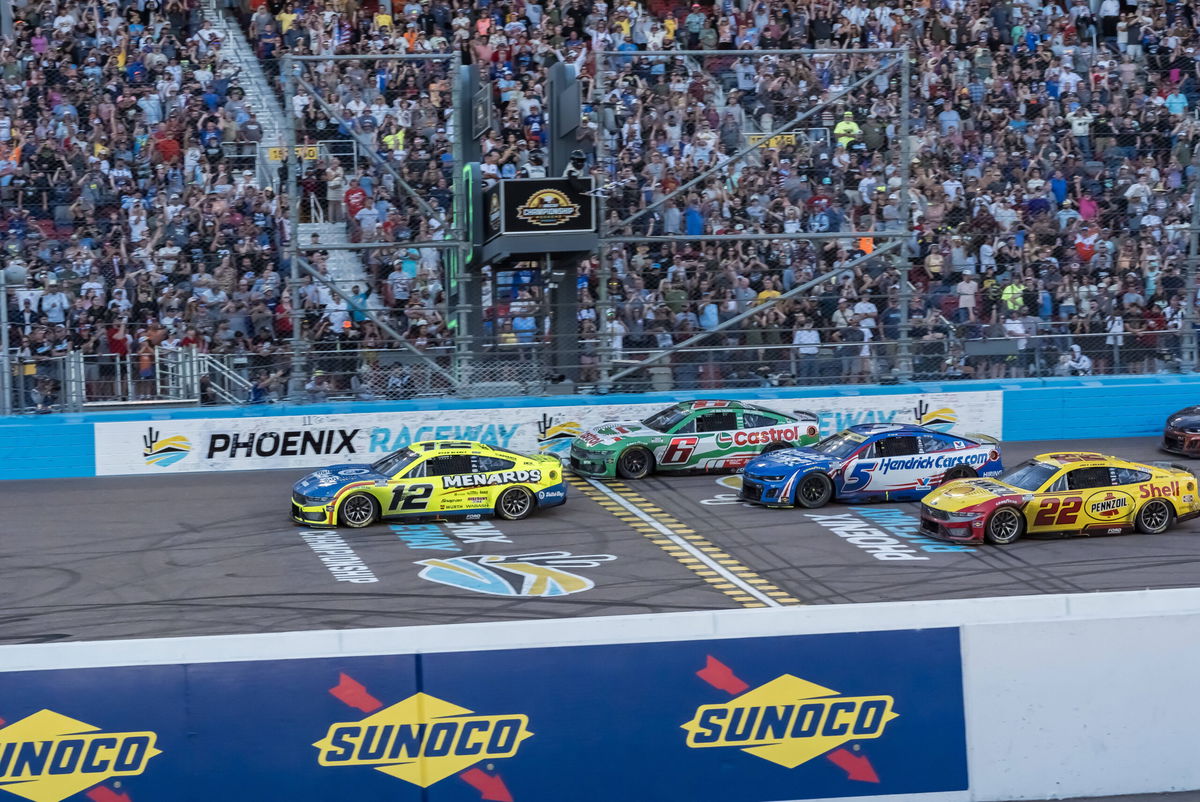
NASCAR is bringing more horsepower and less downforce to Phoenix, but the package change comes with another unusual adjustment. With the Cup Series cars facing a different challenge at the one-mile oval, teams will have extra freedom to prepare their braking systems before the race. NASCAR Managing Director Brad Moran has confirmed a rare rule change, allowing teams to change brake pads without any limit this weekend. The decision comes as the series looks to help teams manage the demands of the new package and avoid brake issues at a track known for heavy braking zones.
Watch What’s Trending Now!
“Yeah, this weekend we’re opening it up. There’s no limit,” NASCAR Cup Series Managing Director Brad Moran told SiriusXM NASCAR Radio.
He confirmed that teams can change their brake pads without restriction at Phoenix Raceway, an uncommon exception to the series’ impound rules. The decision comes as the Cup Series returns to a 750-horsepower, low-downforce package that places greater demands on braking systems. After brake problems at Iowa, Nashville, and Gateway disrupted several teams’ races, NASCAR is giving crews more freedom to address their brake setups before the green flag.
Under NASCAR’s usual impound procedure, cars are subject to restrictions on adjustments after practice and qualifying. The aim is to prevent teams from making major setup changes after the car has been inspected and qualified. Brake-pad changes have been particularly restricted: teams generally cannot replace their pads before the race without facing a penalty, potentially leaving them to make the change after the green flag and lose valuable laps.
The issue is that brake pads are not simply interchangeable parts. Teams can mix different compounds across the four corners to tune braking balance, manage temperatures and help the car turn into corners. A combination that works at one track may prove unsuitable at another, and once impound restrictions take effect, teams can be left with limited options.
That became clear at Iowa Speedway in August. Denny Hamlin, Chase Briscoe, Riley Herbst, and Bubba Wallace encountered brake-pressure problems during the race weekend. The teams spent hours making adjustments, including bleeding brake lines and addressing cooling, but they could not freely replace their chosen pads before the race. Hamlin and Briscoe ultimately finished fifth and sixth, respectively. But the incident prompted renewed questions about a rule that could leave teams committed to a brake combination they no longer trusted.
Nashville offered a different warning. Connor Zilisch and Ross Chastain suffered brake-rotor failures during the race, while AJ Allmendinger’s front rotor appeared to fail as he ran near the front. Allmendinger had won the opening stage before the incident ended his chance at a strong result.
NASCAR’s subsequent analysis highlighted how the combination of 750 horsepower and reduced downforce appeared to increase brake wear. The failures were not all proven to have the same cause. However, they showed how severe the consequences could be when a brake system could not withstand the demands of a race.
Gateway then brought the problem back into focus in September. Ryan Blaney was running sixth when his right-front rotor exploded through the hood on Lap 155. He hit the outside wall entering Turn 1 and finished 35th. Team Penske crew chief Jonathan Hassler said Gateway had always been hard on brakes and acknowledged that the team likely had not provided enough cooling for the higher-horsepower package. The track’s long straights and tight corners create sharp temperature swings, forcing teams to balance cooling against the risk of overcooling components.
Phoenix presents its own challenge. Moran described it as a high-energy braking track, and its layout requires drivers to slow sharply for corners approached from different angles. Teams must manage both brake temperatures and handling balance, making the choice of pad compounds especially important. The higher-horsepower, low-downforce package adds another variable as crews prepare for the race.
Moran said NASCAR has established a procedure for the pad changes and is leaving the decision to each team. “If a team chooses to change their brake pads, it’s on them to do so,” he explained. The existing allowance for replacing damaged rotors remains unchanged, while the new flexibility will also apply at Martinsville.
The rule change will not eliminate the risk of brake failures, nor does it mean every team must change its pads. It simply gives crews the option to replace them when their practice findings suggest the original combination is unsuitable. After several costly brake incidents this season, NASCAR is giving teams more room to respond before a problem turns into a race-ending failure.