
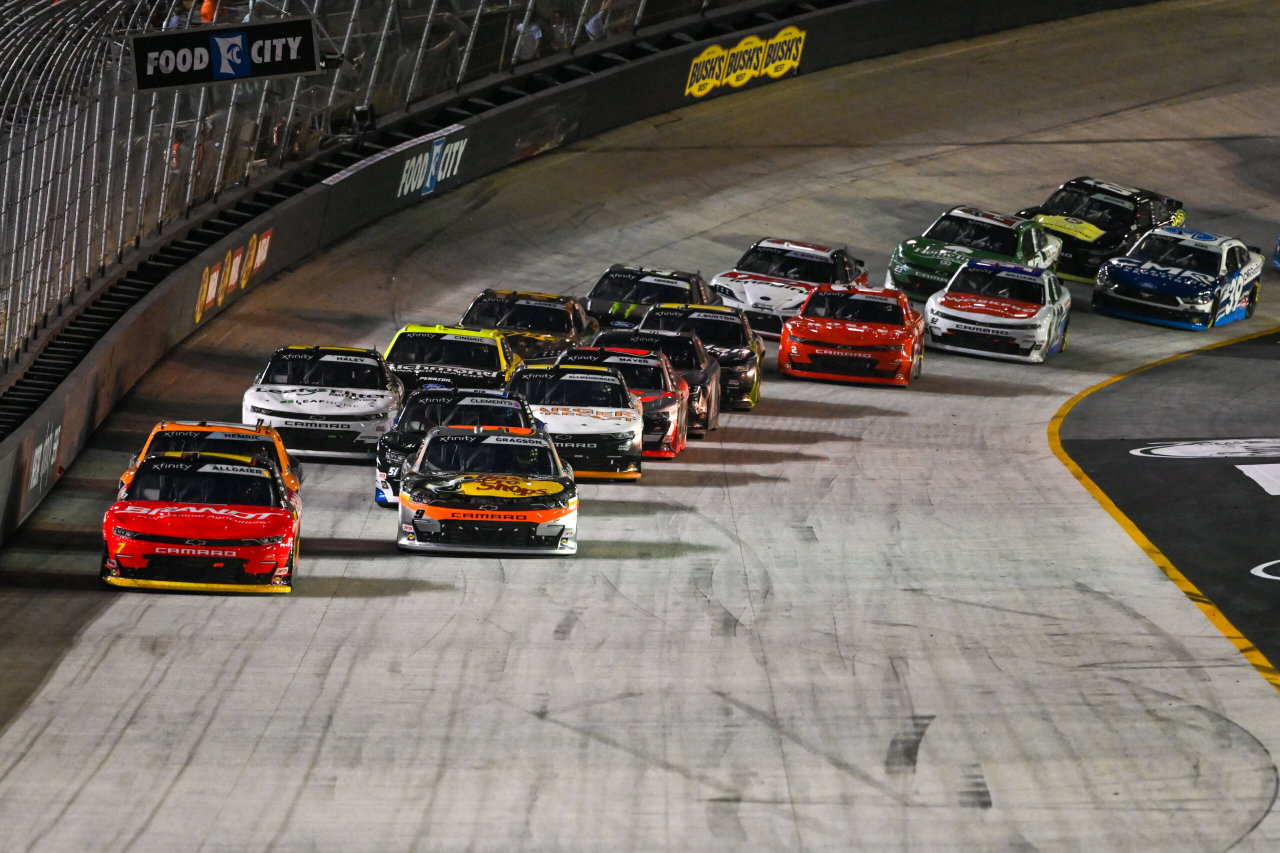
NASCAR’s decision to keep the yellow flag tucked away despite visible debris on the track has raised fresh questions about its race-control judgment. The bizarre moment unfolded during the closing stages of the O’Reilly Series Championship Race at Homestead-Miami Speedway, with drivers repeatedly running over an object that remained on the racing surface for several laps. With a championship hanging in the balance, the lack of a caution only made the situation more puzzling. Now, a veteran NASCAR insider has offered a pointed take on what officials were doing.
Watch What’s Trending Now!
“They were practicing for next year. That was a test. That was a debris test. Let’s see where it flies to so we can understand debris flying where it goes,” Tommy Baldwin said on the Door Bumper Clear podcast.
Baldwin’s sarcastic remark followed a bizarre incident during the NASCAR O’Reilly Auto Parts Series Championship Race at Homestead-Miami Speedway. The object initially appeared in the bottom lane and stayed there for an estimated four or five laps. As cars made contact with it, the debris moved up the track rather than flying into the air.
The object’s apparent weight raised further questions about the potential danger it posed to drivers. The situation was particularly unusual because the object remained visible for an extended period. Even as the spotters tried to alert race control, the field continued racing under green.
Baldwin’s joke about NASCAR conducting a debris test was a pointed way of questioning the officials’ judgment. Rather than immediately clearing the track under caution, NASCAR allowed the cars to keep running over the object until it eventually disappeared from the racing surface. Baldwin’s suggestion that officials were testing where debris would travel next year was clearly sarcastic, but it highlighted the lack of an obvious explanation for the decision.
The timing also mattered because the race was not just another stop on the schedule. Allgaier entered the Homestead finale looking to secure his second O’Reilly Series championship, with Jesse Love among the drivers still capable of taking the title. Love began the race 22 points behind Allgaier, leaving the championship battle open heading into the closing stages. A late caution could have bunched up the field, changed tire strategies and given the contenders another opportunity to alter the standings.
Allgaier ultimately finished seventh, which was enough to clinch the championship. Brandon Jones claimed the race victory for Joe Gibbs Racing, beating Carson Kvapil by 3.937 seconds. While the result settled the title fight, the decision not to call a caution over the debris became a separate talking point.
Baldwin’s criticism also fits into a wider debate about NASCAR’s handling of debris and caution periods. In February 2026, NASCAR discussed taking a more deliberate approach to debris-related cautions after drivers raised concerns about racing through debris fields at high speed. Denny Hamlin and Christopher Bell were among those who had expressed safety concerns. Officials indicated they would assess individual situations using available camera angles, spotter reports and race-control information rather than automatically throwing a yellow for every piece of debris.
However, NASCAR’s caution decisions have attracted criticism in both directions. At Martinsville in March 2026, a late caution following Ty Dillon’s broken brake rotor prompted questions from Denny Hamlin about the timing and necessity of the yellow. The interruption changed the strategic picture for several drivers, including Hamlin and Chase Elliott, who eventually won the race.
There was also a notable reversal after the 2025 Atlanta Xfinity Series race. NASCAR kept the field under green following a last-lap crash, allowing the leaders to race through the incident. Senior competition executive Elton Sawyer later acknowledged that officials had been too aggressive with the decision and said safety should take priority when determining whether to throw a caution.
Homestead added another example to that ongoing debate. Baldwin’s debris-test remark was delivered as a joke, but the underlying question was serious: why did NASCAR allow an object to remain on the track for several laps during a championship race? The officials’ reasoning may have been based on information unavailable to those watching from the spotters’ stand, but the decision still left plenty of questions.