
In 2022, just a year after Kyle Larson won his first Cup Series championship, Hendrick Motorsports’ Vice Chairman Jeff Gordon declared that the team had not been profitable for years. And perhaps that sums up what it takes to win. It’s no secret that teams are in an arms race to make sure that no stone is left unturned in their efforts to do as well as possible throughout the course of the season. But whether that constitutes a hyper-competitive environment, or whether it’s just a spending problem, is what Parker Kligerman discusses.
Watch What’s Trending Now!
On the Money Lap podcast, veteran analyst Kligerman revealed how he discussed spending with a NASCAR Cup Series driver (who remained unnamed) of late. The verdict? Pay is bad, but when it comes to having cutting-edge equipment and state-of-the-art haulers in the garage every week, there seems to be no shortage of money, despite what the teams say.
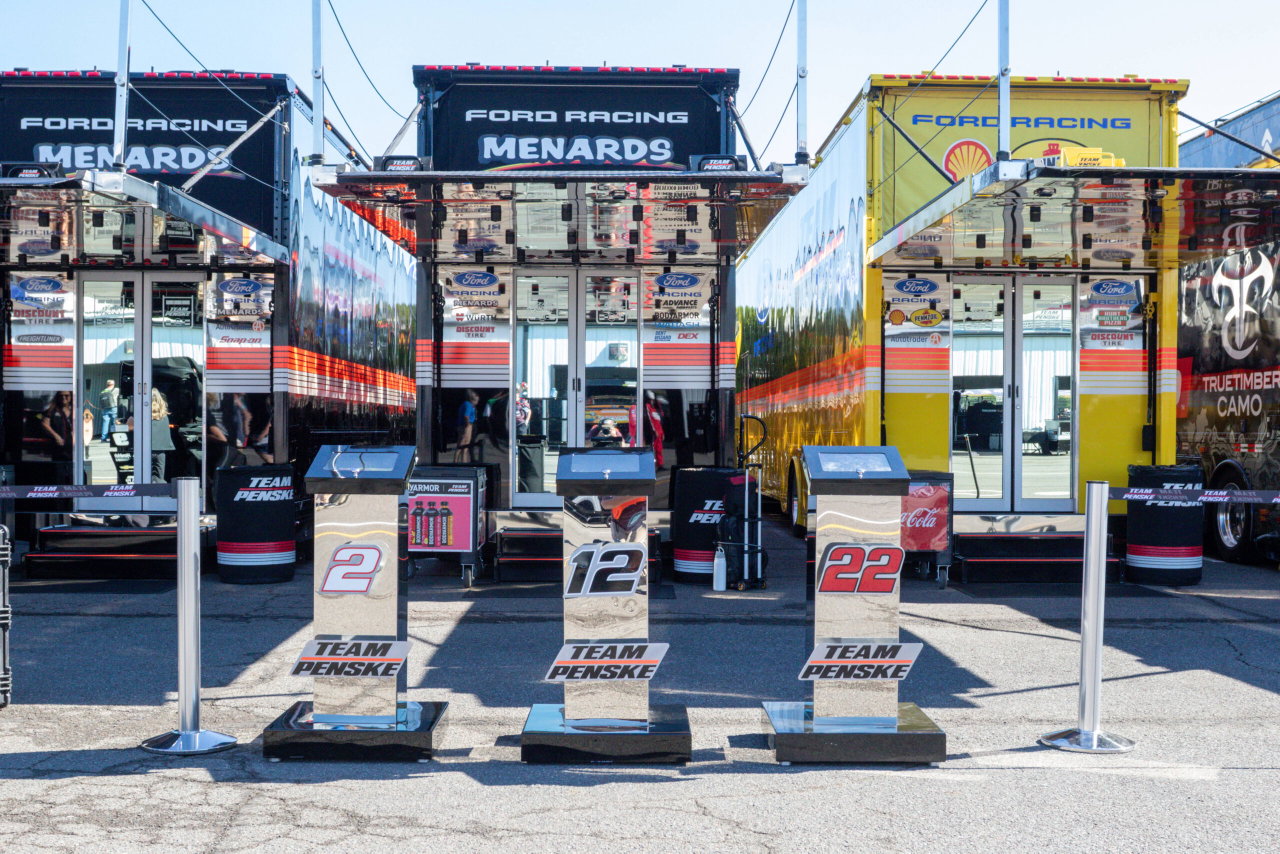
“I said, you know, how’s that looking? He goes, well, same as always been Parker. Teams tell you they’re poor. But you know what doesn’t lie? That lawsuit that shows all the numbers. And I was like, oh, and he’s like, yeah, you guys say you don’t have any of the money, but what are we spending this on? Why do we bring new haulers? Why do we need a new pit box?” Kligerman said on the podcast.
That’s what racing is, according to Kligerman. And honestly, that’s what the sport has become. Technology plays a massive role.
Back in the 1990s and early 2000s, when the sport was booming with new money from sponsorships and broadcasting deals, teams began investing heavily. That’s when the spending game truly began. But it was also an era when drivers wanted a fair share of what the teams were making. They were looking for 30-40% of the total race purse. But it all changed around the time of the 2008 financial crisis, when some of the country’s biggest sponsors cut back on funding.
There were changes that NASCAR was forced to deal with. Private testing was banned, and specifications were limited. But where teams truly began to cut costs was driver payouts. After the charter system took effect in 2016, the onus often shifted to drivers to bring multi-million-dollar sponsorships to the team as an additional cash injection.
As Parker noted in his podcast, the harsh reality is that the physical equipment directly influences track speed, and in a zero-sum game, speed always outranks driver salary.
Parker continued, “They’re going to spend every damn dollar, and they’re going to spend it to zero. And I had a team owner just recently tell me, he said, like, you would think we’re in a good position. He’s like, we are spending to zero every single year, because if there’s a single dollar sitting there come the last race of the year and we haven’t won the championship, we have failed.”
This was also something Parker’s co-host spoke about. Recent financial disclosures have shown that Cup Series teams still lose millions each year because of rising operating costs. That leaves teams with very little room to spend elsewhere.
You either spend big and go home a loser, or you endure losses and win it all
“If you’ve read that book, you will remember the part where he talks about competitive businesses are inherently not good businesses,” Landon Cassill said about Peter Thiel’s book ‘Zero to One’, on the same podcast.
What the former NASCAR driver was trying to say is that you can’t build a winning team without making sacrifices. In racing, profitability and success don’t always go hand in hand. Sometimes, the pursuit of victory comes at a financial cost.
Because of the Charter System (which was introduced in 2016), teams have faced higher expenses. A charter guarantees entry into every points-paying Cup Series race and provides teams with a share of the television revenue. However, the majority of that revenue goes to the tracks, with NASCAR taking up a portion as well. Four years ago, Jeff Gordon revealed that Hendrick Motorsports, one of the sport’s most successful organizations, had not turned a profit in over a decade. So why continue despite the losses? For owner Rick Hendrick, it’s a simple answer. He wants to keep winning.
Cassill said, “If you want to look at the best race teams out there, they’re probably not nearly as profitable as you think they are. Probably for an extended period of time.”
Ultimately, Kligerman and Cassill’s point is that NASCAR’s financial reality isn’t as simple as saying teams are either making money or losing it. Every organization wants a bigger share of the sport’s revenue, but no owner wants to sacrifice performance to save money.
As long as winning championships is the main goal, teams will keep spending every dollar they can to find more speed, even if it means operating at a loss. In today’s NASCAR, winning may not be the most profitable business decision, but for many owners, Rick Hendrick included, it’s still the one that matters most.