
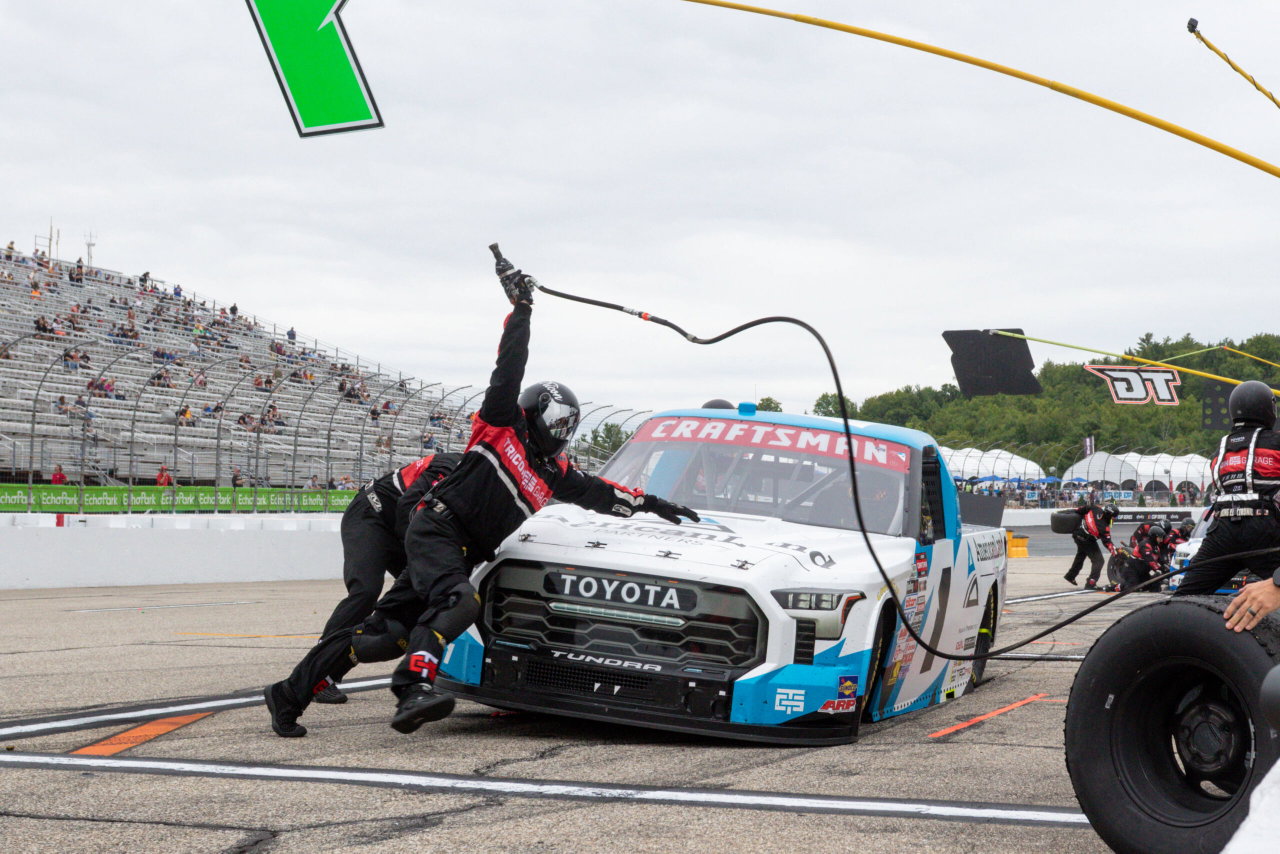
In the high-stakes world of NASCAR Cup Series racing, split-second decisions on pit road can make all the difference, making clear communication crucial. At New Hampshire Motor Speedway, a miscommunication involving a secret word code led to a messy pit stop for Denny Hamlin. Former Hendrick Motorsports crew chief Steve Letarte cannot wait to see the back of this practice.
Watch What’s Trending Now!
Letarte, on Inside the Race, argued that teams’ habit of using code words causes unnecessary confusion. Ultimately, it only hurts the pit crew’s performance.
“So ten laps on tyres, then a jumbled-up mess. Then a very quiet enchilada and then the pit crews not ready. They were the fourth pit stall, which makes the – and here’s my head-scratching moment. It’s not the confusion on the radio that has happened for years. It will happen for years. We just did a nice job of explaining how that can happen. This code word thing infuriates me,” Letarte said on the broadcast.
During the Dollar Tree 301, Hamlin’s crew chief, Chris Gayle, issued the call “enchilada” during the final stage. Hamlin understood what he meant, but the crew didn’t. They interpreted it as a fuel-stop or stay-out strategy, when it actually meant changing all four tires on the No. 11 car. So when Hamlin pitted, the crew was unprepared, costing him precious seconds and dropping him from 10th to 17th. That left him with plenty of work to do.
Hamlin recovered to finish seventh at the end, which helped him clinch the No. 1 seed heading into the Chase. And instead of dwelling on it, he laughed it off on his Actions Detrimental podcast and didn’t hold anyone in the pit crew accountable, joking that they deserved a “BYE” for an otherwise flawless situation.
“I knew what the call was. The call was to stay. Then, if you heard my radio, I said, ‘I hear you, but be ready just in case,’ because I knew this could be an opportunity where I get the advantage. I wanted to be the first guy that peels down there. I’m going to drag some with me, which we did. Unfortunately, the cars we dragged with us were the ones that passed us on pit lane because we weren’t ready,” Hamlin explained on the podcast.
Letarte, meanwhile, is frustrated that more and more teams are using code words to conceal their strategy. He understands the impulse and the desire to remain competitive, but he doesn’t feel the tactic is worth the risk. Hamlin himself has suffered because of this before, back in 2025 at Texas.
That day, both Hamlin’s crew chief and spotter turned on their radios at the same time, and amid the chaos, the driver only heard the word “cowboy.” Recalling the strategy, Hamlin decided to stay out, whereas his team actually wanted him to pit. He realized the mistake, but by then, it was too late.
Hamlin went down pit road twice after aborting the first stop, picked up a speeding penalty and, to add insult to injury, saw his engine blow a few laps later.
The outcome in New Hampshire was not as disastrous. The stakes were not so high either. However, Letarte wants to avoid the confusion. On the Inside the Race broadcast, he added,
“I don’t wanna play my hand because I am pitting early. I don’t want those guys to know, so if you’re pitting in pit stall one, we can – you know, we’re already in a confusing situation. How about we’re gonna pit and change four tyres?”
As the New Hampshire race showed, pit-road communication can quickly turn a small misunderstanding into a major setback. But the pressure isn’t limited to coded radio calls. Even when teams communicate clearly, the sheer intensity of pit-road execution can create costly mistakes, as Team Penske’s Ryan Blaney and crew chief Jonathan Hassler experienced.
Ryan Blaney’s crew chief explained how pit road pressure intensifies at the front
Team Penske crew chief Jonathan Hassler explained how the pressure at the front can make every mistake feel even bigger. Blaney had dominated Stage 2 and built a comfortable lead, but a left-front lug nut issue during a caution pit stop forced the crew to secure the wheel properly. The delay cost Blaney 13 positions, dropping the No. 12 Ford outside the top 10 with just 100 laps remaining.
Hassler called it a “Maybe a little bit of a blessing in disguise” because the subsequent caution allowed him to call for only two right-side tyres. That decision put Blaney back in the lead while most contenders took four and Blaney managed the longer run.
“It’s really competitive on pit road,” Hassler said. “If you’re going to have any speed, you’re going to have these sort of miscues. We’re fortunate that we’re fast enough and up front enough that everybody takes notice when it does happen.”
Blaney recovered and went on to win the Dollar Tree 301 after Hassler capitalized on the setback with a race-winning two-tire strategy gamble. It was his second consecutive Dollar Tree 301 win.
Now, as the regular season heads into its final race this Saturday at Daytona International Speedway, Hamlin sits at the top of the current standings, followed by Blaney in second. So far, thirteen drivers have already locked in chase berths, while the battle for the final three spots intensifies among Bubba Wallace, Austin Cindric and Shane van Gisbergen just above the cutline.