Imago
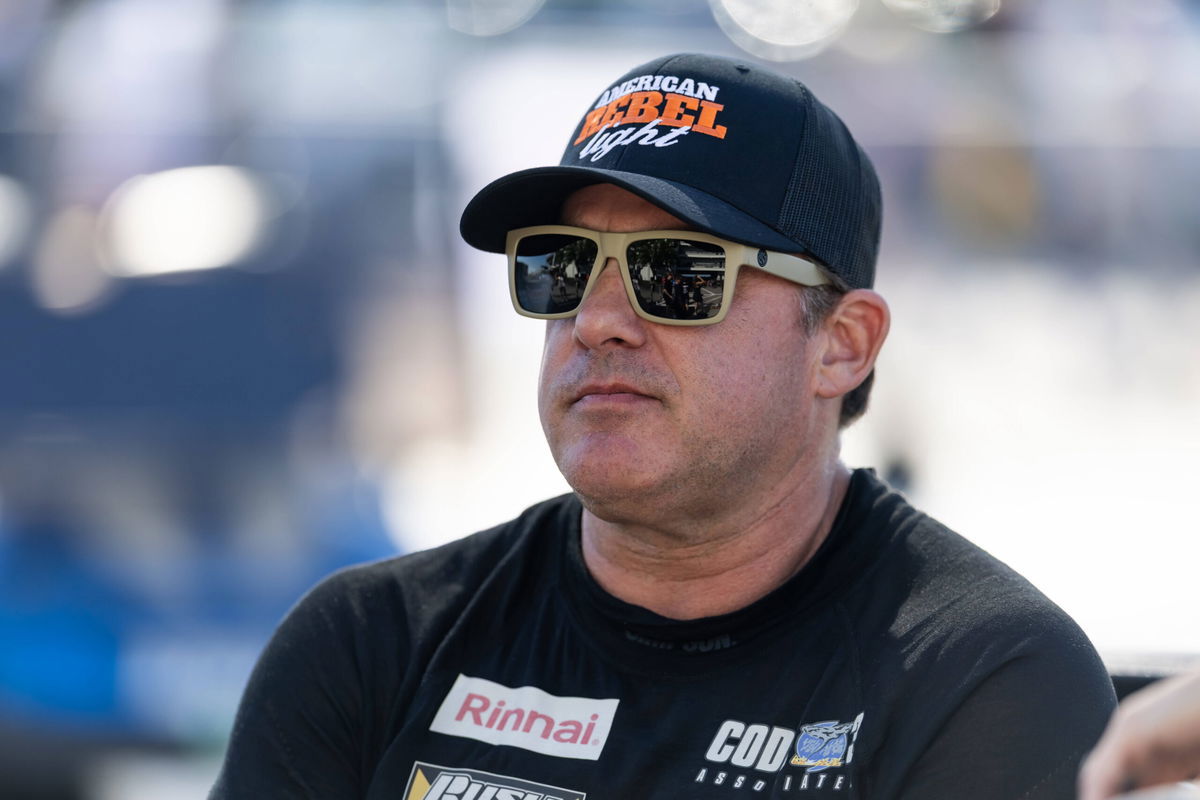
Motorsport, Herren, USA, Dragster Drag Race Midwest Nationals Sep 28, 2025 Madison, IL, USA NHRA top fuel driver Tony Stewart during the Midwest Nationals at World Wide Technology Raceway. Madison World Wide Technology Raceway IL USA, EDITORIAL USE ONLY PUBLICATIONxINxGERxSUIxAUTxONLY Copyright: xMarkxJ.xRebilasx 20250928_mjr_su5_026
Imago
Motorsport, Herren, USA, Dragster Drag Race Midwest Nationals Sep 28, 2025 Madison, IL, USA NHRA top fuel driver Tony Stewart during the Midwest Nationals at World Wide Technology Raceway. Madison World Wide Technology Raceway IL USA, EDITORIAL USE ONLY PUBLICATIONxINxGERxSUIxAUTxONLY Copyright: xMarkxJ.xRebilasx 20250928_mjr_su5_026
Tony Stewart is one of the few people in present-day stock car racing who has publicly disagreed with NASCAR leadership. The three-time Cup champion has never shied away from questioning the executives in charge of the sport, from starting the competing SRX Series to frequently criticizing the charter system and playoff structure. However, Stewart has adopted a more composed tone in an unexpected turn of events. Surprisingly, he put aside the long-standing conflict to give NASCAR authorities a rare compliment.


Tony Stewart welcomes NASCAR’s return to the Chase…
“I was ok with it on the 10-race deal,” Tony Stewart shared his honest thoughts on NASCAR’s decision to revamp the Cup Series championship format beginning in 2026. And coming from someone who has often been one of the sport’s loudest critics, the comment sounded almost like an olive branch.
NASCAR has formally reinstated a 10-race, points-based “Chase for the Championship” format for the 2026 season, doing away with the elimination-style playoffs that were in place for the previous 12 seasons. The top 16 drivers in the standings at the end of the regular season will move on to a 10-race mini-season under the new format, with the winner being decided solely on points. Homestead-Miami Speedway, a racetrack known for championship drama, will host the finale once more.
The decision comes after over a year of internal deliberations over how to reorganize the title fight. In order to get input on several options, including a complete return to the conventional 36-race season-long points system, NASCAR even established an advisory committee. The 2004–2013 Chase-style concept, which many fans still recall as a well-balanced compromise between season-long consistency and a late-season title fight, was ultimately chosen by the sanctioning body.
“I’m with the race fans on this.”
Tony Stewart joins Racers Unchained to break down the current NASCAR playoff format, sharing his honest thoughts on what works, what doesn’t, and how it really plays out on the track.
Watch tonight on RACER Network at 8 PM ET/PT. pic.twitter.com/fsMARemb4M
— RACER Network (@RACER_Network) March 12, 2026
For Stewart, that shift was a welcome step. The three-time Cup champion has long argued that the sport should reward consistency over gimmicks, and the revived 10-race format moves closer to that philosophy. So the positive acknowledgment from him is definitely a fresh change from the long-standing rivalry he has had with the sport’s brass.
That being said, it is worth noting that the same cannot be said for NASCAR’s other national divisions.
For instance, the NASCAR O’Reilly Series operates under a nine-race playoff format after 24 regular-season races and just the top 12 drivers competing for the title. Similarly, the Craftsman Truck Series has a seven-race playoff after 18 regular-season races with only the top 10 drivers competing for the highest honors.
Still, for Tony Stewart and many fans who grew up with the earlier format, that change alone feels like a step in the right direction.
…and explains why the playoff format never sat right
While Tony Stewart welcomed NASCAR’s decision to return to a 10-race championship battle, his comments also highlighted why he never fully supported the elimination-style playoff system used from 2014 to 2024.
“What I don’t like about the current deal is you have somebody that’s not even in the playoffs make a mistake in front of you or crashes in front of you, you get collected in their mess. They’ve ruined your season,” Stewart explained. “And I think that’s where, for us, when we looked at the 10-race playoff, if you had a bad race, it was 10% of your remaining races, where in this format, it’s 33%.”
Tony Stewart’s biggest issue with the old structure was how a single incident could abruptly end a championship run. Under the elimination-style playoffs, drivers were grouped into rounds of three races. Four competitors were knocked out after each stage. That meant one crash (or even a poorly timed caution) could suddenly derail a title contender’s season.
The problem, Stewart argued, was that playoff drivers were still racing in the same pack as non-playoff competitors. This created the risk that someone not fighting for the championship could unintentionally eliminate a contender. In many traditional sports, the postseason operates very differently.
In football, basketball, or hockey, playoff teams compete directly against each other in head-to-head matchups. Outside teams can’t influence the outcome of those championship battles.
NASCAR’s previous system never fully avoided that risk. This is why Tony Stewart believes the return to the longer 10-race Chase format is a better compromise. With more races deciding the title, a single bad day becomes just part of the championship story rather than the moment that ends it.
Related Newsletters