
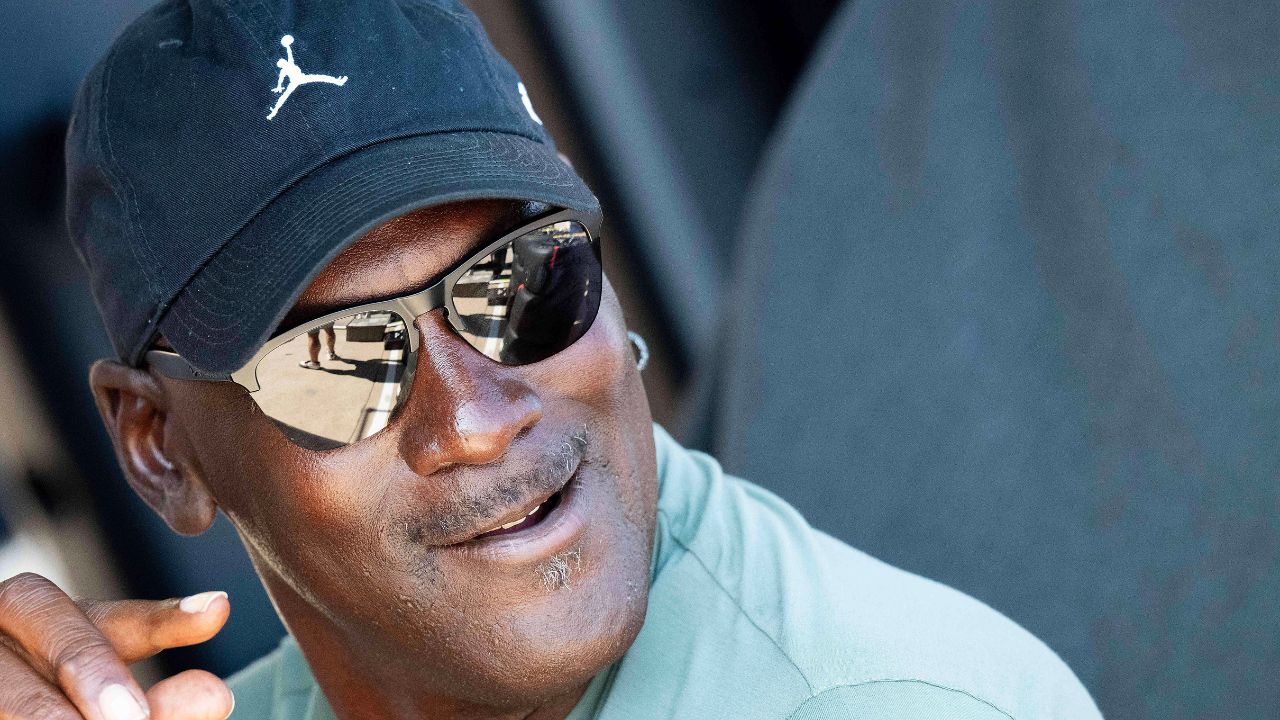
The battle between Michael Jordan and NASCAR’s France family threatened to expose a deep divide in the sport, with two prominent teams willing to risk their future to challenge its business model. What followed was more than a year of courtroom arguments, tense negotiations and uncertainty over the charter system that supports Cup Series teams. Yet the dispute eventually produced an image few expected to see: Jordan standing alongside NASCAR chairman Jim France. A veteran insider now believes the confrontation was more than a legal fight, describing it as a turning point NASCAR ultimately needed.
Watch What’s Trending Now!
“It was nice to go through a season beyond that, not talking about that, and actually talking about things that were happening on the racetrack. So as much as it was a hard thing for the sport, maybe it was a need-to-happen thing for the sport, and we’re better as a result of it,” Brad Gillie said when discussing the antitrust lawsuit.
The dispute began when NASCAR introduced a new charter agreement in September 2024. Thirteen Cup Series organizations signed the deal, but 23XI Racing and Front Row Motorsports refused. Both teams believed the proposed terms gave NASCAR too much control while failing to provide teams with sufficient financial security and influence over the sport’s direction. They wanted permanent charters, a greater share of revenue and a stronger voice in important business decisions.
Jordan, who co-owns 23XI with Denny Hamlin and longtime business adviser Curtis Polk, became one of the most prominent figures challenging NASCAR’s business structure. The teams filed an antitrust lawsuit in October 2024, accusing the sanctioning body of using its control over premier stock car racing to restrict competition and disadvantage teams. Their argument centered on the charter system, which guarantees participating cars entry into Cup races and provides a share of revenue. Without those guarantees, teams face considerably greater financial uncertainty.
Jordan’s involvement brought additional attention to the dispute, but his testimony also made clear that he wanted more than a better financial arrangement for his own organization. During the December 2025 trial, he explained why he believed someone needed to confront NASCAR’s authority. “Someone had to step forward and challenge the entity,” he told the jury. He also described how longtime team owners had struggled to bring about changes and said he felt he could approach the situation without fear of challenging the established system.
That willingness to take on NASCAR’s leadership became a defining part of the case. Several team owners testified about the financial pressures of operating competitive Cup organizations. Richard Childress, for instance, said he signed the 2025 agreement because refusing it could have put his organization out of business. NASCAR, meanwhile, defended its position and argued that the teams’ demands would threaten its ability to operate the series. The trial exposed how far apart the two sides had become after years of unsuccessful negotiations.
The case ended with an unexpected agreement on December 11, 2025, before the jury could deliver a verdict. NASCAR agreed to grant all Cup Series teams a form of evergreen charters. 23XI and Front Row also regained their six combined charters for the 2026 season. The financial terms remained confidential, but the agreement addressed one of the central demands that had brought the two organizations to court.
For Gillie, the settlement’s significance extended beyond the legal outcome. He pointed to the moment Jordan and NASCAR chairman Jim France stood together outside the courthouse after reaching an agreement. “I know there were things in my mind that changed as that went through, but I do feel like one of the most powerful images of the year was seeing Michael Jordan and Jim France standing next to each other outside of that courthouse, and Michael Jordan truly taking a leadership role and saying, all right, now’s a great time for us to move forward.”
That readiness to reconsider established practices also became visible in NASCAR’s approach to the 2026 season. The sanctioning body returned to The Chase, ending more than a decade of the elimination-style playoff format. A new points system was introduced that rewarded race winners with 55 points instead of 40. NASCAR also increased horsepower from 670 to 750 at selected short tracks and road courses, responding to long-standing calls for more power in the Next Gen car.
Later in the season, it consolidated Cup practice into a single 50-minute session at most eligible events, following feedback from teams. These decisions were not direct outcomes of the lawsuit, but they reflected a broader openness to change.
The agreement also allowed NASCAR to enter 2026 without the lawsuit dominating conversations around the series. Gillie acknowledged how refreshing it was to spend a season discussing racing rather than courtroom developments. The return of The Chase and other competition adjustments gave teams and fans plenty to debate with the dispute behind them.
Gillie ultimately believes the confrontation was necessary, even if the process was difficult. The lawsuit did not resolve every disagreement between NASCAR and its teams, but it forced both sides to address issues that had lingered for years. For Gillie, that willingness to confront uncomfortable questions may prove to be one of the most important developments in NASCAR’s recent history.