
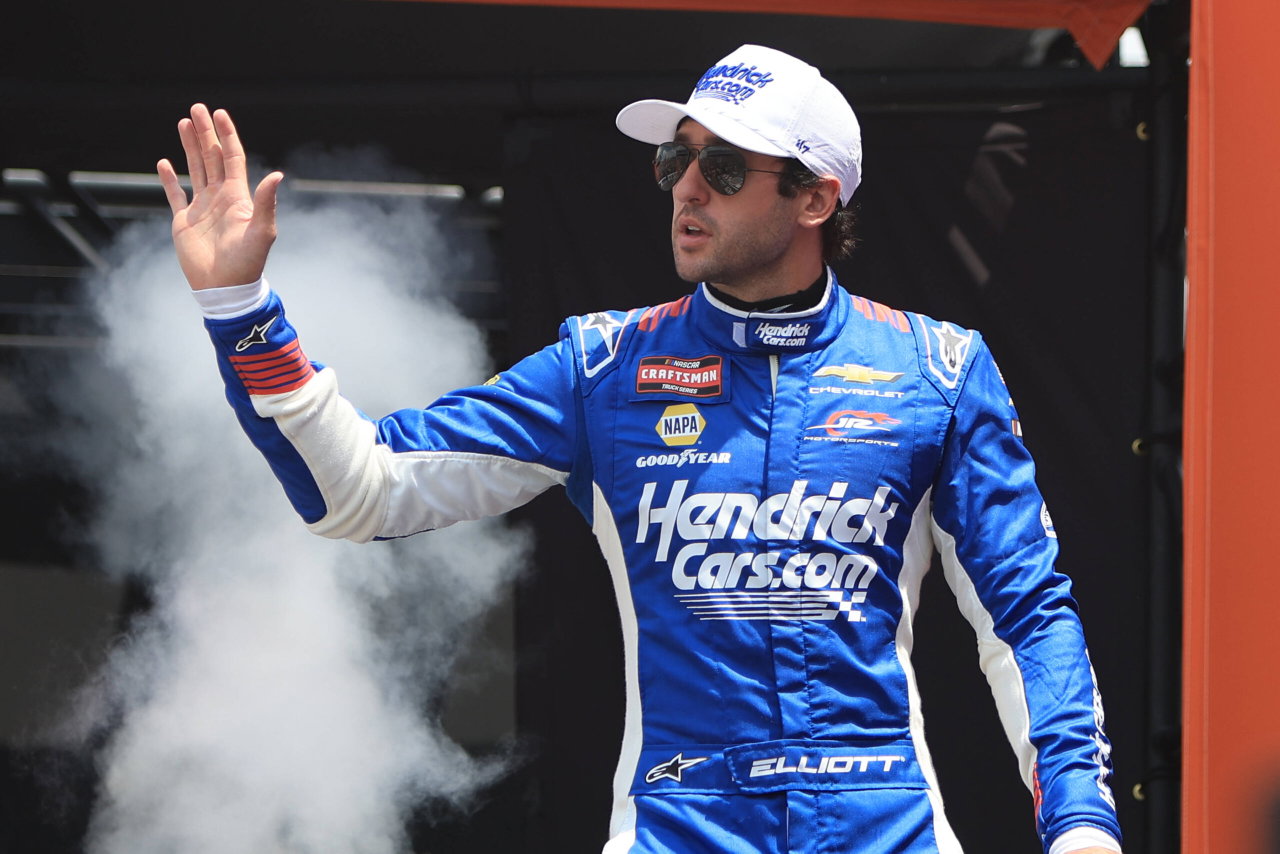
William Byron had just spent 362 of 500 laps leading the field at Martinsville Speedway. Chase Elliott finished second, giving Hendrick Motorsports a one-two finish. Yet, inside the organization’s garage, there was little reason to believe everyone would simply go home satisfied. That might sound strange for a team that had spent much of 2026 trying to find its winning form. However, Elliott’s description of the working culture explains why a good result rarely ends the conversation at Hendrick.
“We complain every week about things we want to make better. Even if we were running first, second, third and fourth, we’d still complain, right?” Elliott told Tim Moore.
There is a difference between being unhappy with a result and being unhappy with the work behind it. Elliott was describing the latter. At Hendrick, a driver can finish second and still return with a list of things the team could have done differently. Even a dominant afternoon does not mean the car was perfect. There is always something to examine, whether it is handling, balance, speed or execution.
That attitude becomes easier to understand when looking at the team’s struggles earlier this season. Hendrick Motorsports entered 2026 with four experienced driver-crew chief combinations. Elliott continued with Alan Gustafson, Kyle Larson with Cliff Daniels, William Byron with Rudy Fugle and Alex Bowman with Blake Harris. Expectations were naturally high.
Instead, the organization found itself searching for answers. Through the first 23 races, Hendrick had collected just two victories, both coming from Elliott. That was its lowest win total at that stage since 2018. Joe Gibbs Racing and 23XI Racing had already established themselves with seven wins apiece. For an organization accustomed to controlling the competition, the gap was difficult to ignore.
Elliott, however, was not suggesting that the team needed a different approach. He had already experienced enough difficult seasons to understand how quickly frustration could take over. The 2020 Cup Series champion spoke about learning to handle those fluctuations without allowing one bad weekend to dictate the next.
“The season is very long, and those roller coaster rides can eat you up if you’re not really careful. So, I’m leaning on my experience and just pushing myself to be better.”
His comments also explain why he values the people working behind the scenes. When asked whether Hendrick’s progress during the Chase reflected its willingness to trust the process, Elliott pointed to the consistency of its approach.
“That’s what they were going to do whether we were running well or struggling. That’s why we’re all proud to work there, ultimately.”
The timing of that assessment is interesting. NASCAR’s new 10-race Chase has brought a different kind of pressure to the championship fight. With points accumulating throughout the postseason, teams cannot afford to treat one bad result as the end of their campaign. Hendrick has had to balance Elliott’s own pursuit of better results with Larson’s championship ambitions.
Larson now heads to Homestead-Miami Speedway with a 67-point advantage over Christopher Bell. Byron also ended his winless run at Martinsville, while Elliott secured another runner-up finish. Those results suggest that the organization has made considerable progress since its midseason struggles.
Still, Elliott’s point goes beyond the results. He knows the team will not suddenly become satisfied because its cars are winning again. The people responsible for preparing them will keep listening, questioning and searching for improvements.
“Everyone in there would look at us and say, ‘Okay, we’ll go to work tomorrow and try to make it better for you.’ I can’t ask for anything more than that.”
For Hendrick Motorsports, perhaps the hardest part of winning is accepting that even a winning car can still be better.