
NASCAR has spent much of the past few years trying to answer a difficult question: how does it make its drivers matter beyond Sunday afternoon? Television audiences have softened, the sport has lost several of its most recognizable personalities, and a growing number of fans no longer identify with a particular driver. The latest SRSS Sports Poll found that 64% of NASCAR fans did not have a favorite driver, its highest reading in more than 25 years.
Watch What’s Trending Now!
Yet the picture is not entirely bleak. Behind the familiar concerns about declining audiences are signs of commercial interest that have caught the attention of people inside the garage. One team’s recent experience, in particular, has offered a different perspective on where NASCAR might be heading.
“A lot of us were around during the ‘boom days,’ so when you start seeing days that even surpass from the ’05s, ’06s, ’07, it’s not all doom and gloom,” Spire Motorsports co-owner and CEO Jeff Dickerson told Adam Stern for Sports Business Journal. “Sometimes we’re asked by fans, and they’ll start talking about the good old days, and it’s like, ‘I don’t know if anyone has considered that we’re entering the good old days.’ And certainly where we’re at and what we see with our internal metrics and sales (around merchandise), I think the wave is just getting formed.”
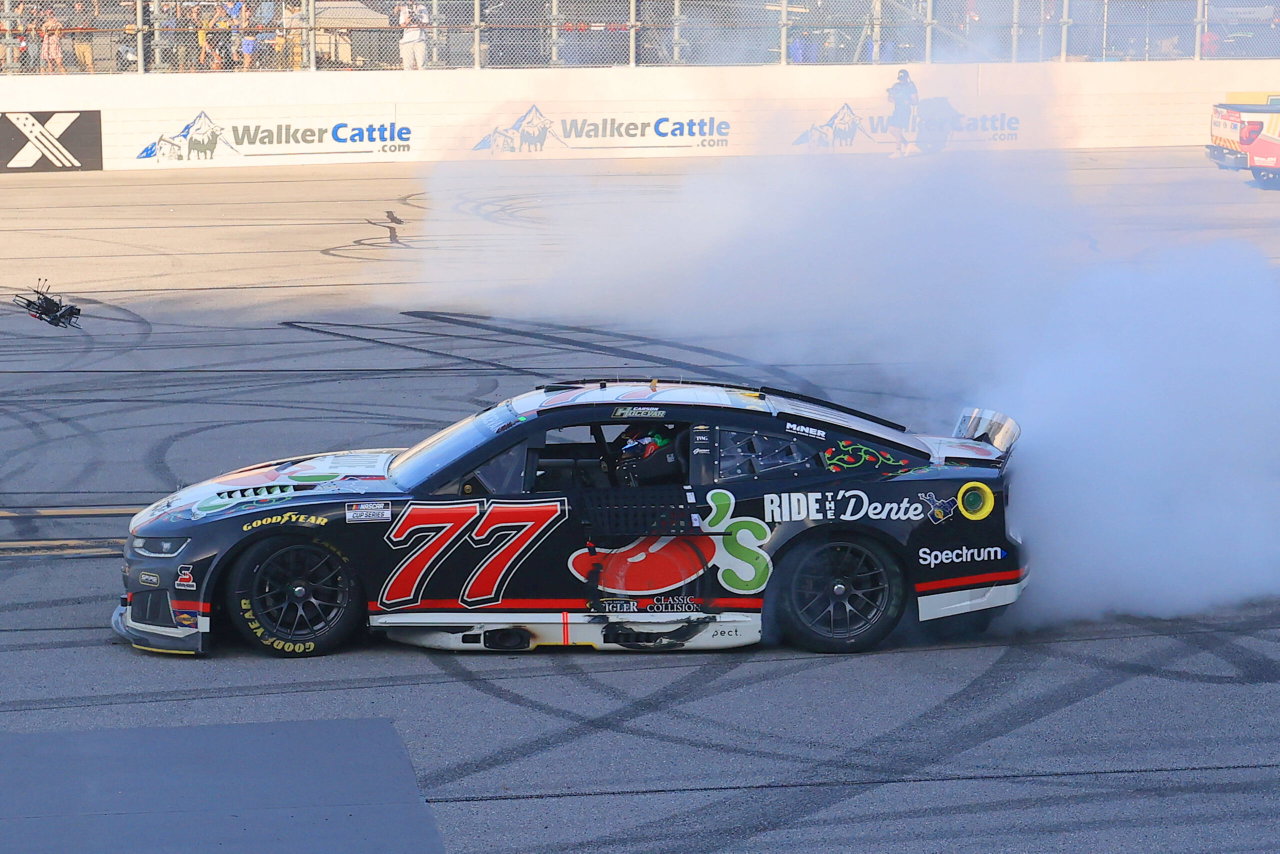
There is a reason Dickerson is looking beyond the television numbers. Carson Hocevar’s first Cup Series victory at Talladega in April gave Spire something more valuable than another trophy: evidence that a young driver could generate considerable interest beyond his results on the track.
The 23-year-old Michigan native had already developed a following through his aggressive driving, personality, and online presence. Winning in the Cup Series took that attention to another level. According to Stern’s reporting, Lionel diecast sales for Hocevar’s winning No. 77 Chevrolet during the first 24 hours after Talladega were the highest for any race victory since NASCAR and Lionel established their joint venture in 2010.
Hocevar’s personal merchandise operation also generated nearly $500,000 in sales during the first month after the victory, according to SBJ’s earlier reporting.
That is significant when compared with some of the sport’s biggest names. Hocevar’s diecast performance surpassed the immediate demand generated by victories such as Dale Earnhardt Jr.’s 2014 Daytona 500 triumph.
Hocevar’s growing profile also earned him a Met Gala invitation, making him the first NASCAR driver at the event since Jeff Gordon in 2010. These are opportunities that extend a driver’s reach well beyond the traditional racing audience.
It also explains why Dickerson’s assessment deserves attention. NASCAR does not necessarily need another championship winner to create commercial momentum. It needs drivers whose personalities, stories, and achievements give casual viewers a reason to become invested.
Merchandise is one measure of that connection, and Hocevar’s numbers suggest there is still room for a new personality to break through.
The wider numbers, however, show why NASCAR cannot afford to become complacent. The 2026 Cup Series season averaged 2.419 million viewers, a 2% decline from the previous year’s 2.479 million. The September SRSS poll also found that the percentage of fans without a favorite driver had more than doubled from 31% in 2009.
Winning races remains essential, but turning those victories into lasting fan relationships is another challenge.
NASCAR executive vice president and chief brand officer Tim Clark believes the sport understands what is at stake. Speaking to Stern, he addressed the difficulty of building athlete star power in an entertainment market where attention is increasingly difficult to secure.
“It is such a big opportunity for fandom and relevance and attention and all of these things, but it’s also the thing that most of the properties have the least control over, and that includes us,” Clark said. “It’s such an interesting topic because there is probably no single topic that comes up more in terms of, ‘We’ve got to get our drivers out there, we’ve got to reach new fans, we’ve got to have someone who breaks through,’ but I don’t think it’s a lever not being pulled.”
One of NASCAR’s responses has been its Driver Ambassador Program, which has now completed its second season. The initiative rewards drivers for promoting the sport through media appearances and public engagements outside their regular racing commitments, with a theoretical annual earning potential of $2 million. Ross Chastain led the first half of the 2026 competition, while Spire’s Daniel Suárez topped the second half, according to sources cited by Stern.
NASCAR wants to expand those opportunities in 2027, taking drivers onto bigger platforms and into markets that have little connection with race weekends. The challenge is particularly important because the sport has struggled to replace several established personalities who stepped away within a relatively short period.
Between 2015 and 2020, Jeff Gordon, Dale Earnhardt Jr., Carl Edwards, Danica Patrick, and Matt Kenseth all left full-time Cup competition. Each had a distinct identity and an established following, giving NASCAR recognizable names even among people who did not regularly watch races.
Clark acknowledged that losing so many generational talents within a short window created a considerable challenge for the sport.
There are potential replacements emerging. Alongside Hocevar, Connor Zilisch, Corey Heim, and Corey Day are attracting attention. NASCAR is also opening another door through Garrett Mitchell, better known as Cleetus McFarland, who has 4.9 million YouTube subscribers and will compete full-time in the ARCA Menards Series with Richard Childress Racing in 2027.
McFarland’s following gives the sport access to an audience that traditional NASCAR marketing might struggle to reach.
The upcoming Tom Cruise-led sequel to Days of Thunder, scheduled for release in 2028, provides another opportunity to put NASCAR in front of mainstream audiences.
But a movie, a merchandise record, or a successful ambassador campaign cannot independently produce the next Dale Earnhardt or Jeff Gordon. That connection still has to be built between drivers and fans.
Dickerson’s optimism is therefore less about declaring NASCAR’s problems solved and more about recognizing what the sport still has to work with. Hocevar’s breakthrough has demonstrated that new personalities can attract attention and generate commercial interest.
The challenge now is turning those moments into sustained fandom. If NASCAR gets that right, Dickerson’s description of the modern era may eventually carry more weight than nostalgia.