
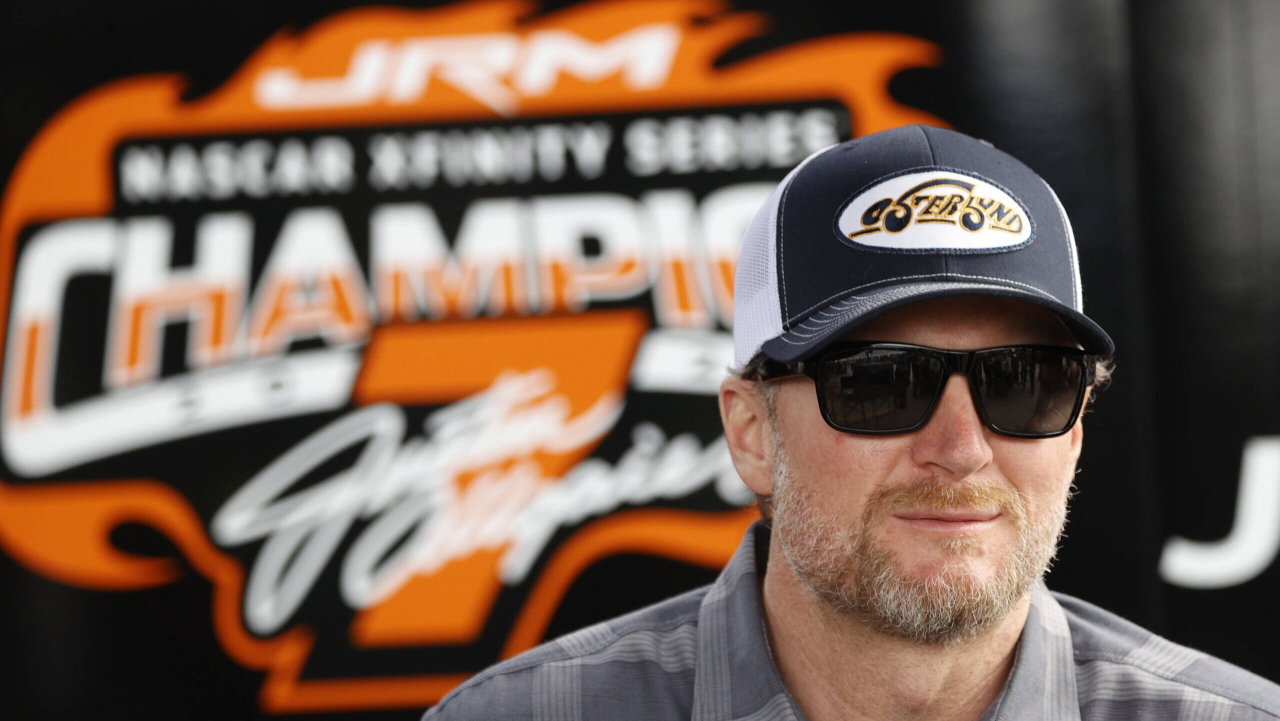
After a week away from racing, NASCAR gave fans a welcome reason to tune back in. Responding to complaints after a Brickyard 400 filled with back-to-back cautions, CEO Steve O’Donnell announced a procedural change that will combine overlapping yellow flags. While many see it as long overdue, Dale Earnhardt Jr. believes it’s only the beginning of a much broader overhaul NASCAR still needs to make.
Watch What’s Trending Now!
“Fans have asked for a change. I think teams, drivers, broadcasters, everybody’s wanted something to change there,” Dale Jr. said on Dirty Mo Overdrive.
“I’ve never really known why they wouldn’t make a change, but we’re finally gonna do it… They’re still working on how they can shorten up standard traditional cautions, so we’re not done yet,” the NASCAR Hall of Famer added.
Under the new rule, if a caution comes out within the final 10 laps of a stage, NASCAR will end the stage under that same yellow instead of restarting the race only to throw another caution for the scheduled stage break. They plan on cutting down exhaustingly long caution periods.
Dale Jr. called it a move that had been needed for years. He noted that virtually everyone in the garage and television booth had been asking for a solution. He revealed that NASCAR is continuing to study ways to shorten traditional caution periods as well.
Stage racing was introduced in 2017 to increase the intensity by awarding championship points at intervals instead of only at the finish. It also created more opportunities for strategy and gave drivers meaningful battles throughout the race, rather than making them wait until the checkered flag.
However, the mandatory caution periods have become one of the most criticized aspects of NASCAR today. While stage racing remains popular with some fans, the scheduled yellow flags interrupt long green-flag runs, wipe out fuel and tire strategies that teams have carefully planned, and often lead to caution periods that many feel last longer than necessary.
The new Iowa procedure reduces unnecessary yellow laps without eliminating stage racing altogether. But if NASCAR truly wants to modernize its race management, the next logical step may be even bolder.
A continuous green-flag race (similar to Formula 1 and other major motorsports) could still award stage points at the same predetermined laps without stopping the action. Teams would retain the incentive to race hard throughout the event. Meanwhile, strategy would return to the hands of the crew chiefs instead of the caution flag.
If NASCAR continues down the path Dale Jr. hinted at, Iowa may be remembered not as the finish of the conversation, but as the beginning of a much larger evolution.