
What fans would give to have a say on all that’s wrong with NASCAR and actually be heard. It’s not every day that the biggest stars of the sport go all out in criticising aspects that have been scrutinized for years, after all. And that’s why Carson Hocevar, despite what some may feel about his antics on the track, is so loved among the fanbase. He’s a Cup Series superstar later, and a NASCAR fan longing for the good old days first. Just days after a rather flat Brickyard 400 in front of a deflated Indianapolis audience, Hocevar brought the past up to explain what’s wrong with NASCAR today.
Watch What’s Trending Now!
In a lengthy rant on his social media, Hocevar mentioned, “We’re on the ventilator and asleep at the wheel of what the problems are.” And he felt that way after watching the 2000 Talladega — he interestingly won his first-ever Cup Series race at the track in Alabama earlier this year — replay at home.
The problem, according to Hocevar, lies in the way the races are presented. He feels fans don’t want stats shoved down their throats. They don’t care about the aero, engine, or tire wear. They want to see a show, and the entertainment side of things has been missing.
“Casual fans just wanna be entertained. They don’t care about aero, engine packages, downforce, drag, or tire wear. They truly don’t care. They just wanna be visually entertained and feel like they’re not wasting their time watching something that’s not prestigious,” the Spire Motorsports driver said.
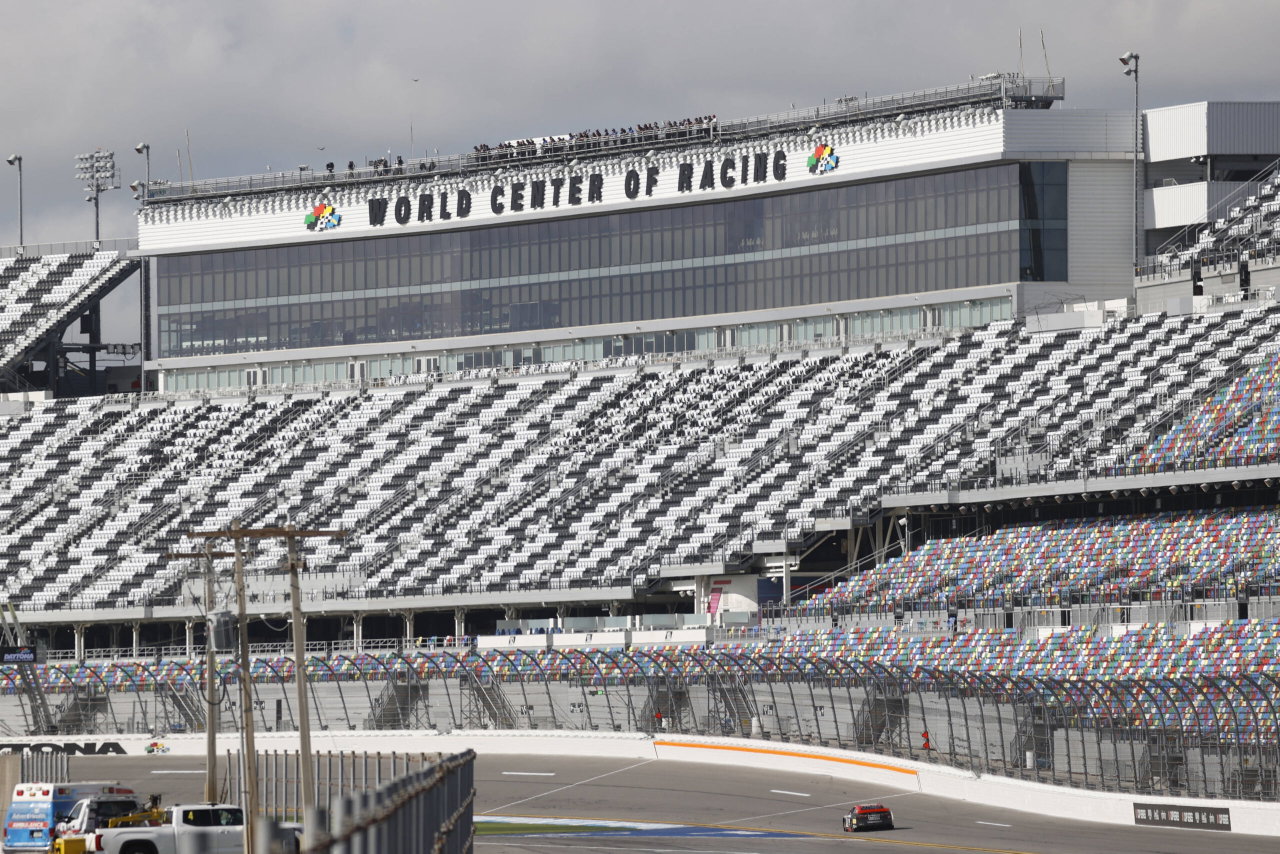
Hocevar’s comments came just days after what was a dull Cup Series race at one of motorsport’s most iconic tracks. The atmosphere, for starters, was, simply put, subdued. Around 70,000 fans made it to IMS, but the vastly empty grandstands of a venue that can host well over 150,000-200,000 spectators did not make for a good showing. The racing, too, was boring.
There were practically zero lead changes up front (except during pit stops), and there was minimal passing for the lead. Hocevar, who started from the pole, lost the lead himself due to pit strategy in Stage 1. And quite frankly, out of those 160 laps around the 2.5-mile oval, the small altercation involving a frustrated Hocevar flipping off eventual race winner Corey Heim on Lap 91 was the most interesting part of the race.
To top it all off, there was the problem Hocevar believes has made NASCAR races less enjoyable for fans over the years. The broadcast focused heavily on technical details and manufacturer-specific discussions, leaning more toward data than turning the race into a spectacle built around the drama, speed, and personalities of the drivers.
Hocevar himself has thrived on being the villain in the garage. Drivers have made it clear that they’re not fans of his aggressiveness on the track. The Heim incident in Indianapolis was another example of why he’s disliked by many. But on the flip side, it’s also earned him comparisons to Dale Earnhardt, “The Intimidator.” And that’s something Hocevar loves, which might just be why he chose to watch the 2000 Talladega race on his day off. It was Earnhardt’s last Cup Series win, and the visuals from that night, 26 years later, showed the 23-year-old Hocevar what a new generation of NASCAR fans is missing out on.
Carson Hocevar on how race wins feel different
A victory in NASCAR felt like a huge deal. That’s what Carson Hocevar felt after watching a replay of a great Talladega race. There were euphoric celebrations trackside, manufactured to celebrate the moment, and not the television ratings. Today, it’s all about interviews and cutting to the studio, before moving on to the next programme.
After his Facebook rant, Hocevar took to Instagram to share a bunch of stories, explaining his reasoning. This time, he spoke about another crown jewel, the Daytona 500.
“7.489 million watched the Daytona 500. 150k-ish went to the Daytona 500. Yet the Victory Lane isn’t prominent and is just an afterthought. You’ve already seen them. You already heard from them. It’s not secondary, or it’s a shot as they cut away to a cornhole championship that is in the next TV time slot,” Hocevar wrote.
“The majority of people watched an interview with nothing around it other than concrete on a track. Not confetti and his team splashing him while fireworks go off, and looking like it’s of importance what they just watched.”
If this continues, the sport’s viewership, which has already been in decline in recent years, will continue to take a hit. There are more and more complaints from fans about the timing of races, how long they are, and how broadcasters care more about sponsors, manufacturers, and telemetry than the racing product.
Hocevar spoke as a fan and warned that this beautiful sport may continue to dwindle in popularity if this goes on. Bring the magic back. Bring the confetti back. Bring the excitement of a Cup Series weekend back. And leave the engineering side of things to the only people who are concerned with it: the engineers and the drivers.