
Six victories and a 229-point regular-season advantage should provide a substantial cushion in any championship fight. But NASCAR’s new Chase format reduced that lead to just 25 points, putting Justin Allgaier’s season-long dominance to an entirely different test. The reset raised a question that would follow all three national series through their championship battles: how much should a driver’s regular-season achievements count once the postseason begins?
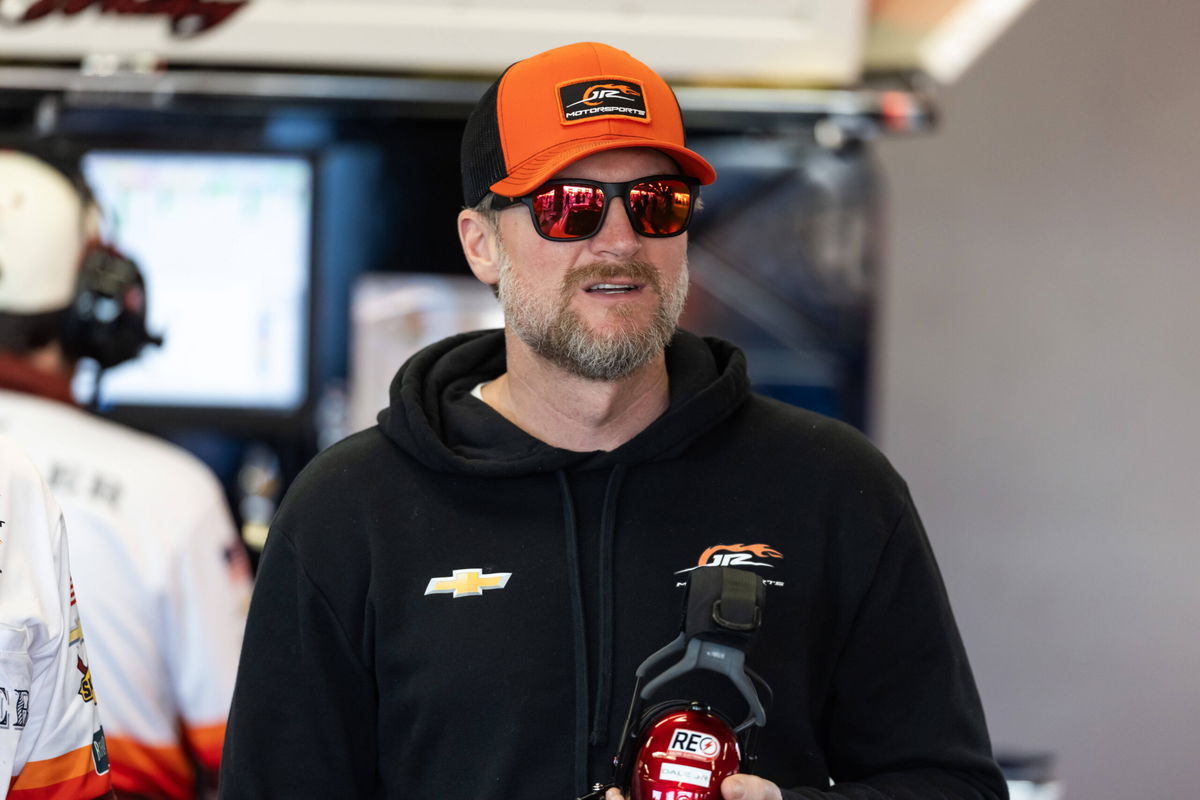
The results at Homestead offered three different answers. While Allgaier recovered to secure the O’Reilly Auto Parts Series crown, the Cup and Craftsman Truck Series produced very different championship outcomes. With criticism and questions surrounding the format, Dale Earnhardt Jr. had a clear assessment of what NASCAR should do next.
“I feel pretty good about how it stacks up. I feel like I said this on my show. I think I need to see about three more years of this thing to kind of truly know what—maybe some flaws in it or some things that can change.” Dale Jr. said at Homestead, according to a video Bob Pockrass posted on X. “But this is what we kind of all begged for.
“And we did a lot of things during the regular season that sort of aided us in these playoffs when we had to overcome some tough moments. But yeah, I feel pretty good about the end result. It feels pretty good in my heart. But then, on the Cup side, there’s a whole other deal playing out over there. So that tells you this could go so many different ways.”
For the JRM owner, the argument is not about making the championship battle predictable. It is about ensuring that the work accumulated over an entire season does not become meaningless when the Chase begins. NASCAR’s new system gives the regular-season champion a 25-point advantage at the reset while retaining stage points and awarding 55 points for a race victory. All 16 Cup qualifiers remain eligible throughout the 10-race championship stretch, with no elimination rounds.
Allgaier’s campaign demonstrated why that regular-season advantage matters. He entered the Chase as the top seed after winning six races and finishing 229 points ahead of the next driver in the regular-season standings. However, the reset reduced that margin to 25 points, leaving considerably less room for mistakes.
Those mistakes arrived quickly. Handling problems at Darlington left Allgaier 17th, damage at Gateway contributed to a 13th-place result, and a crash at Las Vegas ended his race prematurely. Four races into the Chase, he was 30 points behind Creed. The driver who had controlled the regular season was suddenly chasing the championship.
The response was precisely what JR Motorsports needed. Allgaier put together four consecutive top-five finishes at Charlotte, Phoenix, Talladega, and Martinsville before heading to Homestead with a 22-point advantage over Jesse Love.
He finished seventh in the finale, collected 11 stage points, and secured his second O’Reilly championship by 14 points. Teammate Carson Kvapil finished third in the standings, giving JRM the driver’s and owner’s championships.
The JRM owner believes that is the sort of competitive balance NASCAR should be aiming for. The format should leave enough room for a driver who has performed well throughout the year to challenge for the title, without allowing someone buried deep in the standings to suddenly steal the championship.
“I think when we think about the Chase, we certainly don’t want to even the score entirely for everybody, but we want to make it almost impossible for some guys,” Dale Jr. said. “I think that’s what we have. We do want 6th, 5th, 7th, 8th to have a chance, some realistic chance. And well, we don’t want tenth or 16th or whatever, whether it’s in the Cup series or the O’Reilly’s series, who has a little bit of a smaller pool, but we don’t want somebody coming from way behind to turn the sport upside down.”
“But so I think it’s in a good spot. I don’t have a like or a dislike at this point. I think it’s too early to tell, and a couple more years of this and we’ll see if we need to make it, if things are a little heavyweight or in terms of stage points and stuff like that. I was surprised at how important stage points were, and I’m watching even Trucks in O’Reilly and Cup together. Stage points are so important, like they were nice in the past, but not so critical to the endgame. It seems like they’re very, very important now.”
The Cup Series offered a different illustration. Denny Hamlin entered the Chase as the regular-season champion and top seed, but Kyle Larson, who started seventh after going winless through the regular season, gradually took control.
Three victories during the postseason, including a dramatic Talladega triumph, helped Larson build a 67-point advantage over Christopher Bell entering Homestead. He finished fourth in the finale, while Chase Briscoe won the race, but Larson still secured his third Cup championship and second consecutive title.
The Truck Series produced an even more decisive finish. Kaden Honeycutt entered the finale at Homestead, leading Layne Riggs in what was expected to be a direct championship fight. However, early contact with Nick Sanchez damaged Riggs’ No. 34 Ford, and two right-rear tire failures left him struggling to recover.
Honeycutt capitalized, taking the lead after a late restart and winning both the race and championship. Riggs finished 32nd, leaving Honeycutt with an 83-point title margin.
The three outcomes also underline the JRM owner’s concern about stage points. Allgaier collected 11 in the O’Reilly finale, while Larson needed only nine points at Homestead to guarantee the Cup title. Stage performance can protect a championship lead even when a driver does not win the race.
That is why Dale Jr. is reluctant to demand immediate changes. He said Racing Insights conducted thousands of simulations while developing the system and believes considerable work went into ensuring the format would serve the sport properly.
He would rather allow several seasons to expose any genuine weaknesses than react to an unusual championship outcome.
For now, Allgaier’s recovery, Larson’s postseason charge, and Honeycutt’s decisive finish have given NASCAR three different championship stories. Whether that is the balance the sport needs will take longer to establish.
The JRM owner’s position is straightforward: NASCAR finally has the Chase format many wanted, and it deserves more than one season before anyone decides it needs fixing.