Jan 5, 2026 | 11:59 AM EST
Imago
@LegendsNascar/X
Imago
@LegendsNascar/X
Imago
@LegendsNascar/X
Imago
@LegendsNascar/X

As NASCAR prepares to celebrate its Hall of Fame Class of 2026, the spotlight will shine bright in Charlotte this January. Induction weekend runs from Thursday, January 22, through Saturday, January 24, with the official ceremony set for Friday night at 8 pm ET inside the Crown Ballroom at the NASCAR Hall of Fame. This year, that night will feature two very different names.
Watch What’s Trending Now!
Kurt Busch, a modern-era champion familiar to today’s fans, and Harry Gant, a legend whose impact predates the current generation. While Busch’s résumé is widely recognized, Gant’s story often sparks curiosity. So who exactly is Harry Gant? And why does his legacy still matter decades later? Let’s find out.
Who is Harry Gant, and how did his racing career lead to the NASCAR Hall of Fame in 2026
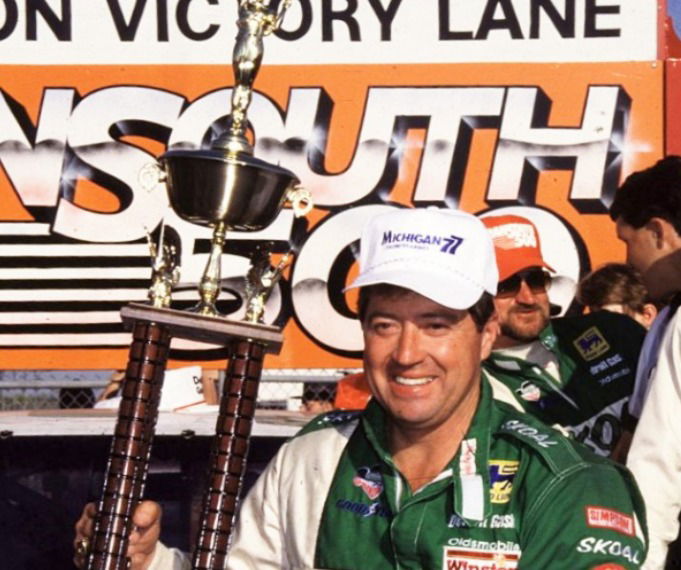
Harry Gant, nicknamed “Handsome Harry” and “Mr. September,” earned his 2026 NASCAR Hall of Fame induction through remarkable longevity and late-career brilliance in the Winston Cup Series. Born January 10, 1940, in Valdese, North Carolina, Gant debuted in 1973 but broke through full-time with Mach 1 Racing in 1982 at age 42, securing his first win at Martinsville. Over 474 Cup starts, he amassed 18 victories, 35 runner-ups, 74 top-3s, 123 top-5s, 208 top-10s, and 17 poles. These are stats that reflect sustained excellence.
His Hall case rests on outlier dominance: second in 1984 points behind Terry Labonte, four straight wins in 1991 (tying modern-era record) at ages 51-52, including the oldest Cup winner ever (52 years, 219 days) at Michigan. Gant swept five Busch Series wins that year, too. This made him the only driver leading both series victories simultaneously.
Retiring in 1994, Gant’s late bloom after his 40s shows his perseverance, earning him votes alongside peers like Jim France. The Class of 2026 honors his 31 combined wins and enduring fan appeal.


Harry Gant’s NASCAR Cup Series career
Gant’s Cup career spanned 1973-1994, peaking 1982-1992 with Leo Jackson Motorsports. His 18 wins included Darlington’s 1989 “Bandit is back” triumph after a three-year drought, Dover 1990, and 1991’s historic streak: Darlington, Richmond, Dover, Martinsville—tying Cale Yarborough’s modern record before brake failure at North Wilkesboro. At 52, he won Michigan’s Champion Spark Plug 400, gambling on fuel for his final victory.
Milestones defined him: 1984 runner-up (259 points shy of Labonte), third in 1981/1985 points, 1991/1992 fourth-place finishes. Superspeedway mastery shone (13 of 18 wins there), plus IROC championship (1985). “Mr. September” stemmed from late-season surges: four September 1991 wins propelled title contention. With 4,927 starts led and an average finish of 15.8, Gant’s consistency rivaled the elites despite a late start. The Skoal Bandit Leo/Olds paint scheme became iconic, blending tobacco sponsorship with Southern flair.
Why Harry Gant’s late-blooming success made him a NASCAR outlier
Harry Gant defies NASCAR norms, achieving his greatest success in his late 40s when his peers retired. Richard Petty quit at 52 winless late-career, Darrell Waltrip faded post-40. Gant’s prime hit 1989-1992 (44-52 years old): 14 Cup wins after age 40, including the oldest pole (Dover 1991, 51) and victory records unbroken 30+ years. Pre-1982, modest results yielded no wins in 107 starts; full-time shift unlocked potential via better equipment and Petree’s tuning.
Physical demands crushed most veterans (neck strain, reflexes slowed). But Gant’s smooth style endured. Four 1991 wins (Darlington-Richmond-Dover-Martinsville) at 51 tied records; 1992 Michigan fuel-mileage masterclass at 52 stunned skeptics. Busch Series dominance (21 wins, three runner-up championships) proved versatility.
Unlike early phenoms like Jeff Gordon, Gant’s arc inverted: short-track roots honed patience for superspeedways. Hall-worthy outlier status celebrates grit over youth, inspiring late-career bids like those from Kevin Harvick. His era bridged the muscle-car 1980s and the aero 1990s, thriving when his age discriminated.
Why Harry Gant’s Hall of Fame legacy endures
Harry Gant’s induction into the NASCAR Hall of Fame isn’t about overwhelming win totals or championships. It’s about redefining what was possible. In a sport obsessed with youth, Gant proved experience, patience, and persistence could still conquer the Cup Series’ toughest stages. Winning races deep into his 50s, earning the nickname “Mr. September,” and thriving when most drivers faded made him a true anomaly. The Class of 2026 doesn’t just honor a veteran. It serves as a reminder that greatness in NASCAR doesn’t always follow the expected timeline.
Related Newsletters