Imago
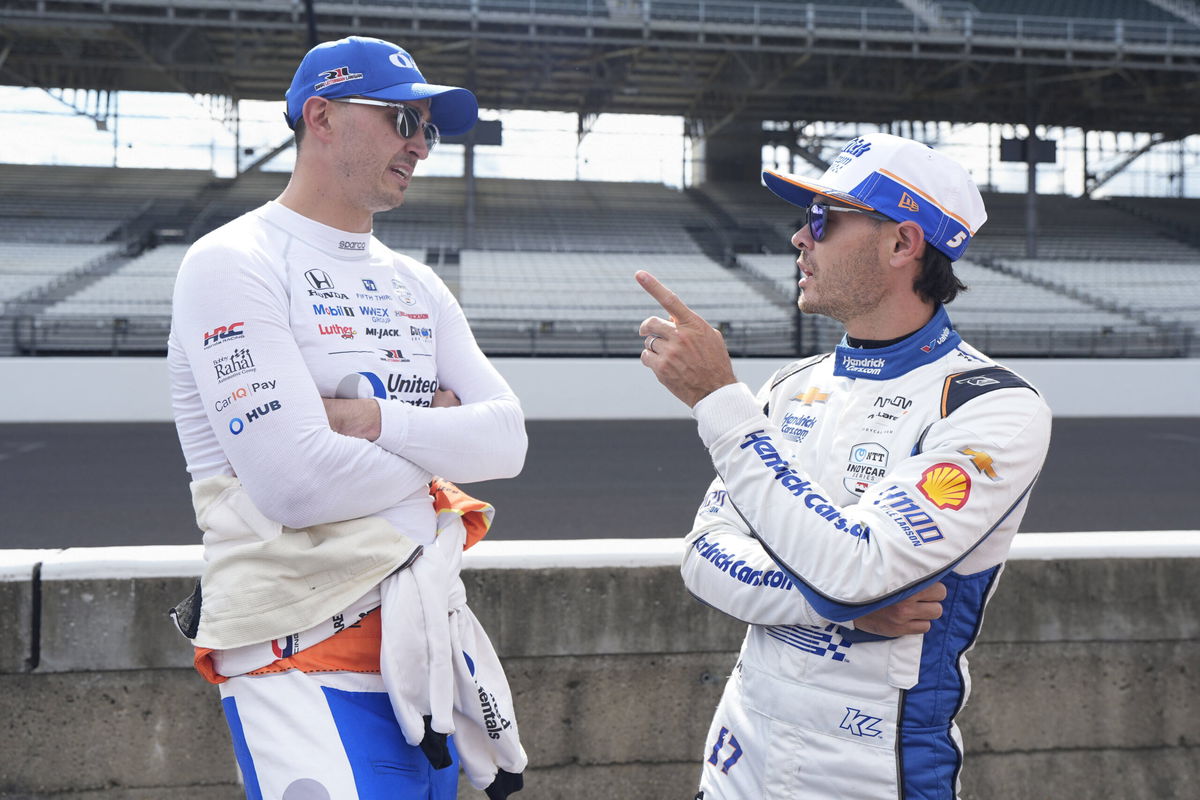
May 17, 2025, Indianapolis, Indiana, USA: NASCAR, Motorsport, USA champion Kyle Lawson talks with IndyCar, Indy Car, IRL, USA driver Graham Rahal in pit lane during qualifying for the 109th running of the Indianapolis 500, at the Indianapolis Motor Speedway in Indianapolis, Indiana. Indianapolis USA – ZUMAd212 20250517_zsp_d212_013 Copyright: xRichardxDolex
Imago
May 17, 2025, Indianapolis, Indiana, USA: NASCAR, Motorsport, USA champion Kyle Lawson talks with IndyCar, Indy Car, IRL, USA driver Graham Rahal in pit lane during qualifying for the 109th running of the Indianapolis 500, at the Indianapolis Motor Speedway in Indianapolis, Indiana. Indianapolis USA – ZUMAd212 20250517_zsp_d212_013 Copyright: xRichardxDolex
Essentials Inside The Story
- Why it would be smart for racing series like NASCAR, IndyCar, NHRA and others to have crossover events on the same weekend, at the same (or close-by) location?
- IndyCar driver Graham Rahal believes everyone wins: the racing series, the teams and most importantly, the fans.
- Crossover weekends may help fans be able to attend more races in a year from a cost and logistic perspective.
I’ve long been an admirer of Graham Rahal and his father, Indianapolis 500 winner Bobby Rahal. I consider them two of the most intelligent individuals in IndyCar. Not only have they had success in racing, but they’re also very astute and successful businessmen off the track.
Watch What’s Trending Now!
So when Graham said last weekend in St. Petersburg, Florida, that he’d like to see racing series like NASCAR, IndyCar, NHRA, and other genres of four- and two-wheeled racing do more sharing of events on the same weekend and in the same (or nearby) tracks, it definitely caught my attention.
We saw it happen last weekend when IndyCar shared its season-opening weekend with the NASCAR Craftsman Truck Series on the temporary street course in St. Pete. And we’ll see it on an even larger scale this weekend at Phoenix Raceway when IndyCar serves as the undercard Saturday to Sunday’s NASCAR Cup main event.
Admittedly, it’s not a new concept, but crossover weekends remain a relatively rare event, although we have seen other occasional crossover events over the years at places like Indianapolis Motor Speedway and others.
Which is why what the younger Rahal pitched is something that hopefully will not only continue but become a regular routine among different series. I’m not saying to have crossover events every single weekend, but if we have, say, three or four events per year, it will be a win-win for not only the respective series that host the races, but even more importantly, for race fans in general.
For if there’s one thing I’ve learned in over 40 years of covering auto racing, be it NASCAR fans, IndyCar fans, NHRA fans, motorcycle racing and even sprint car and dirt track fans, may consider those respective series their favorites, it’s also extremely likely that they invariably follow some of the other forms of racing as well. In other words, most NASCAR fans likely enjoy IndyCar or NHRA as well, or IndyCar fans like NASCAR or Formula One, etc.
It would be quaint to say crossover weekends mean getting two significantly different race events for the price of one, although the reality is that if you are attending both Phoenix races this weekend, you’ll wind up paying for two different tickets.
Why crossover events would be beneficial to each series, teams and fans
Still, in my opinion, crossover events – and more of them – are the way for racing to go in the future. With so much competition for a fan’s entertainment dollar, it makes sense that sanctioning bodies work together in ways that will benefit both series. If a true race fan wants to see two different series on the same two-day weekend, it will be an experience that will leave them talking for weeks, if not months, to come, how they enjoyed both races and the excitement and action both races brought forth.
There are more than enough race tracks and overall racing facilities that can accommodate different series on the same weekend, even if it means perhaps having a NASCAR and IndyCar race at one track or NASCAR and/or IndyCar and drag racing across the street, like places such as Bristol Motor Speedway and Bristol Dragway (aka “Thunder Valley”) or Chicagoland Speedway and Route 66 Raceway.
Heck, you can split up sites in Indianapolis and have NASCAR and/or IndyCar racing on the most famous racetrack in the world, Indianapolis Motor Speedway, and then go about 10 miles west to watch NHRA or sprint cars race at Lucas Oil Indianapolis Raceway Park.
Admittedly, the logistics of running two major events in the same place or nearby means greater expenditures in promoting and actually operating those events than if only one race were held, as we are used to in most cases. But duplication of logistics at the same facility is inherently cheaper than having individual races at different times of the year at the same place.
Crossover weekends would mean more bang for the fan’s buck
I’ve talked with countless fans over the years and one of the top things they talk about is how they would love to attend more races each year – including races of different series – but it’s obviously a costly proposition, particularly for those who have to travel long distances or pay $300 or more per night for hotel rooms (which often come with three- or four-night minimums).
But, when you consider places that have several different types of racing facilities in close proximity to each other such as Bristol, Chicagoland, Charlotte, Las Vegas and others, think about the hundreds – if not thousands – of dollars race fans would save if they were able to see two different series race in as many days.
Hypothetically, if those race fans wanted to see, say, a NASCAR and IndyCar event on the same weekend at the same place, rather than at different times or months for separate events, think of all the money they’d save on hotels, airfare, rental cars, etc.
With that being the case, I can almost guarantee that every series that would be part of a crossover event on the same weekend and in the same general location would see a marked increase in attendance as well as popularity. And there’s another bonus: what if, say, a diehard NASCAR fan has never seen an IndyCar or NHRA drag race in person, then they finally get that chance and wind up enjoying themselves? Suddenly, IndyCar or NHRA has acquired another brand new fan.
Or if it’s for a family vacation, think of how much more economical it would be for Mom and Dad to afford – perhaps even cheaper than taking the whole brood to places like Disney World or Universal Studios. According to a July 2025 story in Budget Guide, a family of four can expect to spend $6,000 or more for a week for tickets, accommodations, and meals.
Whereas taking the fam to two races on a weekend would likely run $1,500 to maybe $3,000 for three or four days.
I’m fully behind Rahal’s idea, and I think other fans would be, too. Imagine the opportunity to see Alex Palou or Scott Dixon or even Rahal himself win on one day and then come back to watch Joey Logano or Kyle Larson or Ryan Blaney take the checkered flag as well the next day.
Related Newsletters