
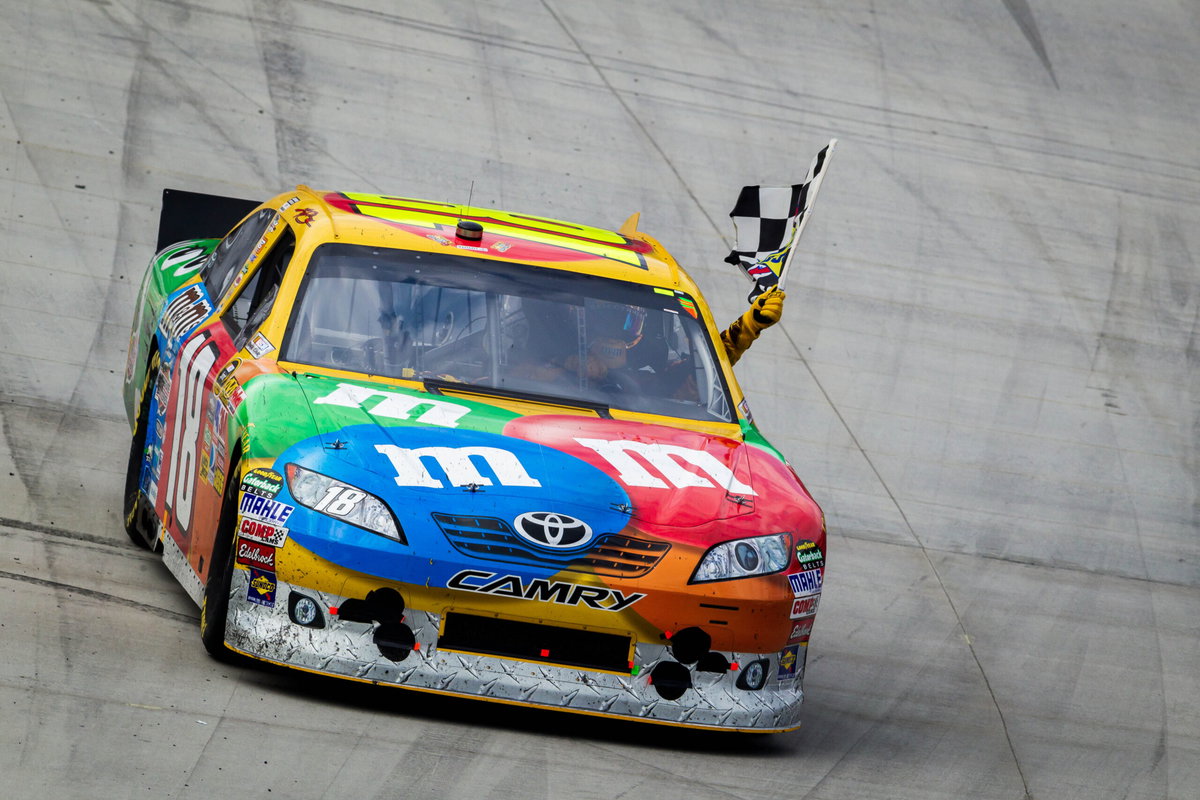
In 2019, Toyota dominated rather than merely competing. Kyle Busch, Martin Truex Jr., and Denny Hamlin were among the Camry drivers who won 19 races, led almost 4,000 laps, and advanced to the Championship 4. It ended with Busch sealing the deal, capping one of the most commanding manufacturer seasons in modern NASCAR history.
Watch What’s Trending Now!
In 2026, the signs are beginning to look eerily similar. The debate isn’t just about race victories, even though Toyota is once again leading the way early. It’s also about whether this could be the year that they finally take back the title after a long, annoying 7-year hiatus.
A flashback to 2019
Toyota’s 2026 numbers are beginning to resemble their 2019 dominance. Toyota drivers have now won seven races in just nine races, with Tyler Reddick leading the way in a historic manner. Five victories in nine starts isn’t just impressive. In fact, it’s the territory last touched by Dale Earnhardt in 1987, almost forty years ago!
Additionally, the burden is not being carried by a single driver. Ty Gibbs has become a real threat with his own breakout victory, and Denny Hamlin has added another victory while continuing to be a weekly contender. This is a full-scale manufacturer surge rather than a one-car operation.
The consistency is what gives it even more credibility. Every week, Toyotas not only win but also dominate races, particularly on intermediate courses where execution, tire wear, and balance are crucial. It feels more like a system running at maximum efficiency than a lucky hot streak.
Chevrolet and Ford are playing catch-up
Toyota’s competitors are finding it difficult to replicate its success. Usually a formidable force, Chevrolet has had an unexpectedly quiet start this year. There hasn’t been a steady front-running presence that can match Toyota’s depth, save for sporadic glimpses.
Ford is in a different but no less worrisome situation. Ryan Blaney, who has been the best performer, has been at the center of much of the competition. Beyond him, results have been uneven, with other Ford drivers like Joey Logano or Brad Keselowski struggling to string together consistent top-tier finishes.
That’s where the real gap lies. Toyota has numbers in addition to speed. There is constant pressure on competitors because multiple drivers can win any given weekend. In contrast, Ford and Chevrolet seem more reactive than proactive, chasing momentum and setups rather than setting the pace.
If this disparity persists, it may have an impact on the season’s competitive landscape overall, in addition to race victories.
Why Toyota still has the edge
The new championship format changes everything. With no points carrying over, the slate is wiped clean once the top 16 drivers enter the final 10-race stretch. On paper, that should neutralize Toyota’s early advantage. Toyota’s biggest strength right now is depth. Having multiple drivers like Reddick, Gibbs, Hamlin, and Christopher Bell consistently running up front increases the odds that at least one of them will peak when it matters most.
Momentum also plays a big role. Teams that spend months executing at a high level build confidence, refine setups, and sharpen race-day decisions. By the time the reset happens, Toyota won’t just have fast cars, but battle-tested ones. This is clearly in the 23XI camp this season. Even without bonus points, being consistently competitive across the board gives Toyota a statistical edge.
When the championship comes down to a 10-race sprint, having more bullets in the chamber can make all the difference.
None of this may matter yet
Here’s the catch! This format is also designed to erase exactly this kind of early advantage. Once the Chase begins, everyone starts from scratch. Five wins in March don’t mean much in October if the performance dips at the wrong time. All a driver needs to do is make the top 16 (with or without wins in the regular season).
From there, it becomes a completely new season. A team that has been quiet all year can suddenly catch fire and steal the championship. That unpredictability is what makes it dangerous to read too much into the current standings. NASCAR’s schedule still has a long way to go, with superspeedways, road courses, and unpredictable variables that can quickly flip the script.
In other words, Toyota’s dominance might look overwhelming now, but it’s not protected. One bad stretch in the final 10 races could undo everything.
The championship will decide
So where does that leave things? On one side, Toyota looks like the class of the field. They’re undoubtedly fast, deep, and relentlessly consistent. On the other hand, the Chase championship format ensures that none of them guarantees a title.
This season may ultimately come down to a simple battle: depth versus timing. Toyota has the numbers and the momentum, but all it takes is one rival peaking at the right moment to flip the narrative entirely.
For now, it feels like 2019 all over again. But in this version of NASCAR, dominance is only half the story. The real test is whether Toyota can still be on top when everything resets and when it matters most.