
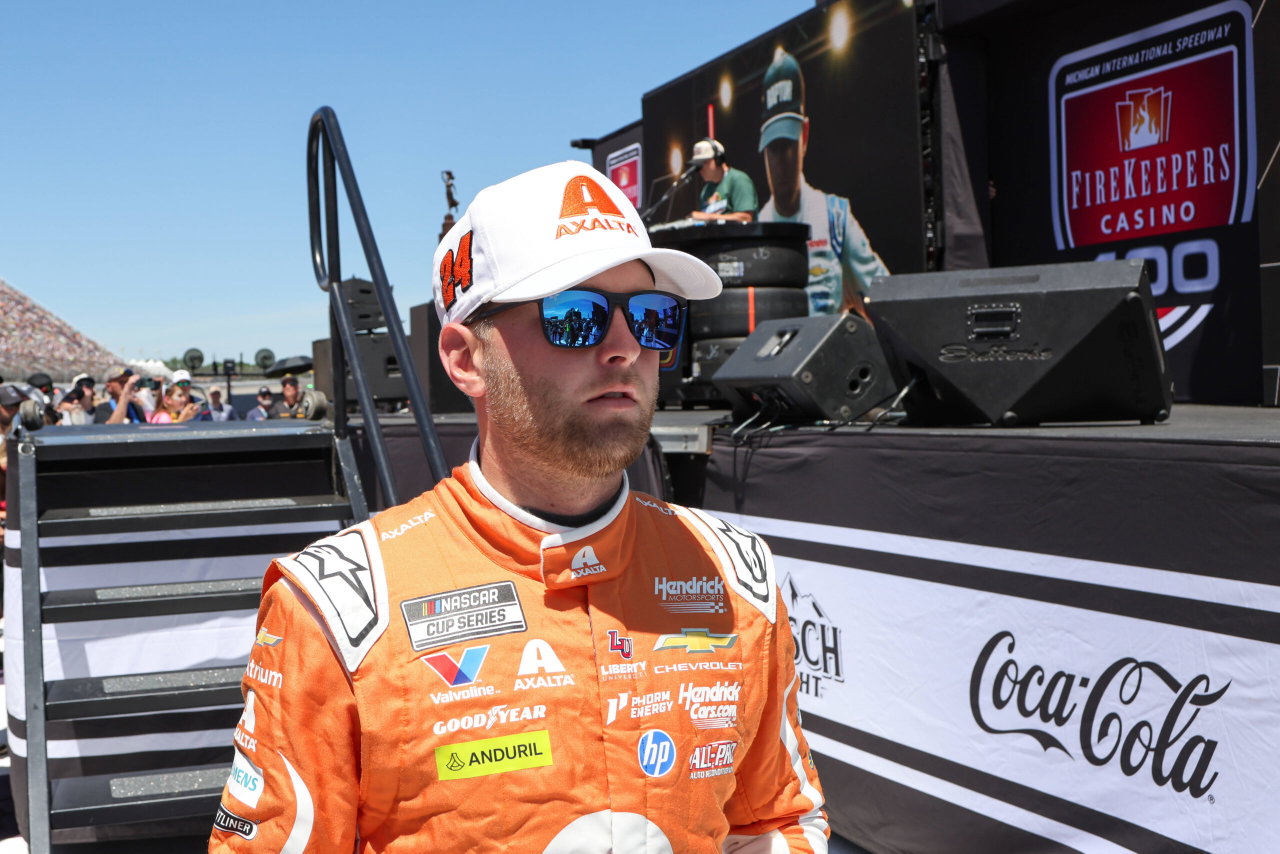
In a championship race, a small favor between teammates can have consequences that extend well beyond the immediate battle on track. At Martinsville, Hendrick Motorsports found itself dealing with precisely that dilemma. One Chevrolet was in contention for a stage victory, while another was struggling to stay on the lead lap. With the closing laps approaching, the decision facing the No. 24 pit box was about more than simply helping another car.
Watch What’s Trending Now!
Rudy Fugle understood the importance of keeping Kyle Larson in contention, but William Byron’s own race could not be compromised. The No. 24 had the pace to take control of the opening stage, and Ty Gibbs was closing in. That left Fugle balancing the interests of two championship teammates against the immediate threat to his driver’s opportunity.
“It’s really tough; it’s stressful,” Fugle said on SiriusXM NASCAR Radio. “So we are always going to look out for us first, but a close 1B is a championship teammate. So we knew we were tracking with ten to go, and we thought it was going to be okay. And then he just started getting roughed up by some guys, and it was a hornet’s nest right in front of us. It’s been happening since the beginning of time that people will cut a break, especially a teammate trying to let them be on the lead lap towards the end of a stage, or when a caution’s coming. It’s been happening forever.
“So we were heads up on that. But the 54 was on a good run, and he was kind of on our bumper, and so we weren’t going to lose the stage to him. So it was like, ‘Hey, if we can try to keep the five on lead lap, we will.’ But we got to win the stage, and unfortunately he went a lap down. But thankfully, the way the next caution played out and whatnot, Cliff played it really well, and they were able to get back on the lead lap pretty quick.”
The circumstances behind Fugle’s comments began with a strategic gamble. During Stage 1 of the Xfinity 500, several teams elected to pit for fresh tires, while Denny Hamlin, Larson, and Ryan Preece stayed out. They were hoping to preserve track position and make the most of the remaining laps before the stage break. But the advantage of running at the front began to disappear as cars on fresher tires worked their way through traffic.
Byron was among those who had pitted. With better tires underneath him, the No. 24 steadily worked forward, eventually passing Preece with six laps remaining to take the lead. Gibbs was also making progress in the No. 54 Toyota, while Larson’s older tires left him vulnerable. The No. 5 was caught in traffic, and Byron eventually lapped his Hendrick teammate before the stage ended.
This was the difficult part for Fugle. Keeping Larson on the lead lap would have given the No. 5 a better opportunity to recover if a caution arrived. Under NASCAR’s free-pass rule, the first eligible car one lap down when a caution comes out gets its lap back. A teammate offering room at the right moment can help another driver stay in contention for that opportunity.
But there was no guarantee that such a concession would produce the desired result. Other lapped cars could occupy the free-pass position, and the timing of a caution would ultimately determine who benefited. Meanwhile, Gibbs was closing on Byron. Giving Larson additional room could not come at the expense of allowing the No. 54 to take the stage victory.
That distinction is central to Fugle’s explanation. Hendrick operates as one organization, but its individual teams still have their own championship campaigns, race strategies, and responsibilities. The No. 24 crew had earned the opportunity to win the stage. Sacrificing those 10 points simply to improve Larson’s position would have been difficult to justify, particularly with Gibbs applying pressure.
Byron ultimately won the opening stage, with Gibbs second and Preece third. Larson started the next segment a lap down, having missed out on the free-pass position. The No. 24 had protected its own opportunity, even though the No. 5’s situation had become more complicated.
The No. 5 eventually got another opportunity through a completely different sequence of events. During Stage 2, a multi-car incident involving Joey Logano, Christopher Bell, and Hamlin brought out a caution. Larson was then in position to receive the free pass, allowing him to return to the lead lap. As Fugle acknowledged, Daniels and the No. 5 team handled the opportunity well, getting their driver back into contention without relying on a concession from Byron.
That recovery was important because Larson still had a championship to protect. The opening-stage setback had threatened to give his closest rivals an opportunity to make significant progress in the standings. Instead, he was able to limit the damage and continue working his way through the field.
There was another reason Byron’s performance proved valuable to his teammate. The No. 24 did not simply win the opening stage and settle into a conservative afternoon. Byron swept both stages, led 362 of the 500 laps, and controlled the race on his way to his first victory of the season. Chase Elliott completed a Hendrick Motorsports one-two, while Gibbs finished third.
For Larson, the bigger picture was what happened to the championship contenders behind them. Hamlin, who entered Martinsville second in the standings, could manage only sixth. Bell finished 10th, despite collecting valuable points in the opening stage. Neither managed to take full advantage of Larson’s early struggles.
The final standings reflected that missed opportunity. Larson left Martinsville with a 67-point advantage over Bell and a 70-point cushion over Hamlin heading into the championship race at Homestead-Miami Speedway. He had finished ninth despite spending part of the afternoon a lap down.
Byron’s victory did not directly put those points into Larson’s championship account. Nor did Fugle’s decision to prioritize the No. 24 create the opportunity for the No. 5 to recover. But the overall result was significant: Byron collected a dominant victory, Hendrick secured a one-two finish, and Larson retained a commanding advantage when his rivals needed a much bigger points swing.
That is the balancing act Fugle was describing. NASCAR teammates can offer one another breathing room, particularly when a caution or stage break is approaching. But those gestures have to fit the circumstances. A crew chief cannot sacrifice his own driver’s opportunity simply because another car carries the same team name.
At Martinsville, Byron had a stage to win and a competitor closing on his bumper. Fugle made his priorities clear. Larson eventually found another way back onto the lead lap, and the No. 24 went on to dominate the afternoon. In the end, both Hendrick teams got something out of the arrangement, even if the help did not come in the way the No. 5 initially needed.