
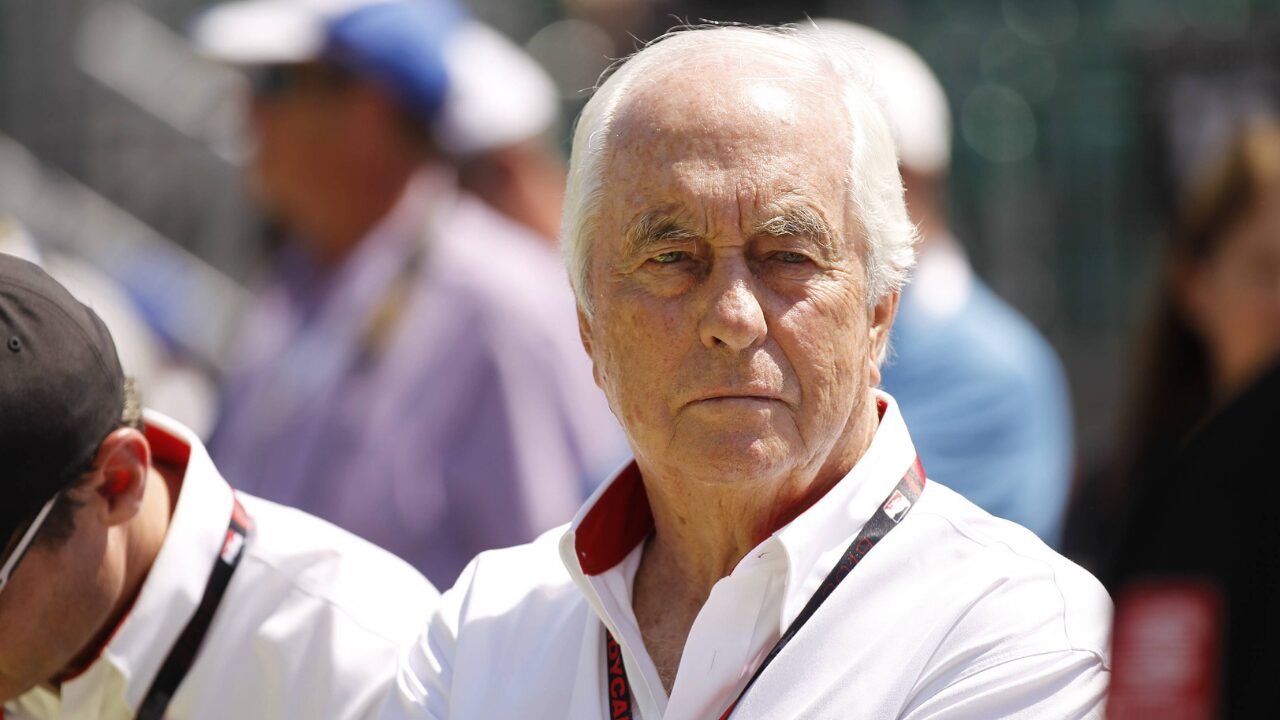
Washington gave IndyCar a stage unlike any other, the White House wanted an encore, and more than 215,000 spectators turned up to witness the spectacle. Yet, despite the event’s success and calls for its return, the Freedom 250 Grand Prix will not be part of the 2027 calendar. For Roger Penske and his executive Bud Denker, the argument is not simply about whether the race can be staged again. It is about whether anything could recreate what made this particular weekend historic.
Watch What’s Trending Now!
Bud Denker, president of Penske Corporation and chairman of the Freedom 250 Grand Prix, has now made the organization’s position clear.
Responding to the decision not to return to Washington, Roger Penske’s executive said, “The reasoning for not returning is simple; you can only make history once and what we created this past August for our country’s 250th Anniversary, on DC city streets, could only be done once. Let history remember what we created,” as reported by Adam Stern via an X post.
The inaugural Freedom 250 Grand Prix took place on August 23, 2026, bringing the NTT IndyCar Series to the streets of the nation’s capital for the first time. The 250-mile race formed part of the United States’ 250th-anniversary celebrations, with a temporary 1.7-mile, seven-turn circuit taking drivers past some of Washington’s most recognisable landmarks.
Kyle Kirkwood made the most of the occasion. Starting second, the Andretti Global driver led 128 of the 147 laps to claim victory, finishing 3.09 seconds ahead of Arrow McLaren’s Christian Lundgaard. Andretti teammate Will Power completed the podium, while pole-sitter Alex Palou finished 20th.
Should NASCAR Stop Sharing SMT Data to Protect Elite Drivers’ Secrets?
The racing was only one part of the attraction. More than 215,000 spectators attended across the weekend, while the race averaged 3.282 million television viewers on FOX, making it IndyCar’s most-watched non-Indy 500 race since 1995.
President Donald Trump waved the green flag, while Washington Mayor Muriel Bowser served as grand marshal. Trump praised the turnout, saying the event had become “bigger and better” than expected. Bowser had also publicly expressed interest in making the race a recurring fixture, suggesting the first edition could be followed by more races.
The enthusiasm was not limited to political leaders. Scott Dixon suggested the event could rival the Indianapolis 500 in scale, while Will Power described the experience of meeting the president before racing through Washington as surreal. The appetite for another edition appeared to be there. The question was whether the economics and the occasion could justify one.
Denker had already raised those questions in his post-race press conference. Despite the support from the White House and local agencies, he stressed that returning was ultimately a decision for Penske.
“I think it’s a financial decision ’cause it’s very expensive to do this,” he said, pointing to the substantial costs involved in staging an event in Washington.
The infrastructure alone represented a significant investment. Roger Penske’s executive revealed that the concrete barriers cost more than $3.5 million. Some of that investment could be reused, and he acknowledged that having already paid for the infrastructure would make additional editions easier to justify. However, the bigger concern was whether the revenue could be repeated.
“There’s only one 250-year event. What is 251 going to look like? What do you call it?” Denker asked.
He explained that several sponsors had allocated marketing budgets specifically for the anniversary celebrations. Whether those companies would commit comparable funding without the same national milestone was uncertain.
“How much of this revenue would we reclaim again next year when it’s not such a novelty, an event?” he added.
That distinction helps explain why the latest announcement is not entirely at odds with Denker’s earlier comments. Immediately after the race, he said that he and Roger Penske would discuss the possibility of returning, while acknowledging the financial challenge. The organizers had not ruled out another edition, but neither had they promised one. The latest statement brings that uncertainty to a close, with the anniversary itself becoming the defining reason for leaving the event as a one-time celebration.
There was, however, no shortage of interest in keeping the concept alive. House Speaker Mike Johnson publicly backed an annual return, while Freedom 250 CEO Keith Krach said after the race that he would like to see it happen again. Denker also said that city agencies, including the police, fire department and Secret Service, had been supportive. He was confident there would be no administrative obstacle to staging another race.
Drivers were similarly enthusiastic, although Kirkwood offered a rather different perspective. The winner joked that he would prefer not to return if it meant remaining the only driver to win an IndyCar race in Washington. More seriously, he questioned whether a regular race could ever match the significance of the anniversary edition.
The decision also creates an interesting contrast with NASCAR’s own America 250 celebrations. Its race at Naval Base Coronado in San Diego, held in June 2026, initially appeared to be a one-off. NASCAR, however, confirmed that the Cup and O’Reilly Auto Parts Series would return in 2027, while exploring a longer-term rotation of events across other military installations.
Ford also took the opportunity to bring motorsport into a national tribute through its Proud to Honor Veterans Day Classic at Daytona on November 11. The one-night event featured six teams representing the six branches of the U.S. military, with a race and concert supporting veterans and their families. It was a different format and purpose, but another example of racing being used to create something beyond a conventional championship weekend.
For Roger Penske and Co., Washington may not be the end of the road for ambitious urban events. In the same post-race press conference, Denker said he would like to explore another street course in the East Coast market if the series did not return to D.C. He also floated the possibility of further opportunities to work alongside NASCAR.
The Freedom 250 will therefore remain a singular chapter in IndyCar’s history: a race that brought the series to the National Mall, attracted a huge audience, and gave Kirkwood a unique place in the record books. The White House may have wanted another, and the drivers may have welcomed one, but Roger Penske’s position is clear. Some events are remembered not because they become annual traditions, but because they happen only once.