
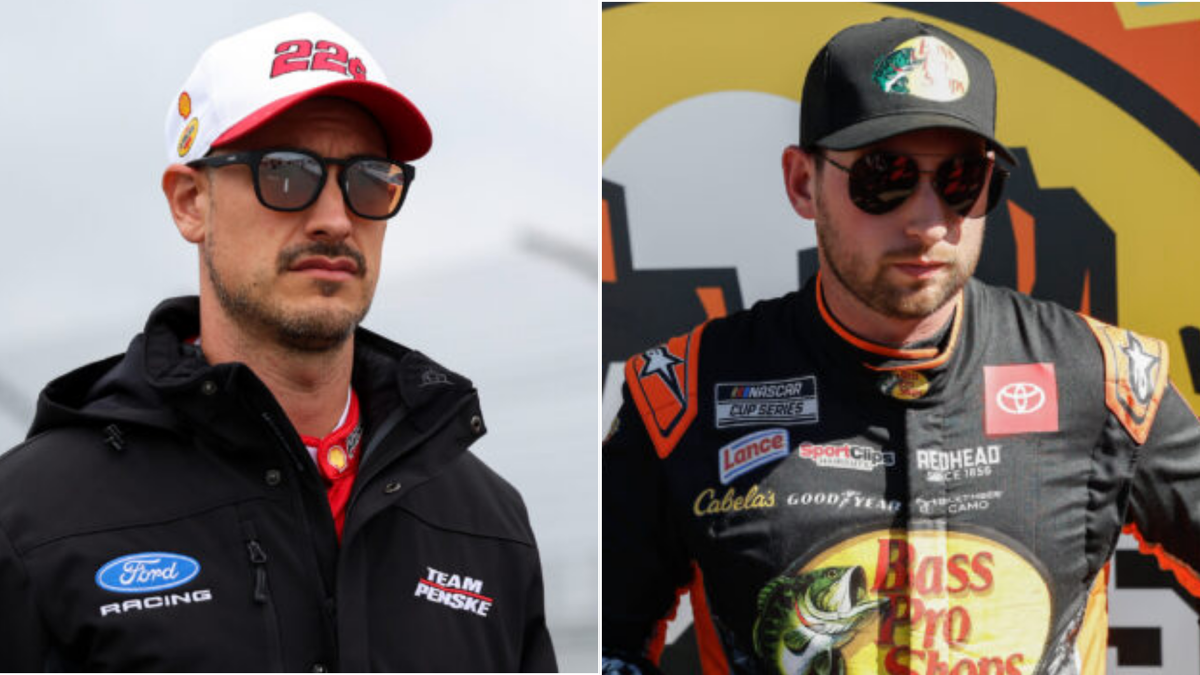
Kyle Busch’s death has shaken NASCAR in a way the sport honestly hasn’t seen before. Drivers are used to talking about wrecks. They know the risk every time they strap into a car at 190 mph. What they are struggling with right now is a lot different. Busch did not die in a crash. He died after trying to fight through an illness the same way drivers have been conditioned to do for decades.
Watch What’s Trending Now!
That’s why Joey Logano and Chase Briscoe sounded different this week. There was a certain vulnerability to what they said. Just two drivers looking at what happened and realizing it could have been anybody in that garage. Briscoe was probably the most open about it. “Certainly from the health standpoint, I think it’s a huge wake-up call,” he admitted, as per NASCAR journalist Matt Weaver on X.
Then he explained something people outside racing probably do not realize. NASCAR drivers almost never slow down long enough to deal with their health properly.
“My wife talks all the time about how you guys just don’t get a break,” Briscoe said. “And I think we’re all pretty hard-headed in the sense that we don’t want to go to the doctor.”
That sentence basically sums up garage culture. Drivers pride themselves on showing up no matter what. Fever, flu, broken bones, dehydration, if they can physically climb into the seat, they usually race. Briscoe admitted he fell into the same trap himself. “Literally this December, I had pneumonia,” he said. “I didn’t go to the doctor for a long time.”
Normally, that story probably gets laughed off as another racer being stubborn. But not anymore. Because what happened to Busch suddenly made those decisions feel dangerous instead of admirable.
Before his death on May 21, Busch reportedly thought he was dealing with a stubborn sinus cold and cough. He kept working through it, but things escalated fast. The illness changed to double pneumonia before progressing into sepsis.
Reports say Busch collapsed during a simulator session in Concord, North Carolina, after suffering shortness of breath, a high fever, and coughing up blood. He died the next day at just 41 years old.
“It’s crazy just how fast that stuff can get you,” Briscoe said. “If you’re not feeling good, you probably need to go get checked out.”

The loss of Kyle Busch was a wake up call to Chase Briscoe, he says, to not leave things unsaid but also see a doctor He says everyone in the industry is hard-headed about seeing doctors because everyone is so busy. Said he had pneumonia in December and pushed back getting it Show more
Inside NASCAR, that warning lands differently because this sport has a long history of drivers pushing way beyond what their bodies should handle.
Ricky Rudd once raced at Watkins Glen with walking pneumonia and a 102-degree fever. He somehow won the race, then collapsed over the steering wheel afterward while paramedics rushed oxygen to him.
Davey Allison nearly passed out during a race at Pocono after severe bronchitis left him struggling to breathe inside the car. His crew had to yank him out mid-race and stick a relief driver in. Even Brad Keselowski ignored a badly infected leg injury long enough that doctors feared it could turn septic.
For years, NASCAR celebrated those stories as proof drivers were tougher than everybody else. Now? They sound more like warnings nobody took seriously enough. Joey Logano’s comments showed just how deeply Busch’s death hit drivers from his generation.
“Kyle Busch was only five years older than me,” Logano said. “I’ve been thinking about health stuff I’ve been putting off.” That thought clearly stayed with him because he kept going.
“We shouldn’t put anything off, mend relationships while we can, hug loved ones while we can, because you never know.”
"Kyle Busch was only five years older than me...I've been thinking about health stuff I've been putting off. I'm not speculating on anything but we've all thought about it. We shouldn't put anything off, mend relationships while we can, hug loved ones while we can, because you Show more

That wasn’t just a generic tribute line. Logano and Busch shared a tough history that was almost two decades long. They were rivals, teammates, enemies at times, then eventually racers who understood each other better than most people in the garage.
People still remember their 2017 fight in Las Vegas when Busch stormed down pit road and swung at Joey Logano after a late-race incident. But over time, the relationship changed. They became two veterans who grew up in the same NASCAR era, raised families around the same racetracks, and carried the same mentality about racing through pain.
That mentality is exactly why Busch’s death feels so personal to Logano. And honestly, Logano knows better than most how quickly things can go sideways.
Joey Logano Has Already Stared Down Moments That Changed Him
The first big one came at Talladega in 2021. At nearly 200 mph, Logano’s car got turned in the draft and lifted completely into the air. The car flipped violently before crashing onto its roof and sliding upside down across the track.
What scared drivers afterward was the damage inside the cockpit. Parts of the roof and roll cage collapsed inward. Bent steel ended up inches from Logano’s helmet while he sat trapped upside down. When he climbed out, he was visibly angry and shaken.
“I just got a roll bar in my head,” Joey Logano said afterward. “I’m one hit away from not being here.” That wreck forced NASCAR into immediate safety changes because the margin between surviving and disaster looked terrifyingly small. Then there was Darlington in 2025.
Logano spent the entire week sick with norovirus. He was vomiting constantly, couldn’t keep fluids down, and was severely dehydrated before the race even started. Most athletes would have sat out immediately. Logano raced anyway. That’s NASCAR culture in one sentence.
Inside the car, cockpit temperatures climbed past 130 degrees. Drivers can lose pounds of water through sweat alone during races. Logano’s condition kept worsening, but he refused to step out.
He finished the race. Then his body shut down almost instantly afterward. Medical crews rushed him to the infield care center for emergency IV fluids because his dehydration had become dangerous.
That experience is probably why Busch’s death hit him so hard. Logano sees the same stubbornness in himself. Ignore the illness. Race through the weekend. Deal with the consequences later. The terrifying part for drivers right now is realizing Busch never got that later.
And that may be the biggest shift happening inside NASCAR this week. Drivers have always accepted the danger they can see. Violent crashes. Fires. Hard hits.
What they are struggling with now is the realization that something as ordinary as a cough can quietly become just as deadly if nobody takes it seriously soon enough.