
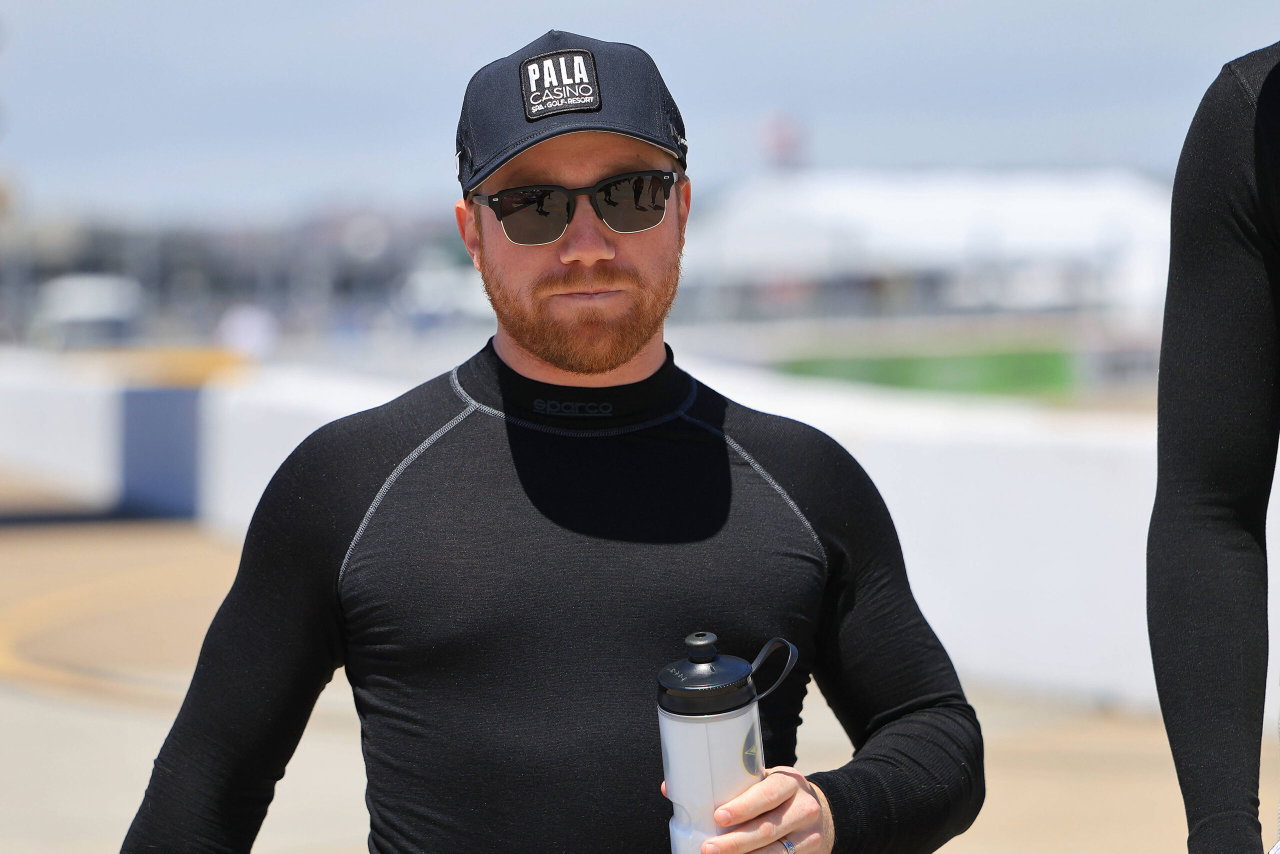
Tyler Reddick’s 2026 season has swung between dominance and frustration. He won five of the first nine races, including the Daytona 500, before going 23 races without returning to Victory Lane. Finding answers became a weekly challenge, and the work continued long after each race weekend. Reddick recently offered a glimpse into the demands drivers face away from the track and the difficulty of balancing those responsibilities with family life.
Watch What’s Trending Now!
Speaking with Dale Jr., Reddick discussed how much preparation modern drivers handle outside race weekends. He stopped short of declaring this era harder than previous generations but explained how the workload can become especially difficult when results are not going their way. His comments offered a look at the hours that go into competing at NASCAR’s highest level, even when the driver is no longer at the racetrack.
“The amount of preparation that takes place and the amount of work that takes place on the driver side away from the track, I feel like, has gone up a lot,” Reddick said on the Dale Jr. Download podcast. “And so yeah, when you go on a dry spell or the year’s not going right, it can’t weigh on you a lot because you’re home, but you’re not home.
“I was actually before I got on here talking to my wife; she’s like, ‘Where you at? What do you got going on this week? When do you think you’re gonna be done today, tomorrow?’ And I’m like five o’clock, six o’clock. And she doesn’t love that, which I understand because we’re gone every weekend. So it’s a tricky balance. You laugh sometimes like we want to race. That’s awesome. It’s like. Oh crap, I’m gonna be really, really busy this week now, but that’s okay. These are good problems.”
The reference to a dry spell carries particular weight after Reddick’s difficult stretch this season. His early victories established him as a contender, but the 23-race drought meant repeatedly searching for answers while the next event approached. A driver cannot simply put a disappointing result behind him when preparation for the next race is already underway. Every new weekend brings another opportunity to get it right but also another deadline to meet.
Phoenix finally broke that cycle. On October 18, Reddick won the Freeway Insurance 500 for his sixth victory of the season and first at the one-mile track. It was his first win since Kansas in April. With 30 laps remaining, Kyle Larson suffered a tire failure and hit the wall, bringing out a caution. Reddick’s team opted for two tires, putting the No. 45 Toyota in position to challenge for the lead.
Restarting fifth, Reddick drove through a four-wide opening to move into second before passing Chase Briscoe for the lead a lap later. He held off Ryan Blaney to win by 0.801 seconds. After months of trying to turn speed into results, Reddick and his team had found their way back to Victory Lane. The finish also showed how quickly fortunes can change in NASCAR, where a late caution and the right call on pit road can decide a race.
That breakthrough helps explain why Reddick considers the extra work a good problem to have. The hours spent preparing and searching for improvements can be draining, but they also create opportunities to win. He was not suggesting he wanted less of the sport. Instead, he acknowledged the trade-off that comes with pursuing success at NASCAR’s highest level. The work can be demanding, but it is tied to the opportunity he has spent his career chasing.
The Phoenix result also gave Reddick a boost heading into the closing stretch of the Chase. He left Arizona seventh in the standings, 56 points behind Larson, whose DNF tightened the battle at the front. Christopher Bell sat just five points behind Larson, while Chase Briscoe, Denny Hamlin, Ryan Blaney, and Joey Logano remained in contention. Reddick still had ground to make up, but the win kept him in the conversation as the title fight narrowed.
Talladega is next, where the unpredictability of superspeedway racing can quickly reshape the standings. With three races remaining after Phoenix, Reddick needs to build on his victory and close the gap. There is little time to enjoy the breakthrough before attention turns to the next challenge, and the preparation that Reddick described will continue as the season moves toward its conclusion.
His comments were not a claim that today’s drivers have it harder than those who came before them. They were an honest account of a profession whose demands extend beyond the race itself. Phoenix showed what that commitment can deliver. The challenge for Reddick is to carry that momentum into the final races while finding room for the life waiting beyond the garage.