Imago
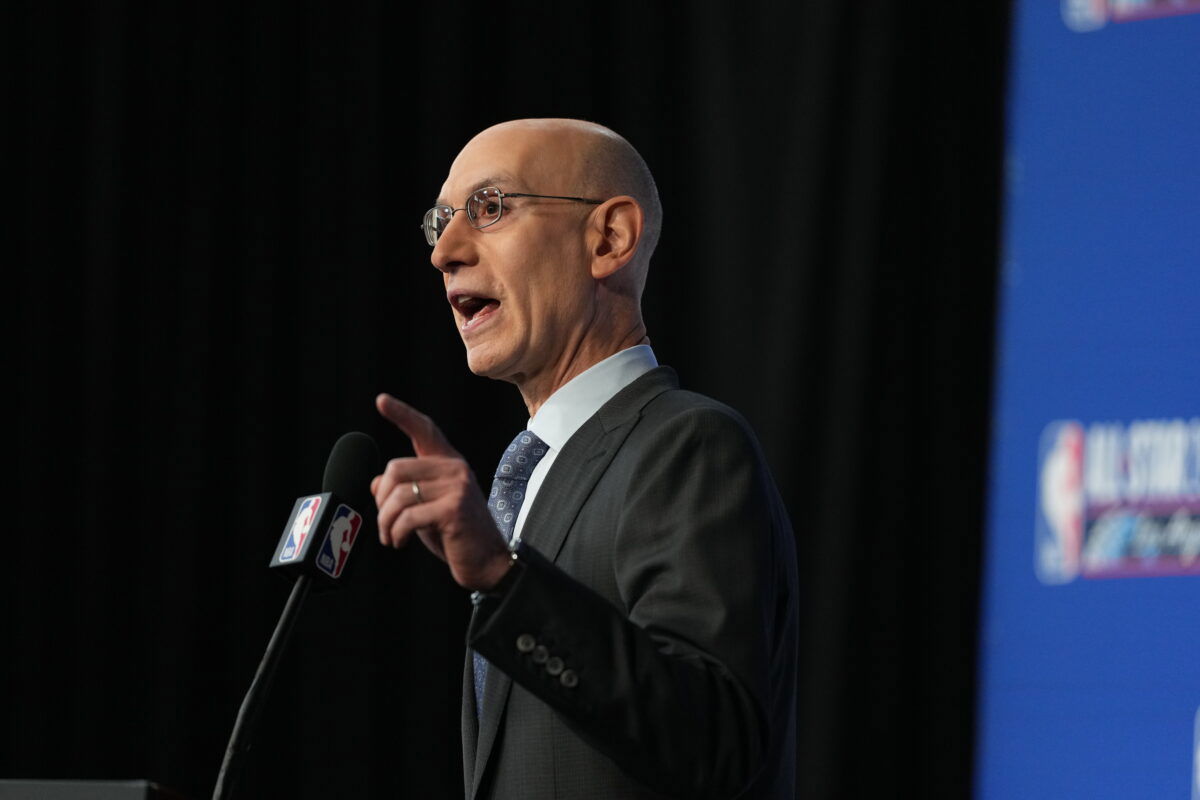
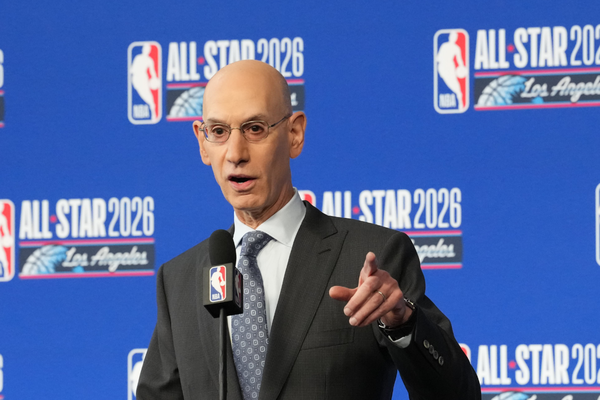
Feb 14, 2026; Los Angeles, CA, USA; NBA commissioner Adam Silver speaks to the media during a press conference before 2026 NBA All Star Saturday Night at Intuit Dome. Mandatory Credit: Kirby Lee-Imagn Images
Imago
Feb 14, 2026; Los Angeles, CA, USA; NBA commissioner Adam Silver speaks to the media during a press conference before 2026 NBA All Star Saturday Night at Intuit Dome. Mandatory Credit: Kirby Lee-Imagn Images
The NBA has tolerated rebuilding for decades. It has never tolerated what the league now claims to be seeing. Across the standings, losses are no longer just losses. They are strategies—fourth-quarter benchings. Healthy stars are sitting. Newly acquired All-Stars mysteriously unavailable for months. The league office finally decided the line between development and deception had disappeared.
Watch What’s Trending Now!
On February 19, during a video call with all 30 general managers organized by executive vice president Evan Wasch, commissioner Adam Silver broke character and delivered a message executives say sounded more like David Stern than the typically diplomatic Silver.
“You could assume for next season your only incentive will be to win games.” That was not a suggestion. It was a warning. And it effectively ended the NBA’s soft-enforcement era on tanking.
Top Stories





Imago
IMAGN
The call began normally. Wasch presented possible anti-tanking reforms for the 2026-27 season and asked for feedback. Then, Brooklyn Nets GM Sean Marks raised a concern. If rules changed immediately, teams already in multi-year rebuilds would be punished mid-cycle.
Silver stepped in. Executives on the call say the tone shifted instantly. One described it as the first time Silver openly confronted the league’s competitive culture rather than managing it.
Tension grew when Silver addressed coaches. He argued that coaches on tanking teams are not truly aligned with front offices because their jobs depend on winning. A GM insisted his staff supported the plan.
Silver pushed back. Coaches say they are on board because they have to. That exchange revealed the league’s fundamental belief. Tanking is not organizational alignment. It is organizational pressure. The commissioner also acknowledged why GMs do it. Long-term rebuilds protect job security. Losing becomes proof of patience rather than failure.
Silver’s response was blunt. The league must change incentives and mindsets so executives do not need to lose to survive professionally.
Why the NBA suddenly cares more than ever
Tanking has existed for decades. What changed is money. The NBA is now deeply tied to legalized sports betting partnerships. When teams pull starters late in close games or declare healthy players inactive, betting markets become unpredictable.
To fans, that feels rigged. To betting partners, that feels dangerous. One owner called intentional losing worse than a prop bet scandal because it is effectively the strategic throwing of games. So, tanking stopped being a basketball debate. It became a business risk. That is why Silver’s office has escalated enforcement aggressively this month.
The Utah Jazz received a $500,000 fine after playing Lauri Markkanen and Jaren Jackson Jr. for about three quarters before benching them in competitive games against Orlando and Miami.
The participation rule technically requires stars to play. Utah complied with the letter of the law while violating its spirit. The league responded accordingly. Indiana was fined $100,000 after an independent physician ruled Pascal Siakam healthy enough to play, despite being listed out.
Executives say harsher punishment is possible next. That includes loss of draft picks if starters are intentionally pulled before the fourth quarter. In short, fines were phase one. Competitive penalties may be phase two.
The real driver is the 2026 draft
This season’s behavior is not random. It is coordinated around a single belief within front offices. The 2026 draft is loaded. Teams see multiple franchise-altering prospects, only to face a weaker pipeline afterward. That creates a one-year gold rush where losing has unprecedented upside.
Insiders estimate nearly a third of the league is currently deprioritizing wins. For some teams, a $500,000 fine is trivial compared to the long-term valuation boost of a top-three pick. So the NBA concluded that enforcement alone would fail. Structural reform became necessary.
The competition committee is reviewing sweeping changes designed to eliminate targeted losing entirely:
- Limit pick protections to top-4 or late-round ranges
- Freeze lottery odds at the trade deadline
- Ban consecutive top-four picks
- Prevent conference finalists from drafting top-four the next year
- Use two-year records to determine odds
- Include play-in teams in the lottery
- Flatten odds across non-playoff teams
Each rule attacks a specific tanking tactic. Teams cannot aim for exact standings ranges. Late-season losing stops mattering. Multi-year bottoming out stops working. The league is no longer trying to punish tanking. It is trying to make tanking mathematically useless.
Some organizations pushed the boundaries so far that they alarmed the commissioner. Washington acquired two stars but delayed their debuts while fielding lineups built to stay bottom-eight and retain a protected pick. Sacramento used mid-season surgeries to end competitive seasons effectively.
Utah manipulated playing time instead of availability. Indiana used injury designations. Different methods. Same objective. Lose now, win the lottery. Silver’s message indicated the NBA sees these not as clever roster strategies but as threats to credibility.
Owners are divided
Not everyone agrees with Silver. Some believe tanking gives small-market teams hope. Without draft access to stars, competitive balance collapses. Others argue that fans understand rebuilding and accept short-term pain. Opponents say intentionally losing damages the league nightly and drives audiences away. This is no longer a rules debate. It is a philosophical divide about what sports competition should be.
The Board of Governors will debate reforms this spring. Implementation could begin next season. But executives already believe the decision has been made. The February call was not a brainstorming session. It was a declaration.
Imago
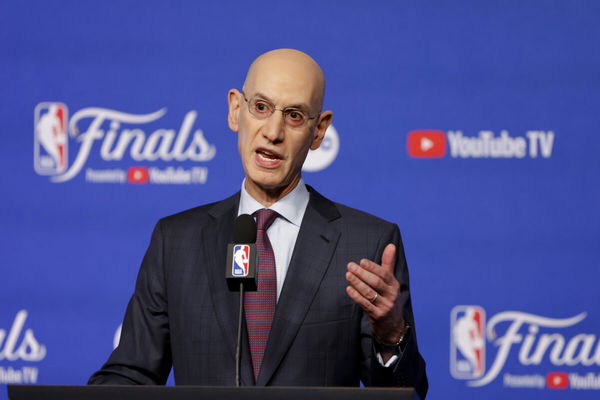
Jun 5, 2025; Oklahoma City, Oklahoma, USA; NBA commissioner Adam Silver speaks to the media before game one between the Oklahoma City Thunder and the Indiana Pacers in the 2025 NBA Finals at Paycom Center. Mandatory Credit: Alonzo Adams-Imagn Images
“This is not who we are going to be as a league,” Silver told them. The NBA is shifting from regulating behavior to redesigning incentives. If the reforms work, tanking disappears not because teams behave better but because losing stops helping.
If they fail, the league risks something far worse than bad basketball. It risks leading fans to believe outcomes are engineered. For a sports league intertwined with gambling and global media rights, that is the one loss no commissioner can afford.
And that is why Adam Silver finally stopped negotiating with tanking and started threatening it.
Written by

Edited by

Tanay Sahai