
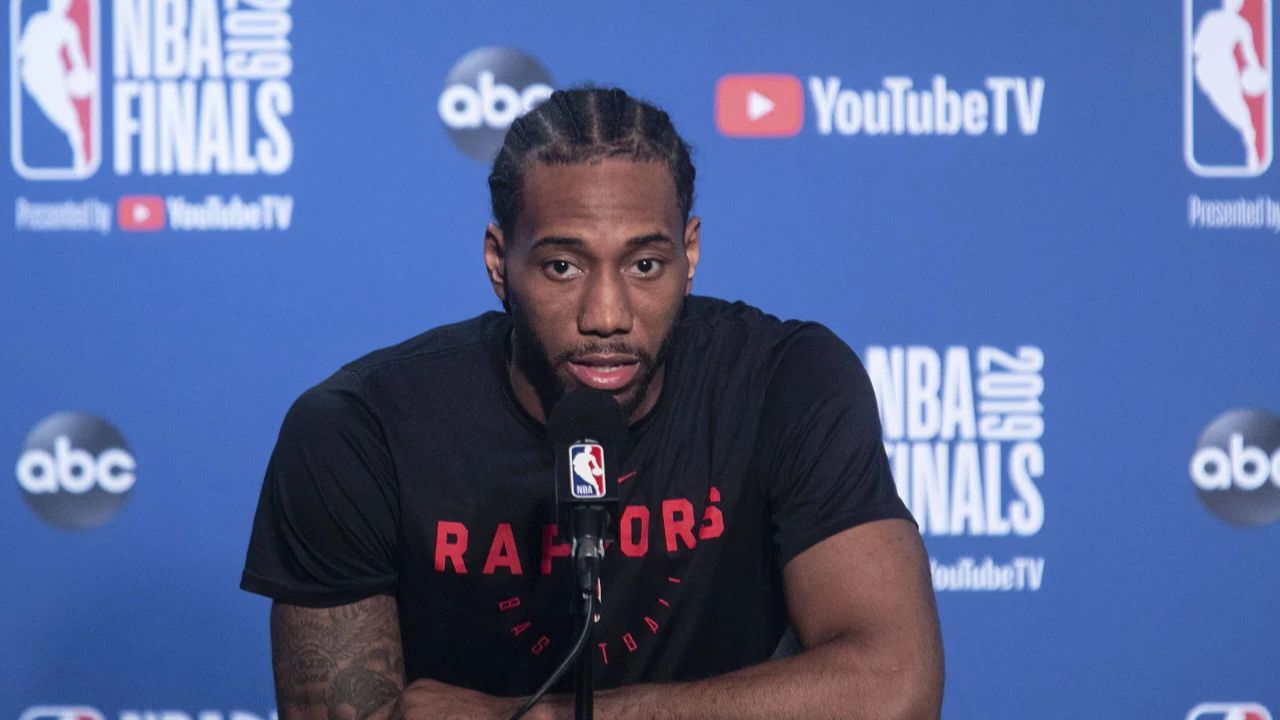
Kawhi Leonard walked away from the NBA’s investigation into the LA Clippers’ salary cap circumvention with a $700,000 fine, while the Clippers absorbed a $30 million penalty and lost five future first-round picks. That gap has raised an obvious question: why did Leonard receive such comparatively light punishment? It went to the extent that some began to throw shade at the two-time NBA champion.
Watch What’s Trending Now!
Fox Sports Radio analyst Adam Auslund believes the answer has less to do with Leonard himself, and more about the NBA’s relationship with its players’ union. Before stating his perspective, he urged every analyst, including Stephen A. Smith, to understand the situation, saying, “Can you not read the room?”
“Adam Silver was afraid of going up against the Players Association. This is my read on it,” Auslund said, speaking on the show FnA. “And so he gave a lighter punishment to Kawhi Leonard, and I mean light, light, with all the money he was making outside of what he did on the court.”
The NBA found Leonard and the Clippers guilty of signing under-the-table endorsement deals that earned them money, but circumvented the salary cap. Investigators found that the Clippers facilitated arrangements with four companies, namely Aspiration, Boingo Wireless, Daktronics, and Lockton Insurance. Leonard reportedly signed a $28 million deal with Aspiration, but when it came to facing the music, he was let go with a slap on the wrist in the form of a $700,000 fine.
Meanwhile, team owner Steve Ballmer was suspended for a year without pay, in addition to the Clippers being fined $30 million and forfeiting five first-round picks.
Adam Auslund argued that the NBA commissioner deliberately kept Leonard’s punishment light to avoid triggering a much larger labor dispute.
“If he had really suspended him or voided his contract or fined him $30 million, like Steve Ballmer and the Clippers are getting fined, then the Players Association would have been up in arms, and the big thing about that is they are the ones who can implement an arbitration lawsuit,” Auslund added.
Auslund believes the NBPA would have responded forcefully and taken the matter into arbitration. There have been instances in the past when the NBPA has been successful in reducing punishments imposed by the league on players.
For reference, Latrell Sprewell’s case from 1997-98 is a good example. After he attacked Warriors coach P.J. Carlesimo at practice, then-commissioner David Stern imposed a one-year suspension, and the Warriors terminated his contract. The NBPA took objection to the penalties and filed for arbitration. Eventually, his three-year contract was reinstated, and the suspension was nearly halved.
Auslund, without using this example, believes that the Clippers may have expected something similar from the NBPA.
“I think what the Clippers were feeling was, at worst, even if they come after us, even if they hit us hard, we’re going to have the Players Association on our side because they’re going to get Kawhi too, right?” Auslund added.
That difference in penalties for Leonard and the Clippers has become central to the debate surrounding the NBA’s ruling. The franchise absorbed enormous organizational damage while the player at the center of the controversy faced a penalty that was dramatically smaller.
Auslund argues that the lighter punishment also changed the team’s ability to fight back.
“The fact that they don’t have the ability to go to arbitration now within the CBA bylaws, that undercuts a lot of their paths to coming out of this victorious,” he said.
That leaves civil court as the primary option, according to his reading of the situation. Auslund believes the legal path is considerably less favorable. He cited analysts who view the Clippers’ chances of winning such a case as much lower than they would have been through arbitration.
While Ballmer and the Clippers are neck-deep in trouble, Kawhi Leonard will walk away from the situation relatively unscathed and reportedly already has his next move to the Toronto Raptors ready for the upcoming NBA season.