Imago
Image Credits: Imagn
Imago
Image Credits: Imagn
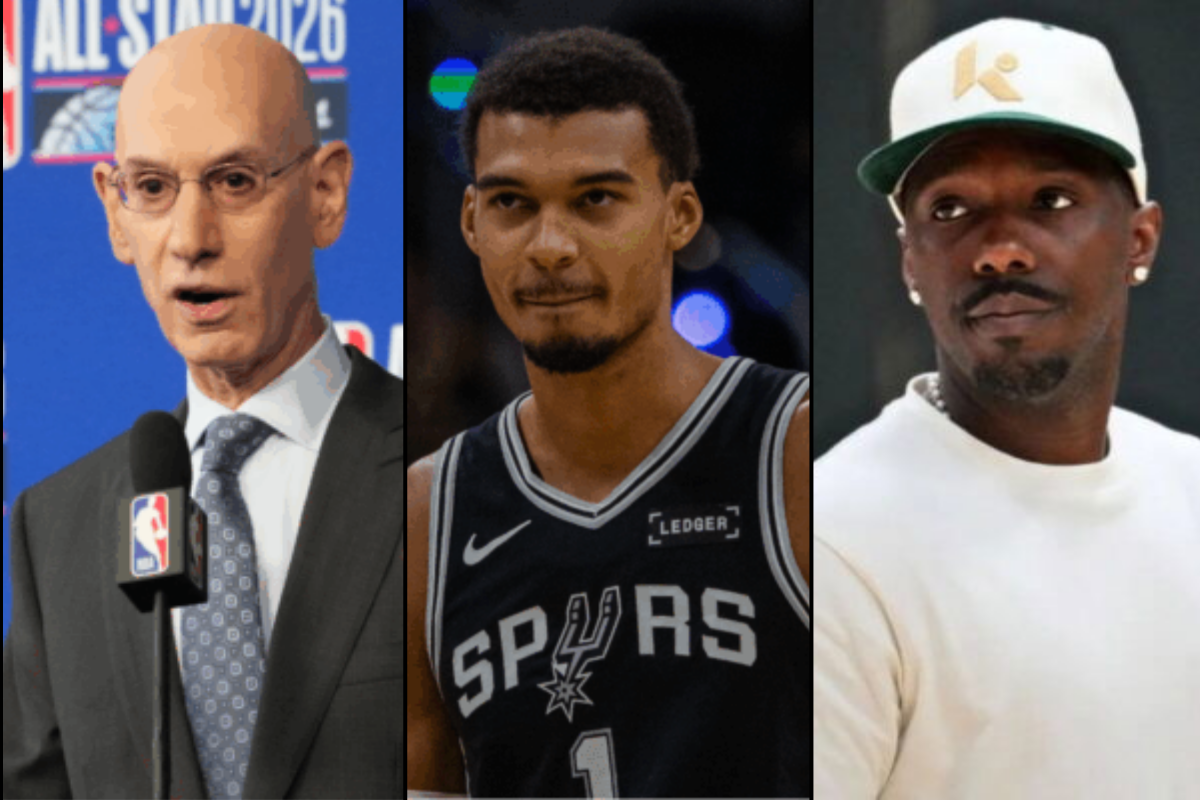
The NBA All-Star Game has long faced a familiar problem: no defense, no intensity, and barely any reason for fans to care. In fact, some of that lethargy carried itself into Day 1 of this year’s edition. The Intuit Dome, at about 40% capacity (or less), was not a good look. But NBA Commissioner Adam Silver, as he has assured us since last year, took matters into his own hands, and recently Klutch Sports CEO Rich Paul explained why that was badly needed.
Watch What’s Trending Now!
“We got it right,” Paul told Max Kellerman on Game Over. “They were not competing quarters one through four. They were not… The biggest thing was the format because if you don’t have to play a four-quarter game and you create a format where every game is the fourth quarter, you get a competitive start and finish.”
Paul credited Silver and the management’s reforms for turning the league’s annual tradition into something that actually mattered, where every possession counted and every player had a reason to compete. And as someone with ties to multiple NBA All-Stars through his representation agency, Paul’s words matter.
Part of the context comes from Kevin Durant. A few days before the game itself, Durant pushed back against criticism he received for not competing, framing the competitiveness issues as prevalent among all participants and previous generations, too, not something that used to be different.
“I don’t think it’s that big of a deal, to be honest, the All-Star Game, the All-Star Weekend, it’s here to celebrate the game of basketball,” Durant said with a clear aim in mind.
Paul also noted that addressing these concerns wasn’t just leaning into nostalgia, but creating a structure that motivates intensity across the board. For him, one player embodied that more than anyone.
Imago
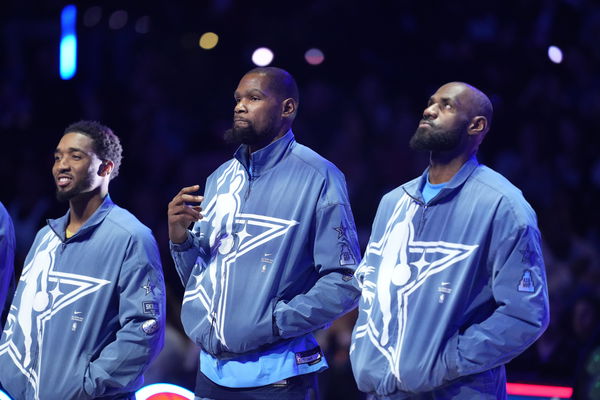
Feb 15, 2026; Inglewood, California, USA; Team USA Stripes forward Kevin Durant (7) of the Houston Rockets reacts during the national anthem during the 75th NBA All Star Game at Intuit Dome. Mandatory Credit: Kirby Lee-Imagn Images
“[Victor Wembanyama] came out and said, ‘I want to really approach this with a seriousness,'” Paul said. “You saw other players follow with that same sentiment… It was just a holistic approach by all, and because there was so much chatter about it, we got to hear someone’s intentions very early, which in this case, it was Wemby’s.”
Apart from Wembanyama, though, Paul also pointed out several other factors.
Format, incentives, and international pride fueled the turnaround, according to Rich Paul
2026’s All-Star Game featured a round-robin, mini-tournament format, transforming the event from full games into 12-minute bursts. According to Rich Paul, it created a sense of urgency, with teams having to play hard from the get-go because there was no scope for a comeback later in the game.
“The other thing was the scheduling,” Paul explained. “I thought that the All-Star Committee did a great job of scheduling the World Team vs. the Stars, I believe, which was the younger, which was the younger team, and that jumped it off right away. It was good.”
The results reflected that they got it right. According to reports, an average of 8.8 million viewers across NBC, Peacock, and Telemundo tuned in, the highest audience for an All-Star game in 15 years and a whopping 87% increase from last year’s edition, which averaged 4.7 million viewers.
Viewing charts peaked at 9.8 million during the Stripes vs. World section of the game, which was unsurprisingly led by Anthony Edwards and Victor Wembanyama. The NBA achieved this with Luka Doncic and Nikola Jokic playing only a combined ten minutes across Sunday.
Before the final day festivities, Stephen Curry told the NBC panel that Silver and Andre Iguodala (NBPA executive director) made a point to hold a locker room meeting as a vibe check and to make sure everybody’s head was in the right place.
Hopefully, the league can keep up this pace next season, but this year’s All-Star game was a good return to form.
Written by

Edited by

Daniel D'Cruz