
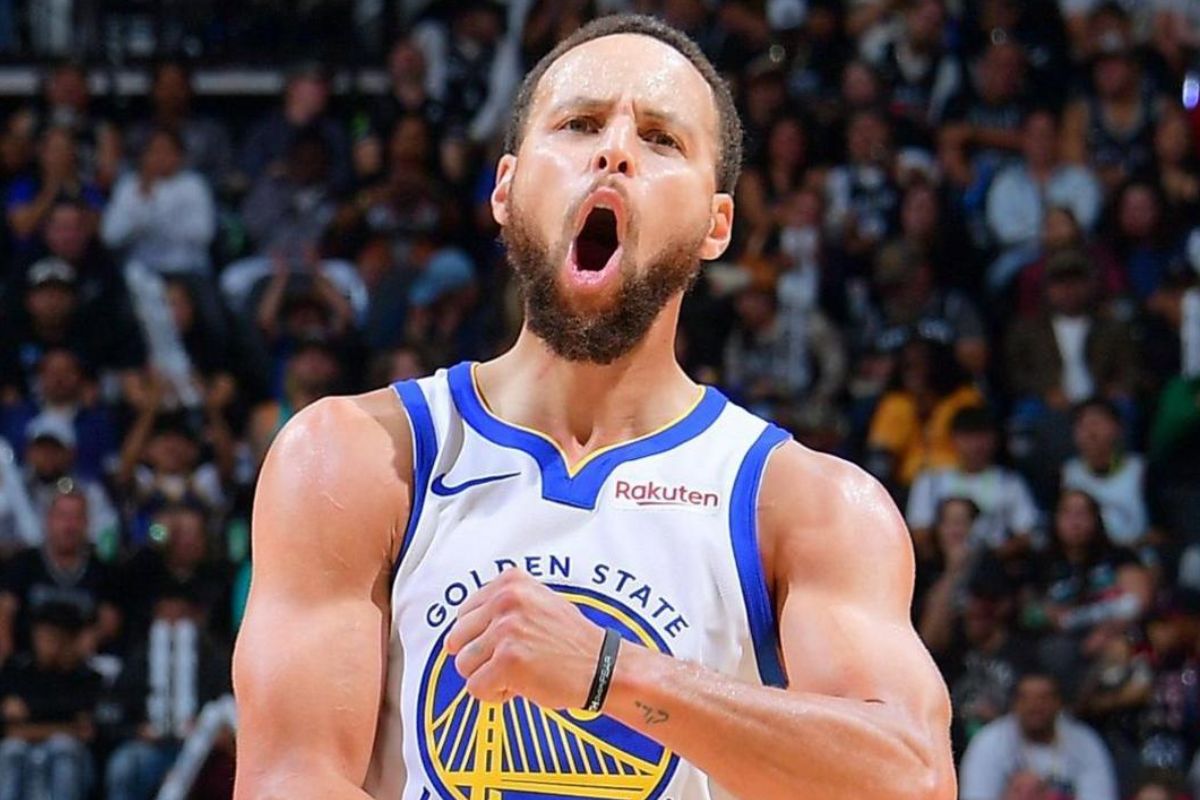
Stephen Curry has a resume that should force its way into any serious GOAT debate, yet somehow he still hovers just outside its inner circle. The greatest shooter the game has ever seen. The face of a dynasty. Four championships, two MVPs, including the league’s only unanimous nod, and a Finals MVP to seal it. By any traditional measure, the case is airtight. And still, when the conversation turns to basketball immortality, his name isn’t always the first one brought up.
Watch What’s Trending Now!
Why is he not in the GOAT conversations of just players, regardless of position? “Yeah, I agree. I definitely agree with that, I think he’s the GOAT,” ex-NBA star Michael Carter-Williams said on Run It Back. “I think he’s changed the game. The reason why, I don’t know, to be honest. I put him up with my all-time greats, I think maybe because he’s had so much help. I don’t know, though, I don’t agree with it, but if I was to answer, like KD went there. But all the greats have had great teams.”
Now, if you truly want to talk about superteams, the NBA has a history of assembling such teams for greatness. Let’s go back in time.
- 1960s Boston Celtics — led by Bill Russell and Bob Cousy.
- 1971-72 Los Angeles Lakers — Wilt Chamberlain, Jerry West, and Elgin Baylor
- 1980s Los Angeles Lakers — Magic Johnson, Kareem Abdul-Jabbar, and James Worthy
- 1990s Chicago Bulls — Michael Jordan, Scottie Pippen, and Dennis Rodman
- 1998-99 San Antonio Spurs — Tim Duncan and David Robinson
- 2007-08 Boston Celtics — Kevin Garnett, Paul Pierce, and Ray Allen
- 2011-12 and 2012-13 Miami Heat — LeBron James, Dwyane Wade, and Chris Bosh
Surely, this “Avengers Assemble” type of situation didn’t spawn out of sheer whim. But well curated through contracts, extensions, and championship hopes. And each of these superteams delivered. Some won a single championship together, while others took multiple. For example, Michael Jordan’s Chicago Bulls in the 90s ruled; they won all 6 titles in their 6 Finals appearances—double three-peat, just for the record.

Michael Carter-Williams doesn't know why Steph Curry isn't in the GOAT conversation 🐐 "Maybe because he's had so much help. I don't agree with it but... KD went there. But all the greats had great teams." @MichelleDBeadle | @ChandlerParsons | @TeamLou23 | @mcarterwilliams
LeBron James, Chris Bosh, and D-Wade took two consecutive championships in 2012 and 2013. In fact, Bron left the Cleveland Cavaliers in 2011 with the hunger to win a title, and the Miami Heat were more than happy to build a dream team for the same. Now, coming back to Stephen Curry’s case.
For that small kid from Charlotte, the entire GOAT debate turns into criticism. The loudest pushback around Stephen Curry often circles the team he thrived in. Yes, the Golden State Warriors were loaded. Think Stephen Curry, Klay Thompson, Draymond Green, and then Kevin Durant arriving in 2016. That core turned dangerous into nearly unfair. Imagine a 73-9 season that broke all records, surpassing the Bulls’ 72-10 record in the 1995-96 season.
So naturally, some fans see the four championships, especially 2017 and 2018, and feel the path looked smoother than a solo superstar grind. It is not about discrediting Curry. Instead, it is about perception. A stacked roster, elite spacing, and a near-perfect system make people question how much was brilliance and how much was the environment. Yet the counter hits just as hard.
Before Kevin Durant, this was already Stephen Curry’s creation. He was the spark, the engine, the chaos every defense feared. His gravity bent the game itself. That system worked because of him. So the divide remains. Some lean toward Michael Jordan and LeBron James for individual dominance. Others see Curry’s impact as revolutionary enough to belong right there.
However, if there is one spot in Steph’s career, it has to be his defense, which might be why he is not in the Greatest Of All Time conversation. The stars before him, be it LeBron, MJ, or Kobe, were all defensive walls.
Stephen Curry’s defense could be the roadblock
Stephen Curry’s defense sits in that awkward middle ground. On paper, it holds up. A career defensive rating around 108.8 to 108.9 is solid for a guard. Even a 115.6 mark in the current season is far from disastrous. Yet, in GOAT conversations, “solid” rarely moves the needle. The label “defensive liability” shows up more as a playoff tactic than a full truth. Teams hunt him in switches. At 6-foot-2, bigger guards and wings see opportunity. So the narrative sticks, even when the numbers suggest a more balanced picture.
Then comes the comparison game, and it gets ruthless. Michael Jordan carried 30.1 points, 6.2 rebounds, 5.3 assists, and 2.3 steals per game while locking in defensively. LeBron James sits at a 105.3 defensive rating and still impacts opponent shooting. Magic Johnson, Kobe Bryant, and Tim Duncan brought size or elite defensive instincts.
Imago
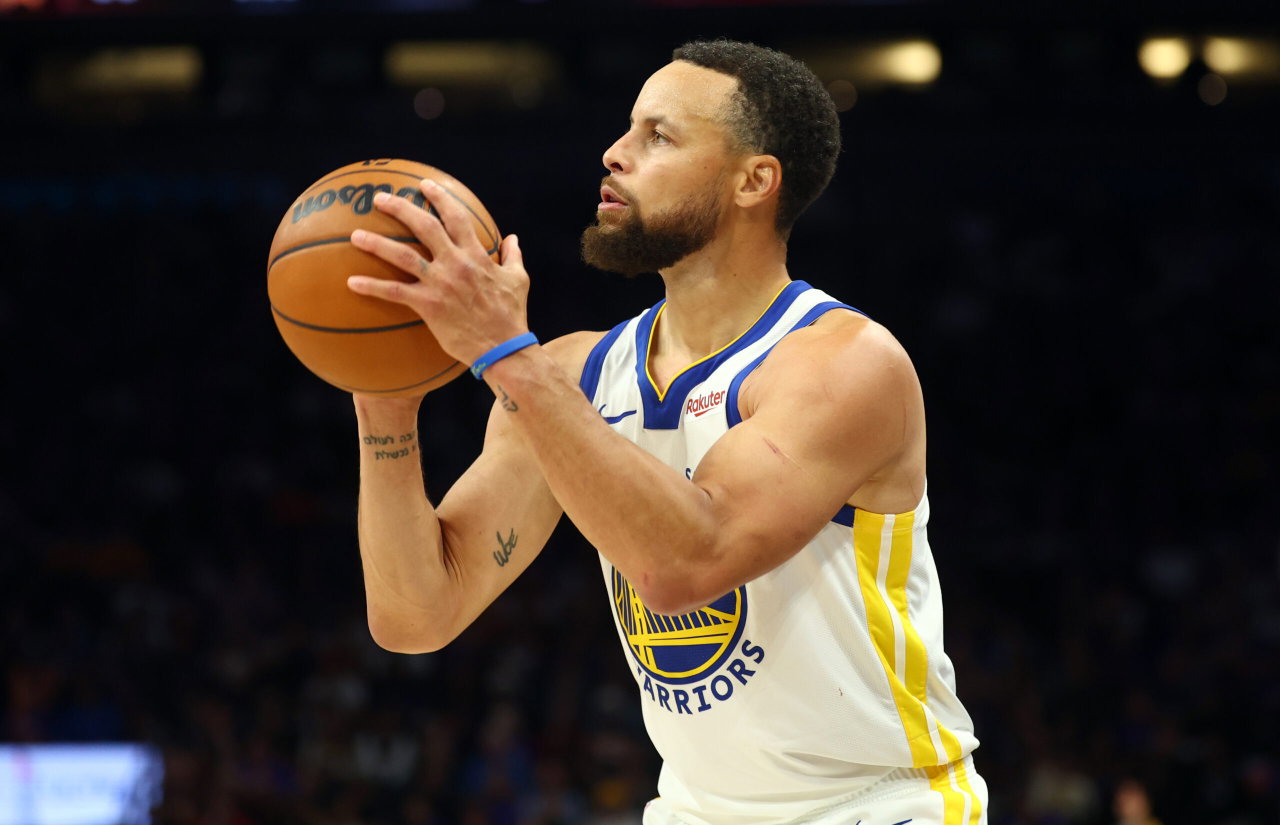
Apr 17, 2026; Phoenix, Arizona, USA; Golden State Warriors guard Stephen Curry (30) against the Phoenix Suns during the play-in rounds of the 2026 NBA Playoffs at Mortgage Matchup Center. Mandatory Credit: Mark J. Rebilas-Imagn Images
Meanwhile, Shaquille O’Neal, Wilt Chamberlain, and Bill Russell controlled entire defenses. Against that backdrop, Curry’s defensive presence feels lighter, even if effective within a system. That gap becomes a quiet roadblock. Curry’s offense bends reality. His defense survives it. However, GOAT debates crave dominance on both ends. So while his teams covered gaps and thrived, the perception lingers. Manageable defender, yes. Untouchable two-way force, no.
So, this GOAT debate refuses to settle, and that may be the point. Stephen Curry built a dynasty, changed the sport, and led greatness before help arrived. Yet perception pushes back. Superteam labels linger, while defensive doubts stay loud. Meanwhile, others set the two-way benchmark. So the divide holds firm. Legacy says one thing. The GOAT room still hesitates.