
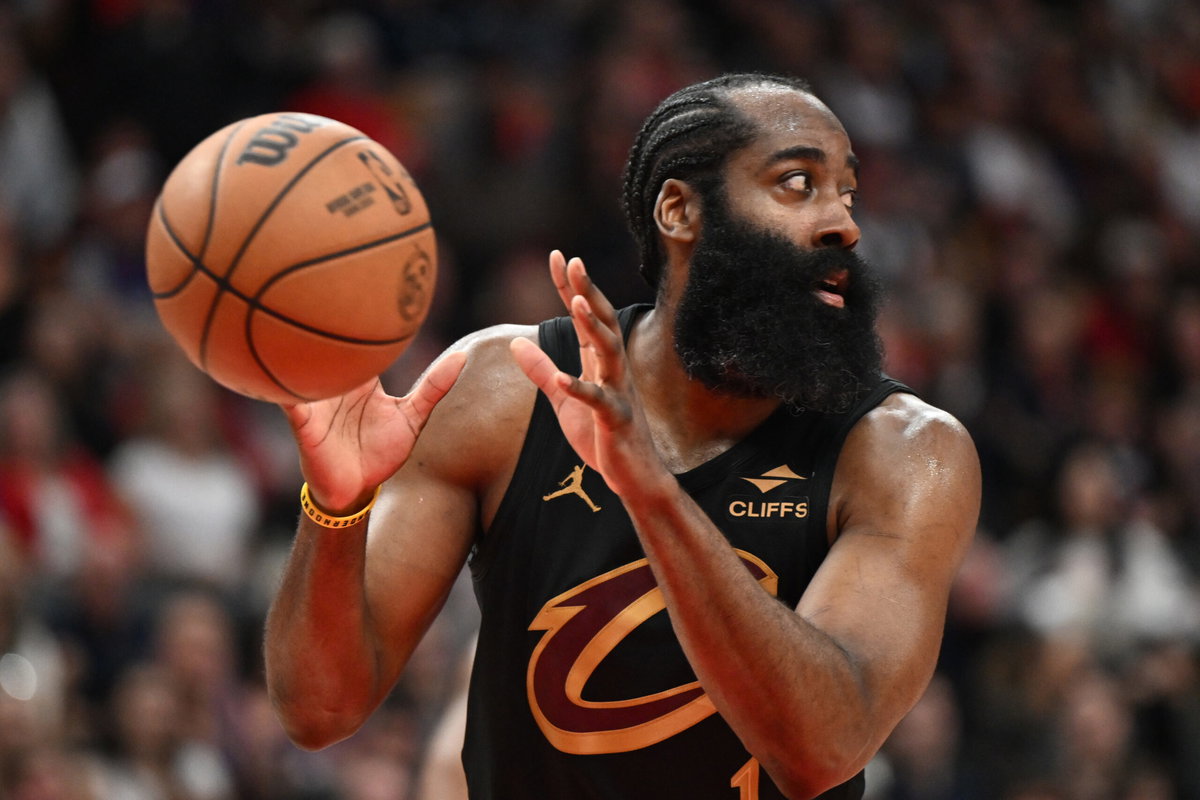
Surprise, surprise, after jumping out to a strong series start, a team led by James Harden has lost two straight and now faces a far taller task to advance to the next round of the postseason.
Watch What’s Trending Now!
No, we aren’t watching the Houston Rockets, Philadelphia 76ers, or Los Angeles Clippers. This is the Cleveland Cavaliers, now knotted up at two games apiece with the wily Toronto Raptors after jumping out to a 2-0 lead.
So what’s the difference? Once again, we’re seeing a familiar pattern: Harden opens a series looking like an all-timer, only for things to shift as the games pile up. And this isn’t just narrative. The numbers tell a very clear story.
So why does this keep happening? And what are the Raptors doing right now to make that pattern show up again?
Why Harden Gets Worse As The Series Goes On
First off, Harden has always carried a massive offensive burden. In 2018-19, his usage rate (40.5%) was the second-highest ever recorded. That kind of workload wears on both the mind and body, especially over a long series, and it forces a veteran like Harden to break down as games stack up. Even though his usage rate in Cleveland (29.2% in this series) is lower than his peak years, he’s also much older now, nearing 37. That means his margin for sustaining that load is far thinner than it once was.
But beyond the physical toll, Harden’s style is also very straightforward. He is either going to dissect defenses with spread pick-and-roll or lull them to sleep with his isolation package. As he’s matured, Harden will occasionally sprinkle in some spot-up jumpers or pace pushes in transition, but for the most part, this is what you are going to get.
This offensive approach has been highly effective for years. But it doesn’t have the same randomness of Stephen Curry’s movement shooting or the inevitability of Shaquille O’Neal’s low post game. And unlike Luka Doncic, his bag of counters isn’t nearly as deep because he is such a left-hand dominant passer.
When you drive right and want to throw a skip pass, you should do so with your right hand. This is a split second quicker than doing it with two hands because you don’t have to turn your whole body to complete the throw. Harden doesn’t do that in this clip, and it gives Patty Mills time to jump the passing lane for a steal and an easy basket.
This issue still plagues him today. Right here, Harden receives a drag screen from Jarrett Allen. It works (meaning that Jakob Poeltl cheats over to Harden), but Harden isn’t thinking about hitting that right hand bounce pass, the window closes, and he’s forced to throw a simpler pass to a streaky shooter (Dean Wade) on the wing.
What Are The Raptors Doing To Slow Harden Down?
In the first two games, Harden carved up the Raptors’ defense with his pick-and-roll brilliance. In those contests, the Cavaliers had a 121.1 offensive rating in Harden’s minutes (the average offensive rating this postseason is 111.0).
Credit to the Raptors, though, they weren’t just going to stand there and fall victim to Harden-ball. They used their defensive versatility to flip the script on him.
In Game 1, the Raptors had RJ Barrett on Harden, Scottie Barnes on Evan Mobley, and Poeltl on Allen. Meanwhile, Game 4, those assignments were Barnes on Harden, Poeltl on Mobley, and Barrett on Allen.
This adjustment is meaningful because Harden wants to go at Poeltl in pick-and-roll with Allen as his roll man, since Allen is a superior screener and finisher to Mobley.
When the Raptors are stationed like this, the Harden/Allen pick-and-roll loses its legs, as Barnes and Barrett can just switch the action because both of them are strong/quick enough to guard the tandem.
Harden could run ball-screen actions with Mobley and still get decent results, but it’s a game of inches, and Mobley simply isn’t as polished in the nuances of the two-man dance as Allen is.
This play features Donovan Mitchell as the lead initiator instead of Harden, but the idea is still the same. Look at how little separation the Mobley screen creates for Mitchell:
The Raptors have also done a better job using their length, sitting deeper in the gaps to clog driving lanes for Harden and Donovan Mitchell and shrink passing windows.
Even with these adjustments and the series effectively reset, the Cavaliers still hold a solid edge. FanDuel lists them at -460 to advance, largely because of Toronto’s inconsistent offense, which ranks 15th, and their struggles against elite teams, going 7-22 against top-10 opponents this season.
Still, Cleveland’s ambitions go well beyond the first round, and this series has made one thing clear: if they want to reach those expectations, they’ll need to find a way to work around Harden’s career-long postseason pattern.