Imago
via denver post
Imago
via denver post
On Friday, the Oklahoma City Thunder hosted the Denver Nuggets in a rematch of last season’s gruelling Western Conference semifinals.


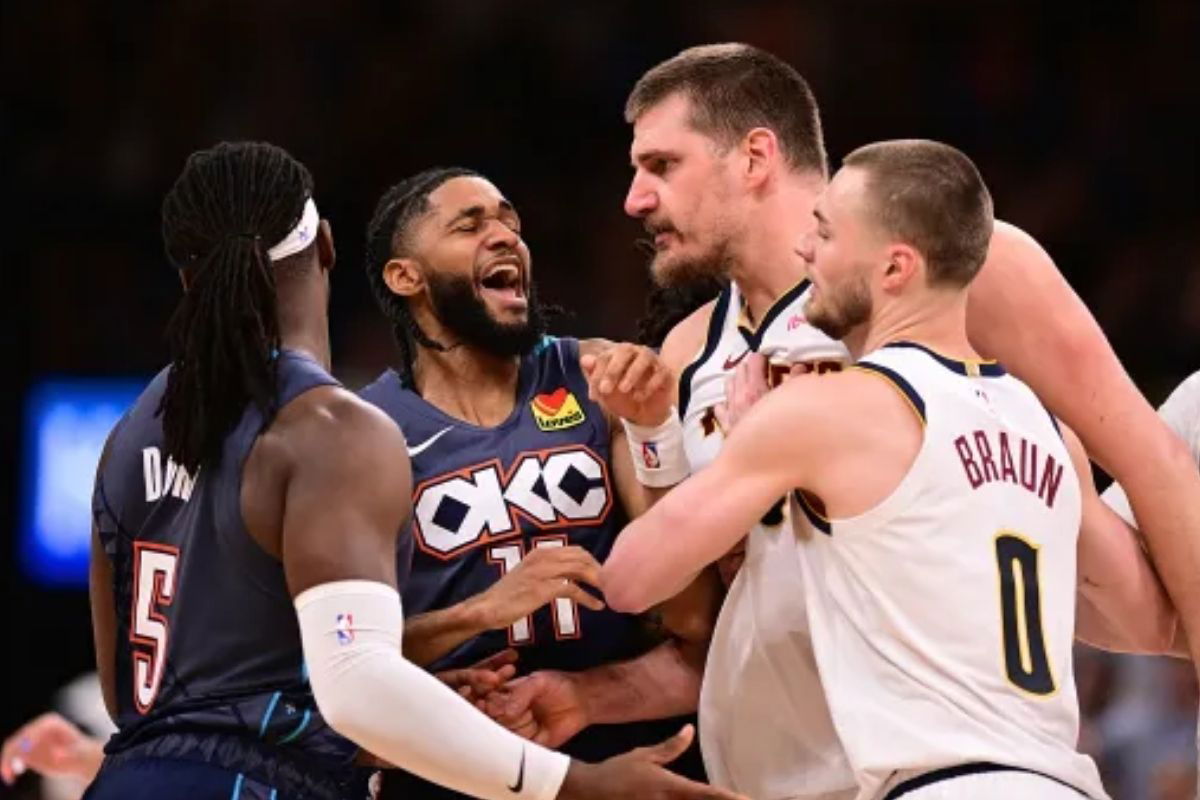
While the Thunder were celebrating the return of reigning NBA MVP Shai Gilgeous Alexander, who scored 36 points in 34 minutes, there were plenty of heated exchanges. In the fourth quarter, Lu Dort hip-checked Nikola Jokic, knocking him to the floor and igniting a heated confrontation that resulted in Dort’s ejection.
Watch What’s Trending Now!
That moment forced the officials to decide whether it was classic physicality or unnecessary roughness. Dort received an automatic ejection for “unnecessary and excessive contact with high potential for injury,” according to the postgame pool report.
The Thunder won 127-121 in overtime, improving their record to 46-15 and maintaining their lead as the West’s top seed.
Imago
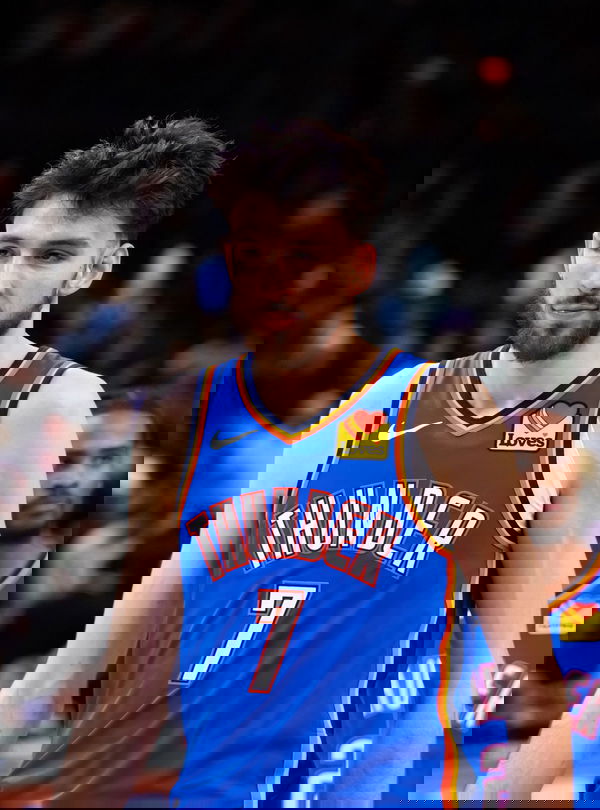
Jan 4, 2026; Phoenix, Arizona, USA; Oklahoma City Thunder center Chet Holmgren (7) against the Phoenix Suns at Mortgage Matchup Center. Mandatory Credit: Mark J. Rebilas-Imagn Images
Fair enough, the foul on the three-time MVP looked reckless, and in a league turning increasingly protective of its stars, this crossed a line. The ejection was warranted. But has it stuck a label that Oklahoma City is a “dirty” team? The game itself was a chippy encounter between two conference foes, a callback to that seven-game series from last playoffs where the Thunder ousted the Nuggets.
OKC’s suffocating unit held Denver to 121 points, forcing 14 turnovers and blocking 10 shots. This has been the case for most parts of the season. Through 61 games, the Thunder are 46-15, boasting the NBA’s best defensive rating at 107.7, allowing opponents to shoot just 43.8% from the field, the lowest in the league. They also lead in steals and rank top five in blocks and force the most turnovers league-wide. All this is built on a system set up by coach Mark Daigneault, who postgame defended his team’s intensity which has been judged as being dirty.
The Controversies Tied to Defensive Greatness
Oklahoma City has found itself in a script that has played out numerous times throughout history. Every all-time great defence is dubbed “dirty” by opponents who are unable to crack it. The late-1980s Detroit Pistons were the epitome of that, and their performance became so bad that they earned the nickname “Bad Boys Pistons.”
Led by Bill Laimbeer, Rick Mahorn, and Dennis Rodman, they used everything in their arsenal, including hand-checking, body checks in the paint, and refusing to let stars breathe. They attacked players with hard fouls, elbows, and psychological warfare. They won consecutive titles in 1989 and 1990, but rivals complained that they were intimidated by this group.
The 1990s New York Knicks, led by Pat Riley and Jeff Van Gundy, did almost identical things, and their physicality propelled them to multiple Finals appearances.
The 2004 Pistons upset Shaquille O’Neal and Kobe Bryant’s Los Angeles Lakers with a smothering defence led by Ben Wallace and Rasheed Wallace. Detroit limited LA to low-scoring games, including a 68-point performance in Game 3. However, it prompted complaints about excessive contact and hand-checking.
The NBA banned hand-checking after that season, and the league has been labelled “soft” ever since. However, more than two decades later, the Thunder have been added to that chapter, which is quite the double standard given the league’s reputation for shambolic defence.
The Thunder do not have the luxury of hand-checking, as teams did in the 1980s and 1990s, when defenders like Gary Payton glued themselves to ball-handlers. The rules have evolved to favour the offence, prohibiting excessive forearm use and encouraging free movement.
But great defences have had to adapt by swarming, rotating, and occasionally pushing boundaries, as the Thunder are currently doing. Chet Holmgren and his 7-foot-6 wingspan anchor the frontcourt, altering shots cleanly and without fouling most of the time. Dort’s assignment is to guard the opponent’s best scorer every night, which necessitates contact. OKC ranks second in contested defensive rebounds and third in percentage at 27.6%, forcing opponents to shoot the league’s lowest effective field goal percentage.
The Thunder are playing their own brand of defence with aggressive characteristics. Dort’s foul could have injured Jokic, and the league’s emphasis on player safety is a positive development. However, the Thunder’s “dirty” label is misleading, as this team is 32-3 when holding opponents to less than 110 points, demonstrating that physicality and a strong defence win games over long periods of time.
Embracing a contact game is not dirty play; rather, it is the wheel of defence in this free-flowing modern era.
Written by

Edited by

Ved Vaze