
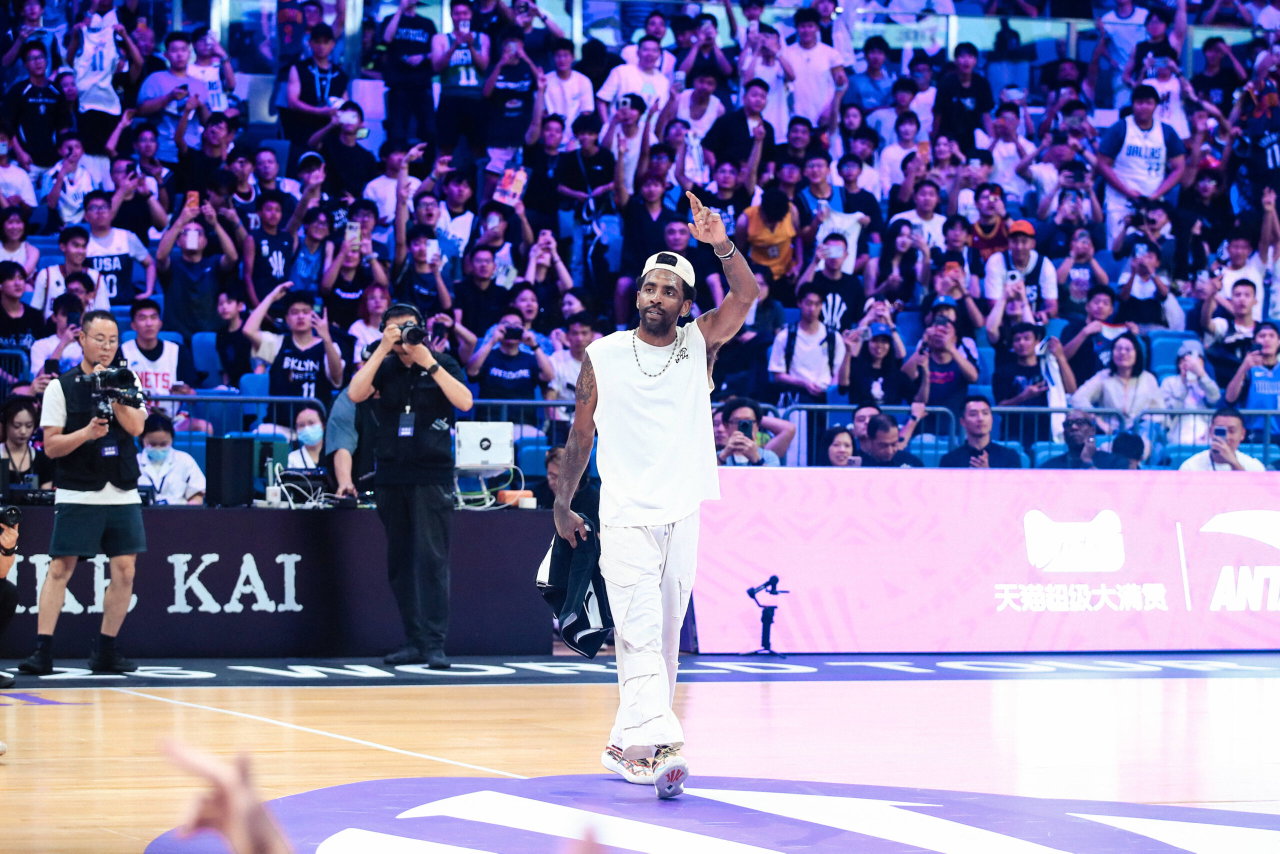
Kyrie Irving is approaching his return from injury with no restrictions and, surprisingly, with gratitude for how the setback reshaped him as a player and a leader.
Watch What’s Trending Now!
“My injury was probably the best thing that happened to me,” Irving said, explaining that the forced time away gave him a kind of reflection he hadn’t allowed himself before.
Speaking recently about his recovery, Irving made clear that he’s not entering the season with a cautious, limited role in mind. “No restrictions,” he said, though he acknowledged there will still be ongoing conversations with the medical staff about managing back-to-backs and staying honest day-to-day about how his body is responding. For Irving, that fluid, constant communication is the priority as he works his way back onto the court.
He also pointed to the makeup of his current team as a source of confidence. With a number of new faces around him, Irving said he still trusts that the foundation in place, medical staff, teammates and upper management alike—will give him the support he needs as he returns.
But the more striking part of Irving’s comments centered on the mental side of recovering from what he called a “traumatic injury.” He didn’t shy away from how difficult that process has been, describing real fear in the aftermath about whether he’d return to form at all. “Am I gonna be back the same? Am I gonna be better?” Irving said, recalling the doubts that crept in during his time away.
Rather than frame the injury purely as a setback, Irving described it as something closer to a turning point. He admitted that a year ago, he likely wouldn’t have been honest about how much physical and mental weight he’d been carrying, pressure tied to the team’s own unmet expectations.
“And it’s no blame to go around, pure accountability of just where we wanted to be as a team,” Irving said. “But I think we fell short of our goal.”
That gap between where the team wanted to be and where it ended up, Irving said, is part of what made the past year valuable. Sidelined from the game he’d been “obsessively” studying and playing heavy minutes in, he used the time to reconsider not just his physical game, but his role within the locker room—specifically, how his teammates could look to him as a better leader and communicator going forward.
Irving’s message, in short, wasn’t one of caution or hesitation about his comeback. It was a reframing: an injury that once carried real fear about whether he’d ever be the same player has become, in his own words, a catalyst for growth, one he believes he was built to handle from a young age.