Imago
IMAGN
Imago
IMAGN
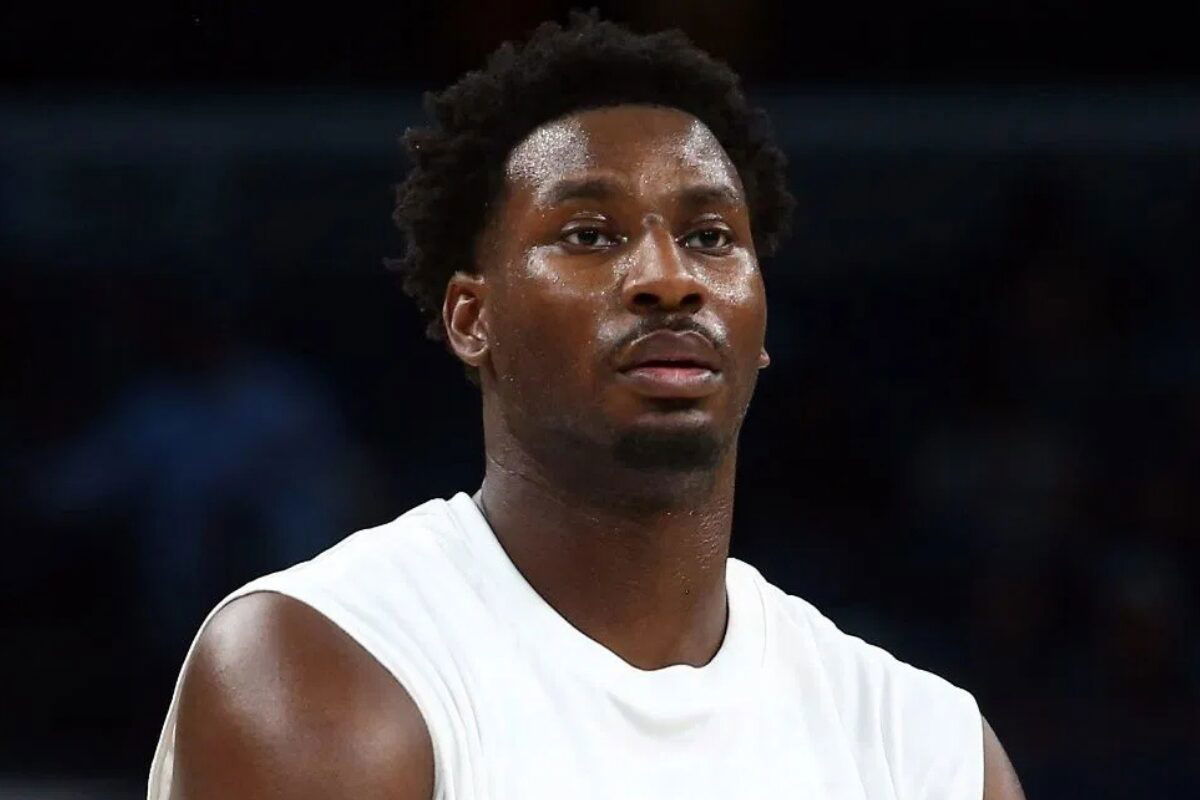
The Utah Jazz have entered yet another desperate scramble for lottery position, benching stars Lauri Markkanen and Jaren Jackson Jr. for the entire fourth quarter of winnable games. In response, the NBA imposed the largest fine in recent memory for this over-tanking offence. Commissioner Adam Silver admitted on the NBA All-Star podium that the problem has reached a breaking point. The league is officially experiencing a tanking crisis.


It appears that the NBA must address the tanking issue or risk losing its appeal. The draft lottery was intended to help struggling teams recover, but when half of the league begins treating the second half of the season as an extended tryout for next year’s prospects, the system has completely lost its way.
Watch What’s Trending Now!
There have been numerous infamous cases of teams embracing the tank. These are simply the most memorable ones.
Biggest Tanking Teams in NBA History
Boston Celtics (2006-07): The Celtics’ season was a very ugly one by every measurable standard. They finished with the second-worst record in the league, endured a franchise-record 18-game losing streak and watched franchise cornerstone Paul Pierce become frustrated. Boston saw its chance with the Greg Oden-Kevin Durant draft sweepstakes and went on a losing spree.
General manager Danny Ainge and head coach Doc Rivers denied it publicly at the time, but the results were there to be seen. The franchise didn’t end up landing the first two picks but instead landed the No. 5 pick, which Boston flipped on draft night for Ray Allen and Glen Davis, then pulled off the blockbuster Kevin Garnett trade. The following season, the Celtics won the championship, a rare dream scenario for tanking team — one painful season and a successful one the next.
Utah Jazz (2024-25): In 2024-25 the Jazz bottomed out at 17-65, the worst record in the entire NBA, and nothing much seemed to have changed this season minus the fact that they have won more games than they did last year. The franchise is still mired in the lottery scrum and drawing fines for resting healthy stars in crunch time.
For all their tanking efforts, the Jazz had to settle for the No. 5 pick in the 2025 draft. It’s already year four and counting of the post-Donovan Mitchell-Rudy Gobert teardown in an era where the Jazz had the best record in the NBA at one point. With Ainge, the man from Boston, now running the show, the results so far look nothing like that 2008 Boston miracle.
Philadelphia 76ers (2013-2017): Under Sam Hinkie, the 76ers were once the gold standard of unapologetic tanking. Over three seasons, they went 47-199, including a soul-crushing 10-72 campaign in 2015-16 that featured a 28-game losing streak, the joint-highest in NBA history.
Philadelphia traded its lone All-Star Jrue Holiday, hoarded second-round picks and openly embraced the “Trust the Process” mantra. The franchise did get Joel Embiid, who became an MVP, but hardly any success in terms of championships. The Sixers added Ben Simmons, who flamed out spectacularly, and they reached the second round multiple times but never got over the hump to a title.
Charlotte Hornets (formerly Bobcats) (2011-12): The then-Bobcats took tanking to historic levels in a lockout-shortened season, winning just seven of the 66 games they played that year. They accumulated a .106 winning percentage that still stands as the worst in NBA history. They averaged 87 points scored per game, and it couldn’t have gotten any worse for the Michael Jordan-led franchise.
It did get worse when they got the No. 2 pick and used it to select Michael Kidd-Gilchrist instead of Bradley Beal or Damian Lillard. The historic tank became a historic missed opportunity.
The Tanking Problem and Why the NBA Can No Longer Look Away
To be fair, there have been some tanking success stories. That is what keeps the strategy alive. The 2006-07 Celtics, the 2002-03 Cleveland Cavaliers, who went 17-65 and signed LeBron James, and the 1996-97 San Antonio Spurs, who went 20-62, owing in part to David Robinson’s limited availability and the draft of Tim Duncan. Even the Oklahoma City Thunder in the early 2020s, following the Paul George trade, had multiple losing seasons while giving massive minutes to obscure players in order to stockpile draft picks. Oklahoma City is now the NBA champion and the definition of a contender.
These examples continue to inspire struggling general managers, but for every Duncan or James, there are a dozen others who failed miserably. The 2014-15 Knicks finished 17-65, the franchise’s worst record, and drafted Kristaps Porzingis at No. 4. A good player, but not the franchise saviour many expected. The 2019–20 Golden State Warriors tanked their way to the No. After injuries decimated their dynasty, they made a second-round pick and selected James Wiseman, but it never paid off.
Overall, the tanking process is akin to “rebuild roulette,” as the lottery gives the worst team only a 14% chance of finishing first. 1 pick. That means that even “perfect” tanking typically places those teams in the 5-10 pick range. However, franchises are still willing to take the risk, and as a result, many teams are racing to the bottom at the same time, resulting in unwatchable basketball during the run-in period.
It degrades the product because fans lose interest in watching games knowing exactly what will happen. Players also lose development reps during the process. Markannen is averaging 26.7 points per game this season and has been a 20+ point player for the Jazz since his arrival, but at the end of the day, the team’s poor performance outweighs his efforts.
Fines will not deter teams from tanking, and the NBA must act by either eliminating the lottery system, which favours weaker franchises, or reducing the odds of a higher draft pick for tanking teams. With all of the commotion in the league, it appears that legislation enforcing anti-tanking measures is on its way.
Written by

Edited by

Ved Vaze