Imago
Credit: Imagn
Imago
Credit: Imagn
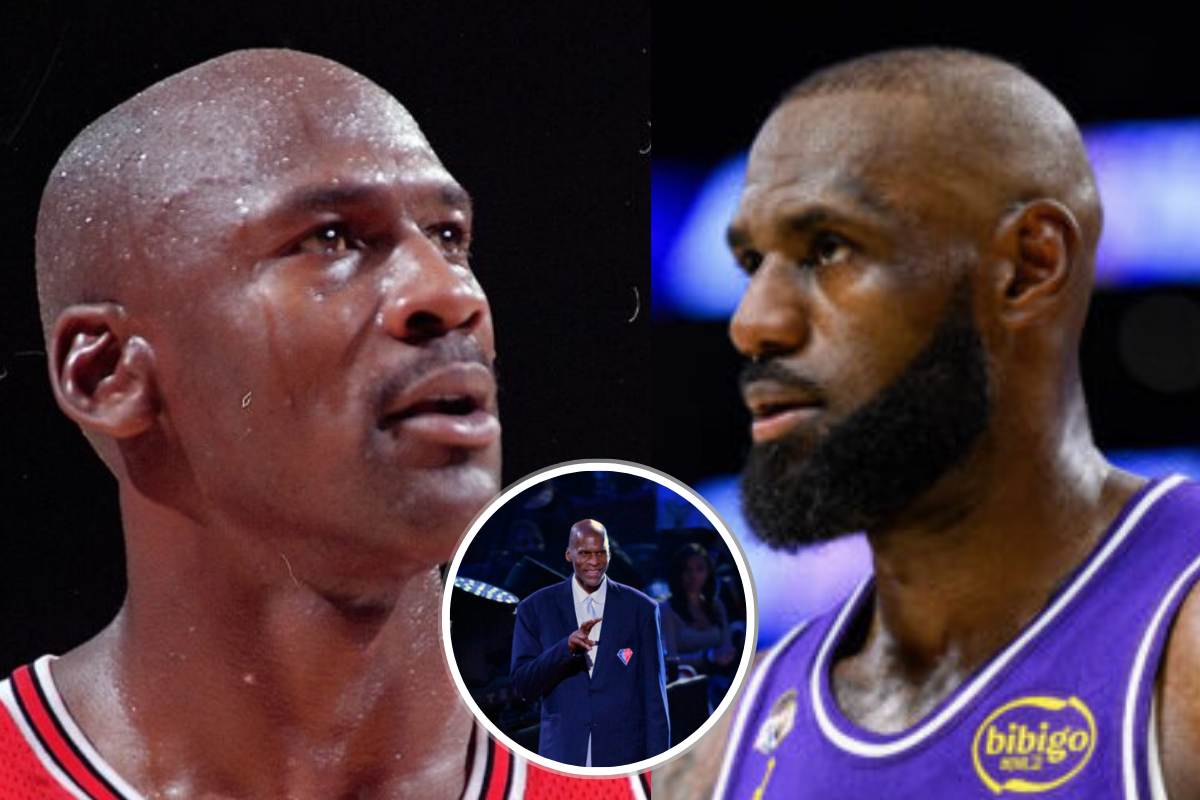
Despite the milestone coming at his expense, Robert Parish praised LeBron James for breaking his NBA record for total games played—largely because it reflects what he valued most: longevity and reliability.
Parish cemented an accomplished 21-year NBA career and Hall-of-Fame resume partly by staying disciplined with his training, dieting and recovery habits. Not surprising then, Parish hardly shares as much admiration for the NBA’s recent challenge with handling load management and ensuring more consistent player availability.
“I have a message for the players: ‘Get in better shape.’ You don’t need load management or time management, whatever you want to call it,” Parish told EssentiallySports. “You don’t need that. If I have my facts accurate, they train less in training camp. They have one-a-days instead of two-a-days. In practices, they don’t practice every day. They practice less. If I were to attend an NBA practice today, it would remind me of a spa. You’re going in to get iced down and get massages. You’re in the jacuzzi, the steam room and the sauna. They have everything available to the players today. I don’t think you can get a manicure and a pedicure (laughs). But training camp shouldn’t look like that. Training camp and practices should be all serious business.”
Parish spoke in depth with EssentiallySports about his recently released memoir, “The Chief: The Story of the Boston Celtics’ Most Enigmatic Icon.” He also addressed various topics. That included why the Celtics’ 1986 championship team is the greatest of all time, comparisons between Larry Bird and Michael Jordan’s trash talk, and his physical battles with former Detroit Pistons forward Bill Laimbeer.
Parish also discussed James recently breaking his all-time record for most NBA games played, the keys to his own longevity, and how he thinks the NBA should address load management. Lastly, Parish shared his outlook on the Boston Celtics’ chances of winning an NBA title, his MVP rankings, and his all-time starting five.
Editor’s note: The following interview has been edited and condensed.
As you’ve been promoting your new book, what have been your favorite stories and interactions so far with the fans?
Parish: “It’s been how well I was received. That really stands out to me. I knew I would get a welcome. But I didn’t expect I would get a welcome like I received. I was at a home game with the Celtics. I got a standing ovation. I had a moment, no question. I have to admit. It’s one thing to get an ovation when they’re sitting. But I always felt like when people are standing and giving you a standing ovation, that means that they respect you and that they appreciate you. I think that was an indicator of not only the success that I had in Boston. But it was about my teammates and the teams that I played on. That shows the respect and appreciation. We gave the city of Boston, the fans and the organization teams to be proud of.”
Why did that catch you by surprise considering your resume and what you did for the Celtics organization?
Parish: “I just wasn’t expecting the level and how much of it was. It reminded me of when I was an active player and causing a commotion wherever I went. People were overzealous about seeing me. I thought I was still a baller (laughs), to be honest. That’s the type of welcome, genuine warmth and how gracious everybody was toward me. As the young people say today, I had a moment. I was feeling some type of way about that. It was a feel-good moment for me.”
What is your favorite story out of this book?
Parish: “My teammates. That’s what I miss most about not competing anymore. I miss my teammates and the locker room. It was all special. It was all of the trash talking, camaraderie and hanging out. Your teammates are like your second family. They’re an extended family because we spend so much time together. Other than the paychecks, that is what I miss the most (laughs). With not being an active player anymore, I miss my teammates. I had some good brothers around me.”
Speaking of trash talking, what’s your favorite trash-talking stories with Larry Bird?
Parish: “This story speaks volumes about who Larry was as an athlete. We were playing the Phoenix Suns in Phoenix. The game was going back and forth. It was a close game. Their star, Tom Chambers, hit a go-ahead shot. We were down by two, and we needed three to win. So [Coach] KC Jones draws up a play for Larry. We broke the huddle before the Suns did. So Larry walks over to Phoenix’s huddle and stands in front of Tom Chambers. He tells Chambers, ‘There is only one white man that can guard me and that’s God!’ (laughs). That tells you the level of confidence and arrogance that Larry had. Not only did he talk the talk. But he walked the walk. He pointed to a spot behind the 3-point line, took a shot and never looked at the basket to see if the shot went in. He would have a ‘Stephen Curry moment.’ He would shoot it and walk away. It was all net. No rim. That lets you know it was no accident (laughs). He didn’t touch the net. It was all net. He just walked off the floor, holding up one finger. No question. You got to respect that. To say that and mean it that only God could guard him? That lets you know he had unflinching confidence in his ability to get it done.”
That’s one of many stories Larry had with trash-talking his opponents. But what about his teammates? What was that like you with in practice and any other setting?
Parish: “It was very competitive with our practices, especially when we got Bill Walton on the team [in 1985-86]. People might not know this. But Bill is a big trash talker. He and Larry would go back and forth with the trash talking with who was better, who had the better team, who was the better passer and who had the better week in practice. The coach kept a running score on who won the most games. So we had to contribute to this pool. So whoever had the best record got the money. It was ‘fine’ money along with penny cash that we had going on the side with incentives in practice to go out and get it done. So it definitely had a playoff feel and playoff atmosphere. The practices were very competitive. Not to mention, the officials gave you more freedom to mix it up in the playoffs. That’s exactly how practices were. Unless it was a hard foul and you knocked somebody down, no calls. The coaches sucked up their whistle. ‘You’re not going to get no call. Tough it out!’
You’ve said it in the book and repeatedly elsewhere that the ’86 team is the greatest of all time. Obviously, they had talent with you, Larry Bird and Kevin McHale and Bill Walton just joined the team. But why does that team have the edge over the 1995-96 Chicago Bulls or the Golden State Warriors during their championship runs?
Parish: “Bill Walton. The league did not have an answer for William. Nobody had an answer for William. I felt like that was the difference maker. The Bulls and the Warriors couldn’t do anything with Bill Walton coming off the bench. We had an MVP coming off the bench. [Bill] Wennington or Luc Longley would’ve had their hands full. William was a tough, tough cover. The Golden State Warriors do it collectively with their defensive strategy and don’t depend on individual defense. Still, I just don’t see how anybody can deal with that. I think Bill Walton was like Moses Malone. You couldn’t quite figure them out. There is something about the way he plays the game and the way he goes about his business with getting it done. Playing against a left-handed ball player kind of throws your rhythm off a little bit. Those two guys messed my rhythm up with that style of play. That’s the best way I can describe it.”
Can you go into detail how what the matchup would’ve looked like between the ’86 Celtics team against the 95-96 Bulls and against the Warriors with Kevin Durant, Stephen Curry, Klay Thompson, Draymond Green and Andre Iguodala?
Parish: “Those teams mirrored how we played. There was a lot of ball movement and a lot of body movement. There was solid coaching. That’s where it starts with the coaching. Every great team mirrors the coaching philosophy. I think it would’ve been exciting. It would’ve been physical, too. If we had the same rules that we had back then when we were active players, it would be a more physical ball game. There would be a lot more contact and less freedom of movement. I think that would add to the allure of the two teams competing. I like the fact that the officials would let the players decide the outcome of the ball game, not the officials making calls that they should not have called. They would just let it go and let us play. Those are the best officials. They let the teams decide the outcome of the ball game. That’s how we would’ve been adjudicated. They would let us decide who is going to win.
The reason why I keep going back to Bill Walton – look at the center position with those championship teams. Think about Bill Walton’s MVP season. Those guys are in trouble. Every other position, you can see it’s a wash. But when William comes in the ball game, that’s the difference, in my opinion. Even the Lakers, as long as they were, did not have an answer for Bill Walton.”
You could make the argument they didn’t have an answer for you either and with your overall center depth.
Parish: “As good as I was, William was better. I know that I belonged in the NBA and I’m one of the all-time greats. But Bill Walton was better. I have to give him something on that. We scrimmaged everyday in practice when we didn’t have a game. When William came to the team, there were no layups. For a whole week, we went ‘no layups.’ It was all mid-range jumpers in the paint. He was blocking all of that and fouling too. Of course, the coaches weren’t calling anything. No fouls. That just gave William a license to be more aggressive. He was catching everything. I had a high-arcing shot. But he was having me shoot even higher (laughs). He would block it. That’s how serious and committed of a defensive ball player that he was. With all due respect to his passing and his offensive ability, I always felt like his defense and passing ability surpassed anything he did offensively.”
Shifting to the present moment. As you know, LeBron achieved another individual milestone with breaking your record for most NBA games played. Of all the individual milestones that LeBron has, where do you rank that specific record that you previously held?
Parish: “It’s up there at the top of the list with the scoring title, the MVPs and the All-Star appearances. It carries that kind of weight because of longevity. LeBron is experiencing longevity and dependability. Not to mention, he’s still playing at an All-Star level. For me, that’s what made that record have an impact with me. It’s because what it signified and what it means. You have to show up almost every night for a number like that. That means having dependability and reliability. That’s one of the things that I prided myself on. I wanted to always be there to do my job.”
When you watch LeBron from afar, what jumps out to you that explains his ability to play at a high level in his 23 season?
Parish: “He is committed. Look at how much focus, energy and money he puts into taking care of himself. He’s eating right. He’s working out. He’s getting in gym time. Plus, he has not gotten tired of the process yet. He’s still going at it in the offseason. In order to play at the level that he’s playing on, it takes a serious commitment with this fitness and his diet. You have to focus on that first. The better your fitness, the less likely that you’ll sustain a major injury. For the players that played 18, 19 or 20 years beyond, almost all of them never had a significant injury. That’s reflective of taking care of yourself. You’re still going to get banged up, beat up and bruised up from playing. But you rarely sustain anything significant with having a catastrophic, career-ending injury. That rarely happens to the guys that take their fitness seriously.”
In the book, you mentioned that once you joined the Celtics, you realized how important it is to be in tip-top shape. What were the keys to your conditioning and durability?
Parish: “I like their team philosophy and approach to the season. They never said it. But it was implied that we needed to be in regular-season shape. All the Celtics players were in regular-season shape. They were ready to go from day one. That was one of the reasons we always jumped out to an eight-to-10 game lead on everyone in our division. It was our level of fitness. Then we had a cushion. Every team goes through a low period with your game ebbing and flowing. But as I like to say, your game stays at the hotel or stays at home. You’re just hopeful that your game travels and shows up so that you can do your job at a more efficient clip.”
Can you paint a picture for the audience on what your routine entailed during the season and offseason with your training regimen and your dieting and anything else that helped you play at a high level for so long?
Parish: “I got up and would have something to drink. I normally would drink a bottle of water. Then I stretch. Then I have breakfast. Then I go to practice. Then I get a massage and go in the steam room. Regrettably, I’d have an ice bath to keep the body right and tight. Then I’d come home and stretch again. I would normally stretch twice a day. That’s another reason why I never sustained a major injury. It’s all of the stretching. I learned early on the importance of it, especially as you age and become an older player. We all know athletics is a perishable school. So everything is going to diminish and slow down. You’re not going to run as fast. You’re not going to jump as high. That jumper is not as consistent. You’re a little slower defensively. Let me give you a great example on how I knew it was time for me to retire after the [1996-97] season: when an underachiever was giving me work and I couldn’t do anything about it. I couldn’t stop. That’s when I knew it was time to retire.”
Are there any examples that come to mind that illustrated that?
Parish: “My last year and my second half of the season in Chicago [1996-97]. I forgot the opponent. But I know he and I were not in the same conversation. I’ll just say that. He was going at it [laughs]. He took it personally that he was playing against me, and I couldn’t do a thing about it. I couldn’t go down on the other end and give him work. All I could do is just take it. That’s it. It’s a humbling feeling to know that it’s over. But for me, that was the sign for me that it’s time to retire. I had a two-year contract with the Bulls. I had another year to come back. But that was an indicator. Plus, I was losing my appetite for the process with the training part. If you’re not in the best physical condition that you can be in, it’s almost certain that you’re going to have a significant injury. That’s one of the things that safeguarded me from anything major in terms of injuries. I took care of myself. That is paramount, especially on the pro level.”
Clearly as you outlined, your time with the Celtics and the Bulls came at different parts of your career. But considering that caveat, how would you compare with the Larry Bird and Michael Jordan teammate experience was like?
Parish: “It was similar. They both have that unshakeable and unflinching confidence in their ability to get it done. They are both highly competitive. They both have a dislike for losing. They are passionate about it with not losing and not experiencing that bitter taste of defeat. That’s what I respect about them – how competitive they were and how aggressive they were in terms of trying to get it done. I always said that Michael and Larry because I played with both and I had seen it up close. They got that military mentality. Losing is not an option. That was their approach. They lost because nobody is perfect. But it wasn’t because of a lack of trying. They were passionate about not losing. They did whatever it takes to get it done. Not only did they believe it. But they were able to demonstrate it and show it. A lot of people can talk the talk. But they can’t walk the walk. That’s why I never had a lot of respect for trash talking. You cannot talk trash if you can’t back it up. Don’t be talking trash if you are just an all-right player, you’re not tearing it up and you’re not keeping people up at night with thinking how difficult it will be to go up against you.”
Someone who could back up their trash talking was Michael Jordan. What was his trash talking like compared to Larry’s?
Parish: “Michael was an in-your-face trash talker. Larry was never confrontational with his trash talking. Michael rarely talked trash the whole game for 48 minutes. Larry talked trash for 48 minutes. It did not matter if he was playing well or playing poorly. He was still talking. That was one of the things that I respected about Larry. He talked trash regardless. His attitude and philosophy was, ‘Next time I see you, my game is going to show up.’ Normally when Larry shows up, he’s the best player on the floor. He’s killing it and he let the person guarding him know that he’s killing it. In my opinion, he’s the ultimate trash talker. He talked trash regardless. It didn’t matter how he was playing. Larry was talking, and letting you know how good he is or letting you know how good he thought he was.”
In your book, Michael Cooper said you never talked trash. But you mentioned there was one time that you lost your cool with Bill Laimbeer because he was being physical with Larry and you knocked him out two games later [in Game 5 of the 1987 Eastern Conference Finals]. We all know what Bill Laimbeer was like as a player. But was it about that specific circumstance that you decided it was time to give Bill a taste of his own medicine?
Parish: “It wasn’t that particular moment or circumstance. It was more that something had been building over a two-year period. So we exchanged elbows, insults and pushing and holding. It was the usual maneuvers around the basket. The only thing that I did not like about Bill is that I felt like some of the tactics that he used should not belong in basketball. You’d be going up for a layup, and he would put his hip under you and cut your legs from under you. You’re going up for a rebound or a shot, he’d give you that tug on the hip and push your hip to one side. That would knock your back out of line. I have one of those temperamental backs anyway. So that’s the last thing that I need. So I felt like some of his plays, moves and defensive tendencies were potentially career-ending. Then when I told him to watch it, he told me ‘to go f— myself.’ So I just lost it. That was the first and only time that I lost my composure and ever became unraveled. Only time that ever happened.”
How do you think that impacted the group and with how Bill handled it?
Parish: “I thought everybody handled it well. Bill showed no ill-signs of the confrontation. He was all right. As for my teammates? After they got over the shock (laughs), they were cool with it. My only regret was the suspension [served a one-game suspension in Game 6]. I let my teammates down. Had I not gotten suspended and it had just been a fine, I would’ve felt better about losing my composure. But with the suspension plus the fine, I felt like the suspension part made me feel like I came up short with my responsibility. That’s my only regret with that incident.”
You and LeBron are examples of durability. But league-wide, there have been discussions about what can be done to improve player availability. How do you assess how the league is handling that?
Parish: “I have a message for the players: ‘Get in better shape.’ You don’t need load management or time management, whatever you want to call it. You don’t need that. If I have my facts accurate, they train less in training camp. They have one-a-days instead of two-a-days. In practices, they don’t practice every day. They practice less. If I were to attend an NBA practice today, it would remind me of a spa. You’re going in to get iced down and get massages. You’re in the jacuzzi, the steam room and the sauna. They have everything available to the players today. I don’t think you can get a manicure and a pedicure (laughs). But training camp shouldn’t look like that. Training camp and practices should be all serious business. It should be basketball-related serious business. Take it personally.
That’s one of the things that I liked about the Chicago Bulls and the Boston Celtics. They were about business. They were successful. It starts with the front office with Red Auerbach and Jerry Krause. Now with the Celtics, it’s about Brad Stevens. Look at the job that he’s done in putting this together with the team. Then they have the right coach and the players to make it happen. Having one without the other doesn’t work. You can’t have a great coach if you don’t have the talent. Or you have the talent, but the coach is weak. You got to have both: a strong coach and a strong, athletic team. Then you still might not win. You still might come up short. So a lot of things have to go right to win an NBA championship. I think that makes it more rewarding. You think about what goes into the process with winning it. It’s a feel-good moment because now you are the blueprint on how to win a championship. That’s one of the reasons other teams copied and mirrored what champions did in terms of how they went about their business to win a championship.”
Speaking of NBA championships, how do you look at this field for this postseason?
Parish: “I think it’s strong on both sides of the landscape. The West is healthy and strong. They have four competitive teams. I think the East has the same thing. It’s going to be interesting, especially when you get to the Conference Finals with teams from each side are battling for supremacy. I think that’s when the real fun and competitive basketball will be seen this year. There are some teams that we didn’t see coming and could be in the Conference Finals. I’m talking about Detroit right now. If Cade [Cunningham] comes back and gets to true form, Detroit is going to be a problem for whoever faces them. I don’t think anybody saw them coming. They are certainly ahead of schedule with what’s expected of them. It would not surprise me if they get to the Conference Finals. They’re that good.”
Where do you see the Celtics in this mix?
Parish: “That all depends on [Jayson] Tatum. I don’t know how healthy Jayson is. I know it’s too soon. It’s probably not going to happen. But if he can get to the high 80s or low 90s in terms of getting all the way back, I like their chances to get to the Conference Finals. But I don’t see them winning it because they have to have a healthy Jayson Tatum to win a championship. Too many things have to go right. Jayson has to be 100% healthy. He’s not there right now. But I think they’ll be a difficult out, though. They play hard. They play smart. They play together. They play on both ends of the court. So they’re going to be a difficult out. The defending champions with Oklahoma are on the other side. Denver will be a tough out. The Lakers will be a tough out. It’ll be interesting.”
With the Celtics, how do you answer the counterpoint that the Celtics have gotten to this for the large part of the season without Jayson because Jaylen Brown has raise his game to another level, Joe Mazzulla is a great coach and they have a strong supporting cast. Why might that still not be enough?
Parish: “As well as the Celtics are playing and as well as [Derrick] White and [Peyton] Pritchard with the absence of Jayson Tatum, they’re not Jayson Tatum. If they were Jaylen Brown-type talents, I would agree with your assessment that they could win it. Then they could win it without Jayson Tatum. But since they can’t play at the level and consistency and athletic ability of Jaylen Brown, they need Jayson Tatum. Jayson Tatum plays just like Jaylen Brown. I think he’s a little bit better. It’s so close, it’s not even worth discussing. It’s that 1 and 1-A, alpha-dog mentality that they have. So they need Jayson Tatum to be 100% for a shot to win a championship.”
Another competitive field is the MVP race. Who do you think the leading candidate should be?
Parish: “Shai Gilgeous-Alexander. That is who is the MVP. As good, consistent and spectacular and awe-inspiring play that he had last year with winning MVP, a championship and Finals MVP, he is even playing better this year. He’s tearing it up. You can make a strong case for Wemby [Victor Wembanyama]. But Wemby is not there yet. I think Wemby will win some MVPs also, but I don’t think you can make a case for Wemby other than on the defensive end. Wemby is scary with his length and instincts. But on both ends, I got to go with Shai. His jumper is a killer. I’m so happy that he’s bringing the mid-range back. That was part of my repertoire. He shot the midrange so consistently. It looks so easy and smooth. He’s must-watch TV.”
What’s your MVP order after Shai with Victor Wembanyama, Luka Dončić, Nikola Jokić Jaylen Brown and any other candidate?
Parish: “I would go with Joker. What he’s doing with his assists, rebounding and scoring, I don’t think any big has done that consistently but him. He’s league-leading in those categories at some points during the season. So I would put him at No. 2. Then, Wemby would be three. After that, I would go with ANT [Anthony Edwards]. Even though he can’t stay healthy, he’s deserving. Jaylen Brown is having a spectacular season. I go back and forth between Jaylen and Luka. They have a similar impact on the game and are similar in how they affect and influence the game [offensively]. So I pay attention to those players a lot. I like the way they facilitate and how they can also create for themselves. I just wish Luka would pay more attention defensively. If he ever decided to become a defensive ball player, things are going to get real interesting. He’s a problem for the Lakers defensively. He needs to do better.”
Luka and the Lakers say that he’s improved with steals and with better effort. But what else do you think he’s missing defensively?
Parish: “Man-on-man defense. That’s where he needs to improve. I’m not a fan of zone defenses, anyway. We’re in the NBA. Man up. Guard your man. You’re not going to stop anybody. Don’t get me wrong. I’m not that naïve and say any NBA player can stop another. But you can make it difficult for them. But you don’t concede and let a guy drive by you without an effort. That’s what bothers me about some NBA players. The effort is not there. You can’t stop anybody one-on-one on the pro level. They’re too talented, too athletic and too good. But you can make it difficult and challenge them. They’re challenging you, so give some of that energy back.”
Who’s your all-time starting five?
Parish: “That’s a good one. I would go Michael Jordan and Magic Johnson at the guards. Forwards will be Larry Bird and Tim Duncan. At center will be Kareem [Abdul-Jabbar]. They all can create their own shot. They don’t need help. Maybe Kareem to get it across half court, but that’s it. But if you give the ball to any of them in their spot, you will get a good shot most of the time. Miss or make, they’re probably going to get a good look.”
Beyond what we already discussed, do you think there’s anything else important to add about your memoir or anything else about your career?
Parish: “I think we covered the basics. The main thing is about getting the message out there about the book. I think it’s a good read. It also sheds a light through that window on who and what I am as a person. That was the objective of the book. Most people know about my athletic accomplishments. But this lets them look at the person and the man. I think the book does that and sheds a light on that subject.”
Mark Medina is an NBA insider for EssentiallySports. Follow him on X, Blue Sky, Instagram, Facebook and Threads.
Written by

Edited by

Ved Vaze