
In January 2026, former Alabama center Charles Bediako returned to college basketball after signing an NBA contract and spending time in the G League. The NCAA challenged his eligibility, and after five games, a judge denied his request to continue playing. The decision appeared to draw a firm line between professional basketball and the college game.
Watch What’s Trending Now!
NCAA President Charlie Baker did not hide his satisfaction with the outcome. “Common sense won a round today. The court saw this for what it is: an attempt by professionals to pivot back to college and crowd out the next generation of students,” Baker said. But months later, another former college standout would challenge that same boundary, and this time, the courts would take a different approach.
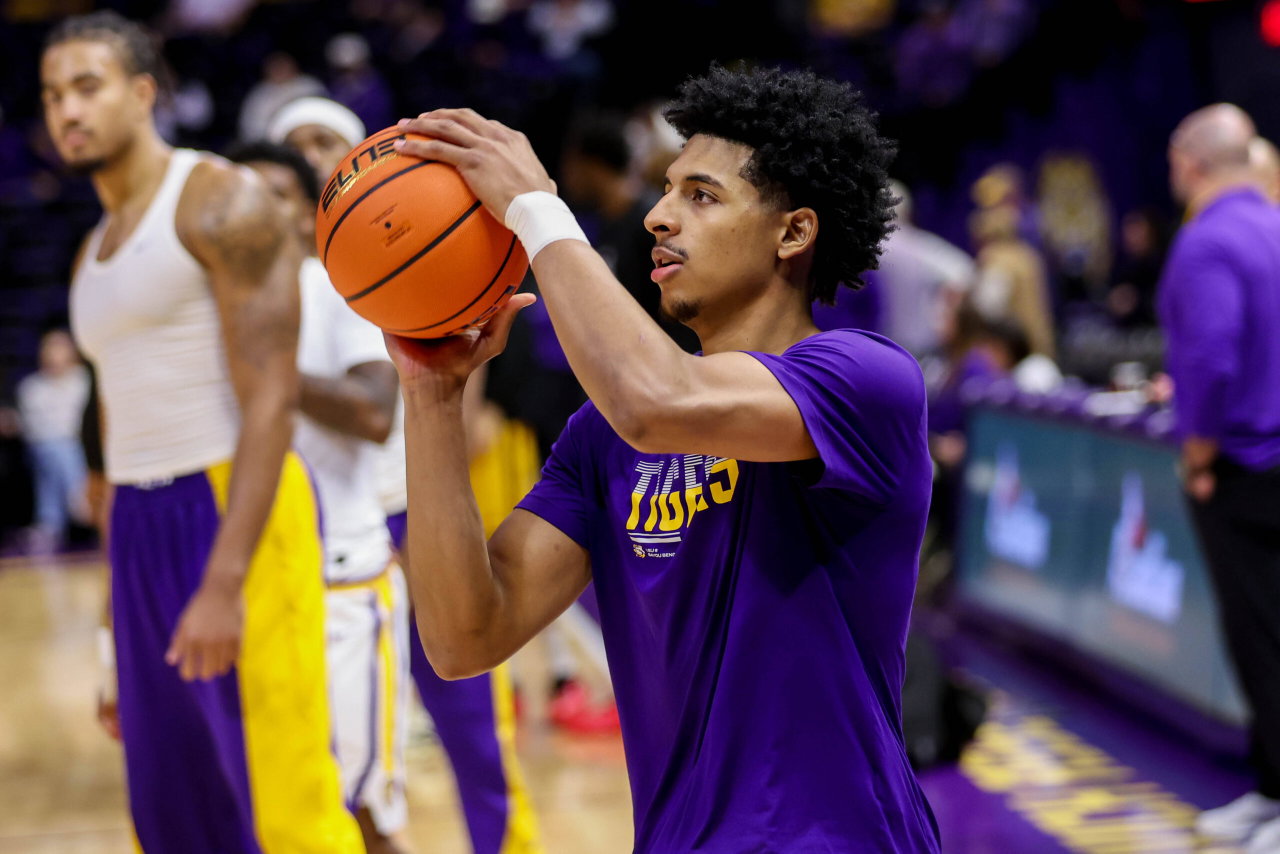
RJ Luis Jr., a former Big East Player of the Year who signed professional contracts with the Utah Jazz and Boston Celtics, has now returned to college basketball with LSU. His lawyers argued that he never played an NBA regular-season game, while the NCAA and SEC maintained that his professional contracts made him ineligible. Louisiana courts intervened, and Luis’ attorney Tony Clayton made his position clear: “It would be fundamentally unfair to RJ Luis to not allow him to play college ball when you have so many similarly situated young men who are playing in college now.”
The November 13 preliminary injunction prevented the SEC from blocking Luis’ participation or punishing LSU for playing him. The conference subsequently confirmed that it would abide by the order, but its response to LSU’s decision to roster him sparked another legal confrontation. Luis eventually made his debut on November 18, recording 11 points and nine rebounds in 15 minutes against Louisiana-Monroe.
From Big East Player of the Year to the NBA
Luis’ journey back to college becomes even more unusual when looking at how highly he was regarded before pursuing a professional career. The forward transferred to St. John’s from UMass after his freshman season and gradually developed into one of the Big East’s most dangerous players under Rick Pitino.
During the 2024-25 season, Luis averaged 18.1 points, 7.1 rebounds and 1.4 steals per game. He shot 44.6% from the field and 33.6% from beyond the arc, finishing fourth in the conference in scoring and sixth in rebounding. His performances earned him Big East Player of the Year honors, along with unanimous All-Big East First Team recognition.
Luis also received Second-Team All-American honors from the Associated Press and the USBWA. He became the first St. John’s player since Walter Berry in 1986 to win the conference’s top individual award, making his departure for the NBA a significant loss for the program.
Pitino had little doubt about his player’s professional potential. In January 2025, the St. John’s coach said, “I think RJ is ready to go, ready to be a factor in the NBA.”
He also explained what made Luis attractive to professional teams, saying, “He’s got tremendous upside. His body, his shot, his game, really lends to the NBA.”
When Luis declared for the 2025 NBA Draft, Pitino supported his decision. “We would not have had the season we had without RJ, but I do think RJ should try and make the NBA. He’s reached his potential with us. Now, I think the NBA is his calling,” he said.
The forward went undrafted, but his professional opportunity arrived shortly afterward. The Utah Jazz signed him to a two-way contract on July 7, 2025, giving him an opportunity to work toward an NBA roster spot.
The Celtics opportunity that changed everything
Luis’ next move brought him to Boston. On August 6, 2025, the Celtics acquired him from Utah in a trade involving Georges Niang and two future second-round picks. Boston also signed Luis to an Exhibit 10 contract, giving him another opportunity to establish himself professionally.
The move was part of a larger financial decision for the Celtics, with the transaction reportedly reducing the franchise’s payroll and luxury tax bill by approximately $50 million. For Luis, however, the bigger opportunity was getting a chance to prove himself in an NBA environment.
He appeared in three preseason games for Boston, recording six points and two rebounds. However, the Celtics waived him on October 15, 2025, before the regular season began.
Luis was subsequently expected to join the Maine Celtics, Boston’s G League affiliate. However, he never appeared in a G League game and was later waived by Maine, with reports indicating that he was scheduled to undergo surgery.
That distinction would become central to the eligibility dispute that followed. Luis had signed professional contracts and appeared in NBA preseason games, but he had never played in an NBA regular-season game or a G League contest.
The NCAA, however, did not consider the absence of regular-season appearances enough to overlook his professional contracts. Its position was based on the decisions Luis had made when pursuing his NBA career, rather than simply the number of professional games he had played.
Why the NCAA refused to clear Luis
The eligibility dispute involved two major issues: Luis’ decision to remain in the 2025 NBA Draft and the professional contracts he subsequently signed.
The NCAA argued that Luis had failed to withdraw from the draft by the required deadline. Under its interpretation of the rules, remaining in the draft without meeting the necessary conditions prevented him from returning to college basketball.
His professional contracts presented another obstacle. NCAA President Charlie Baker had previously made the organization’s position clear in December 2025.
“The NCAA has not and will not grant eligibility to any prospective or returning student-athletes who have signed an NBA contract (including a two-way contract),” Baker stated.
Luis had signed a two-way contract with Utah before subsequently agreeing to an Exhibit 10 contract with Boston. The NCAA viewed those agreements as sufficient grounds to deny his return, even though he never reached an NBA regular-season game.
His attorneys, led by Tony Clayton and Elliot Abrams, challenged that interpretation. They argued that Luis was being treated differently from international players who had accumulated professional experience overseas before receiving NCAA eligibility.
Clayton pointed to the number of international players competing in college basketball despite having previously played professionally. “There’s 91 foreign players who played professionally overseas that are now playing in the NCAA across the country. If those 91 players can play, some in the SEC, explain to me why RJ can’t play,” he argued.
LSU already had three international players whose eligibility became relevant to that argument: Brice Dessert, Michael Ruzic and Saliou Niang. All three had professional experience overseas before being cleared to compete for the Tigers.
Dessert, in particular, had spent five years playing professional basketball in Europe, including appearances in the Turkish Basketball Super League and EuroLeague. He was cleared by the NCAA on October 20, 2026.
Ruzic was cleared shortly before LSU’s October 8 exhibition game against McNeese State, while Niang received his clearance on October 20. Luis’ attorneys used these cases to question why overseas professional experience could be accepted while his NBA contracts prevented him from playing.
However, the comparison was not legally identical. The NCAA’s stated distinction was that signing an NBA contract, including a two-way agreement, crossed a boundary that professional experience overseas did not necessarily cross.
The legal battle reaches the SEC
The NCAA was not the only organization standing in Luis’ way. The SEC also took a position against his eligibility, creating a situation in which LSU faced potential consequences for adding him to its basketball roster.
The conference introduced a more aggressive interpretation of its eligibility rules in September 2026. The policy carried potentially severe consequences for programs found to have violated its professional eligibility standards, including financial penalties, coaching suspensions and restrictions on conference voting privileges.
The SEC also filed a federal lawsuit against LSU in Birmingham, Alabama, challenging the university’s approach to its eligibility rules. The dispute raised the possibility of even more serious consequences, including the potential expulsion of a member institution.
Luis’ attorneys subsequently sought protection through Louisiana’s courts. On October 28, Judge Ronald R. Johnson issued an injunction preventing the SEC from penalizing LSU for rostering Luis. The order also prevented LSU from using SEC policies as a reason to refuse to play him while the legal proceedings continued.
The matter returned to court on November 13 before Judge William Jorden. Following a full evidentiary hearing, the judge issued a preliminary injunction protecting Luis’ participation throughout the 2026-27 season.
The order prohibited the SEC and those acting with it from refusing to allow Luis to join LSU’s men’s basketball team, practice with the program or compete during the season. It also prevented the conference from penalizing LSU or threatening penalties over his participation.
Importantly, the ruling did not permanently settle Luis’ NCAA eligibility. It provided preliminary legal protection while the wider dispute continued.
On November 16, the SEC communicated its position to Luis’ attorneys in writing. “The SEC will abide by the terms of the preliminary injunction while it remains in place and will not impose penalties or fines on LSU if it places Mr. Luis on its men’s basketball roster,” the conference stated.
LSU president Wade Rousse announced the following day that the university intended to add Luis to its roster. Rousse explained that the school had to balance its obligations to NCAA and SEC rules with its responsibility to follow the orders issued by Louisiana’s courts.
“LSU is committed to compliance with NCAA and SEC rules, but it is equally committed to obeying the orders of Louisiana’s courts,” Rousse said.
He also explained why the university believed it could proceed with Luis’ addition. “RJ secured his eligibility through a court order before the new SEC policy interpretation was announced.”
The decision finally allowed Luis to join the team, but the SEC was far from pleased. Its November 17 statement described LSU’s move as “inconsistent with the expectations and responsibilities of membership in the Southeastern Conference.”
The conference also called it “a deeply concerning and disappointing development,” adding that it would continue to defend the standards and policies established by its member universities.
LSU’s decision sparks another legal confrontation
The SEC’s statement prompted Luis’ attorneys to take further action. On November 18, Clayton filed a motion asking Judge Jorden to hold the conference and commissioner Greg Sankey in constructive contempt of court.
The motion argued that the SEC’s public response amounted to a threat against LSU, despite its written assurance that it would not impose penalties or fines if the university rostered Luis.
Clayton explained the legal team’s position to ESPN. “We want to hold [Sankey] and the SEC in contempt for the threat. Their lawyer sent us an email [saying] that they would not take any actions against LSU or threaten any actions. And then Sankey or an SEC official issued the threat about what they’re going to do to LSU.”
The motion also challenged the conference’s statement that LSU’s decision was inconsistent with its membership responsibilities. Luis’ attorneys argued that the language effectively treated him as ineligible under SEC standards, despite the November 13 injunction.
Clayton raised another allegation involving Sankey, claiming that the commissioner may have contacted other SEC university presidents about possible action against LSU.
“We’ve received information, and we believe that he has contacted the fellow presidents and conferred with them about taking some type of actions against LSU,” Clayton told On3.
“If that’s the truth… we would want to talk to all the presidents and see if he called them, if he conferred with them and if they acted in concert to threaten or to retaliate against LSU,” he added.
The SEC had not publicly responded to those specific allegations as of November 20, and Judge Jorden had not ruled on the contempt motion. The allegations therefore remain claims made by Luis’ legal team, rather than findings by the court.
A debut that gives LSU another weapon
While the legal dispute continued, Luis finally returned to the college basketball court on November 18. LSU faced Louisiana-Monroe at the Pete Maravich Assembly Center, with the former St. John’s star making his first appearance for the Tigers.
He checked into the game with just over 12 minutes remaining in the first half and received an enthusiastic ovation from the crowd. Luis quickly made his presence felt, grabbing a rebound before knocking down a three-pointer that brought another loud reaction from the arena.
The forward finished with 11 points, nine rebounds, one assist and one block in 15 minutes. He shot 3-of-9 from the field and 1-of-4 from beyond the arc, giving LSU another physical presence on both ends of the floor.
The debut was not entirely smooth. LSU trailed Louisiana-Monroe 39-36 at halftime before pulling away in the second half to secure a 79-67 victory. Luis helped the Tigers with his rebounding and physicality, while the team also held a 19-7 advantage in second-chance points.
Head coach Will Wade was pleased with what he saw, particularly considering how little time Luis had spent practicing with the team before making his debut.
“He played well for not having practiced in a while,” Wade said.
He also highlighted the different qualities Luis could bring to the roster. “He can shoot it. You saw some physicality and him being able to play above the rim. He can guard. He’s a physical defender.”
Wade added, “He’s going to continue to get better.”
The coach remained unwilling to discuss the eligibility dispute, instead directing questions about the matter to the university’s statement. “Everybody we played tonight is eligible,” Wade said.
Skyy Clark led LSU with 17 points, while Mo Dioubate added 16 as the Tigers improved to 5-0. Luis’ debut offered a first look at what he could contribute, although his limited preparation means there is still plenty of room for improvement.
Luis’ return is only the beginning
Luis has now made it back to college basketball, but the legal fight surrounding his eligibility remains unresolved. The November 13 injunction currently protects his ability to compete, while the SEC’s federal lawsuit against LSU and the contempt motion filed by his attorneys remain outstanding.
The SEC could still challenge the existing legal protections, while the NCAA’s position on NBA contracts remains unchanged. The preliminary injunction could also be modified or overturned as the proceedings continue.
The outcome could have implications beyond LSU. If Luis ultimately succeeds in maintaining his eligibility, other players who have pursued professional opportunities before returning to college may look at his case as a possible route back into the NCAA.
For now, the former Big East Player of the Year has another opportunity to build his basketball career. The difference is that his next chapter will unfold in college basketball, with the NCAA and SEC still fighting over whether he should be there.