Imago
IMAGN
Imago
IMAGN
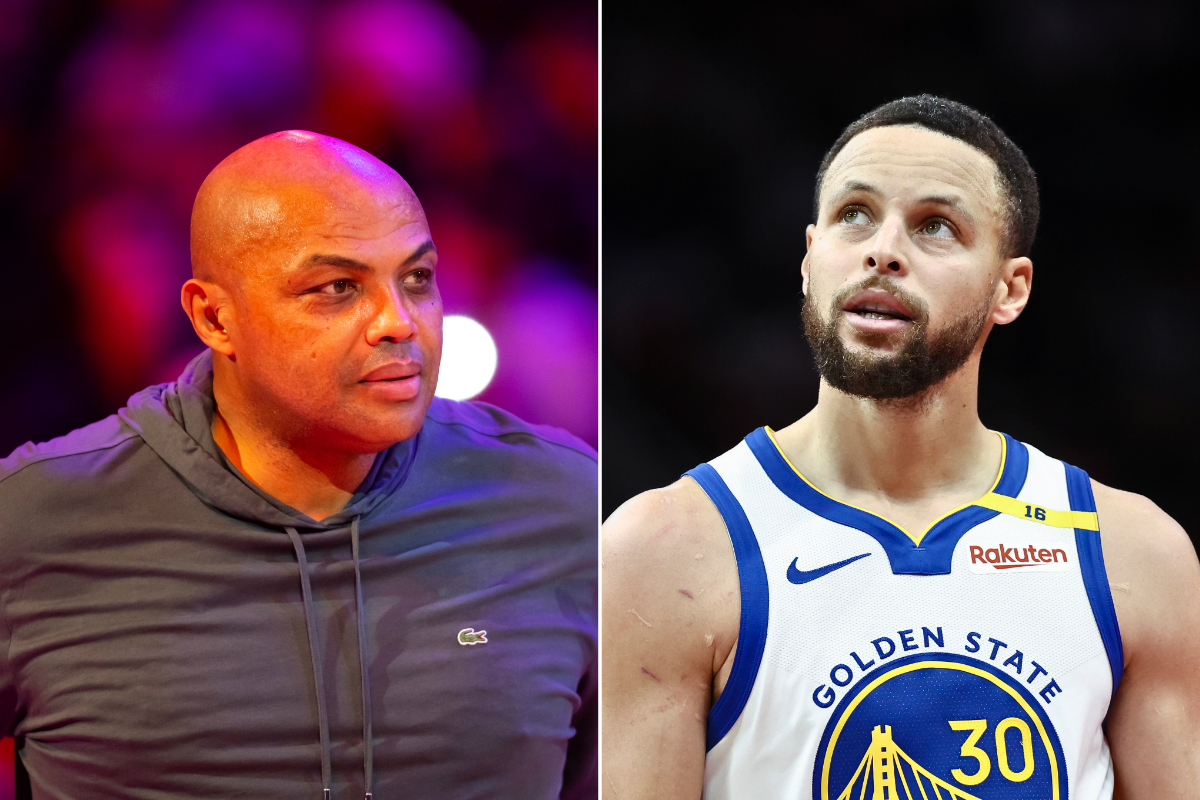
Stephen Curry can still light up an arena, bend defenses at will, and carry an offense by himself. But none of that saved him from becoming the most uncomfortable talking point on national television this week. Because while Curry continues to perform like a superstar, the Golden State Warriors look stuck in purgatory this season. And according to Charles Barkley, that unfortunate reality has a clear casualty.


“The biggest loser in the whole thing is Steph, because they were not contenders,” Barkley said on the Tip-Off segment on ABC. “Now Steph is going to finish the last part of his career on a mediocre team. And that’s the thing that’s disheartening about it. Because like I say, they were not contenders, but they were a solid team.”
Watch What’s Trending Now!
Chuck while talking about the Kuminga drama:
“The biggest loser in the whole thing is Steph because they were not contenders now Steph is gonna finish the last part of his career on a mediocre team” pic.twitter.com/yW398dcxRr
— Oh No He Didn’t (@ohnohedidnt24) January 24, 2026
Barkley’s take aligns with the NBA standings. As of January 25, the Warriors sit at 25-21, eighth in the Western Conference, clinging to play-in territory rather than chasing a top seed.
Still, context matters. Over the last five games, they went 3-2, a stretch that perfectly captures Barkley’s point. The Warriors can still score and win on certain nights. But they just cannot string it together like a contender.
Curry’s strong run of form has continued despite the team’s state. Against the Dallas Mavericks on January 22, Curry poured in 38 points and eight three-pointers, but they still lost 123-115. Earlier in the month, Curry dropped 31 points in a loss to the Atlanta Hawks.
The season pivoted on January 19. That night, Jimmy Butler suffered a torn right ACL during a win over the Miami Heat. It ended his season immediately. The Warriors had acquired Butler to extend Curry’s championship window. Instead, his injury slammed it shut.
Draymond Green later described Butler as devastated but trying to stay present with his family.
At the same time, the Warriors’ next most important swing piece has been unavailable. Jonathan Kuminga exited the Mavericks’ loss with a left knee hyperextension and ankle twist. He is set to miss the sudden back-to-back against the Minnesota Timberwolves and remains day-to-day. Kuminga was averaging close to 20 points per game in the first month of the season and was the team’s dynamic young scorer.
Nevertheless, the lack of certainty is more profound than health concerns. Earlier this month, Kuminga officially asked for an exit, feeling dissatisfied with his playing time and the team’s overall strategy. While the Warriors have downplayed the chances of a trade before the February 5 deadline, other teams expect him to be a topic of discussion once the offseason begins.
Consequently, Curry faces the challenge of managing an unbalanced roster. Brandin Podziemski has demonstrated flashes of talent. Gary Payton II is a source of energy. None of these points tackles Barkley’s central idea. Scoring an average of 116.8 points per game, Golden State is positioned among the league’s more effective offenses. Defensively, they allow 114.2 points. That gap places them firmly in the NBA’s middle class.
Their playoff odds reflect it. The Warriors have a solid chance to make the postseason. Their title odds are almost nonexistent. That is why Barkley’s comment stung. His comments landed in the middle of his public frustration with ESPN, amplifying the moment far beyond basketball analysis.
Charles Barkley’s unhappiness over the ESPN schedule, or rather a lack of it…
The backdrop is the rocky 2025-26 transition of Inside the NBA from TNT to ESPN and ABC under an 11-year deal. While the show is still produced by TNT Sports in Atlanta with the same iconic crew, Ernie Johnson, Barkley, Shaquille O’Neal, and Kenny Smith, the scheduling shift has been jarring. After decades as a weekly ritual, Inside the NBA has appeared only a handful of times in the first half of the season.
That reality pushed Barkley to speak out on The Dan Le Batard Show, where he revealed the crew had directly complained to ESPN executives.
“We’ve complained,” Barkley said. “We’ve only been on ESPN four times in three months. We did like the first two weeks, we were off all of December until Christmas, and we’re off all of January until now. I don’t like that at all.”
Barkley clarified he was not asking for nonstop airtime. In fact, he joked that he had no interest in being “on ESPN One, Two, Three, Deportes, Nacho, Echo, whatever they call it.” What frustrated him was the absence of balance. For a show built on consistency, the silence felt like a downgrade.

USA Today via Reuters
February 20, 2022; Cleveland, Ohio, USA; NBA great Charles Barkley is honored for being selected to the NBA 75th Anniversary Team during halftime in the 2022 NBA All-Star Game at Rocket Mortgage FieldHouse. Mandatory Credit: Kyle Terada-USA TODAY Sports
Some suggested ESPN was quietly shelving the show due to Barkley’s unfiltered criticism of players and league narratives. Others went further, theorizing the NBA itself pressured ESPN to limit Inside the NBA’s presence. However, Barkley shut that down forcefully during a recent episode of the show.
“There’s some fools at home,” the NBA legend said, pushing back on conspiracy theories. “Well, on the internet. They’re at home now. Saying that we were talking bad about the players, so they made us work less. Shut the hell up. Shut the hell up. This is already scheduled.”
Barkley explained that the show is set for a more consistent run of episodes leading into nightly coverage for the latter half of the season and playoffs.
Curry turns 38 in March. His contract runs through the 2026-27 season. He has said repeatedly that he wants to retire in the Bay Area. Still, the reality Barkley described is already here. With Kuminga’s future uncertain, and with an aging Draymond Green, they are not maximizing what Curry offers.