
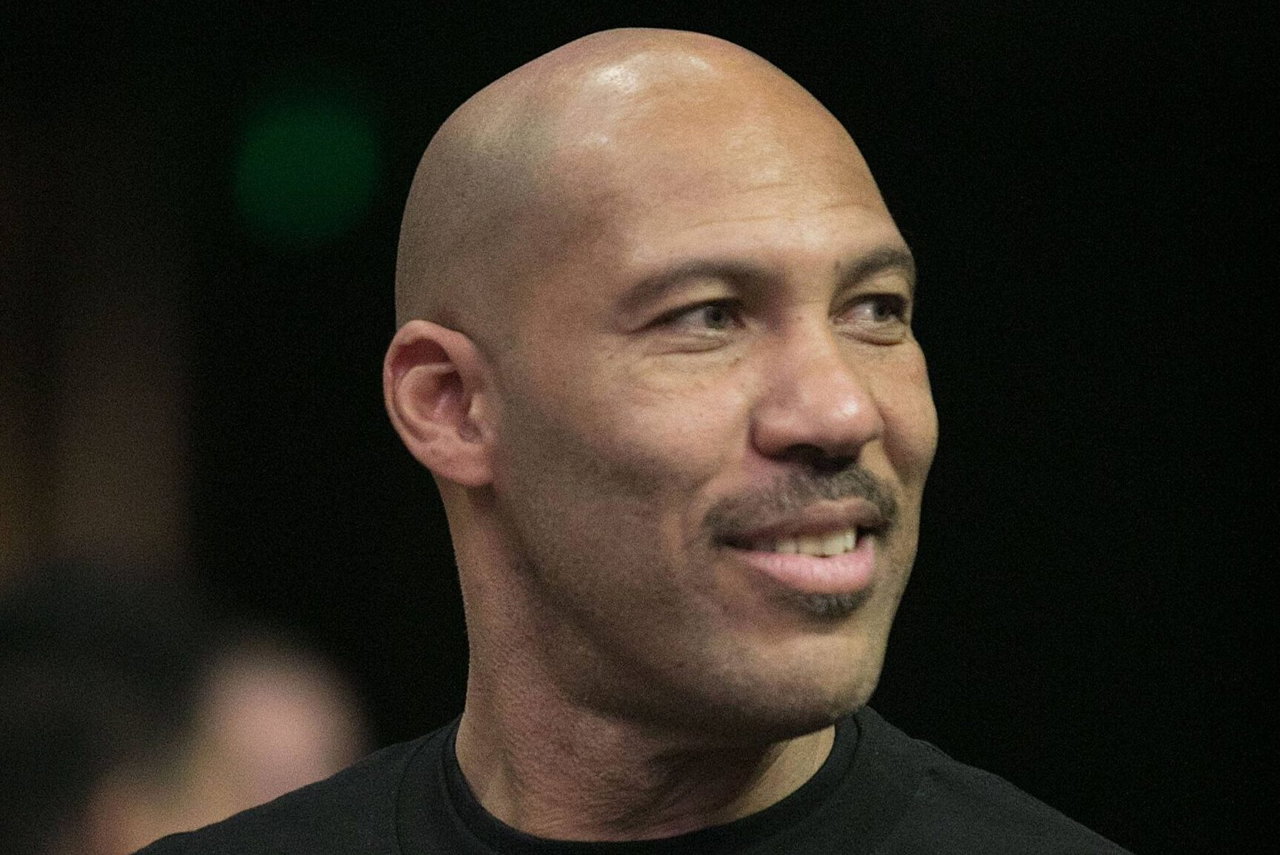
The Michael Jordan vs. LeBron James GOAT debate has stretched across generations, with fans often leaning toward the player they grew up watching dominate the NBA. LaVar Ball believes that divide may be one reason the argument never has a definitive answer. While speaking with Draymond Green on The LaVar Ball Show, Ball explained how the era a fan grew up in can shape their view of basketball greatness, before revealing where he stands in the Jordan-LeBron debate.
Watch What’s Trending Now!
“And that’s where everybody gets stuck on, you know, like you said about LeBron being the greatest of all time,” LaVar Ball said on the show. “Everybody going to ask that. And it’s on what era you grew up in…. (But) I leave it at that, that when you go six for six and you the coldest in the world.”
Basically, fans who watched Jordan dominate the NBA in the 1990s may have a different opinion from fans who grew up watching LeBron. But if you ask Ball, he personally puts Jordan above everyone else. And his reasoning goes beyond simply counting championship rings.
For Ball, Jordan’s perfect Finals record is the clearest measure of what greatness looks like when everything is on the line. Jordan reached the NBA Finals six times with the Chicago Bulls and won the championship in every appearance, earning Finals MVP each time. The NBA also credits him with five regular-season MVPs, 14 All-Star selections and a record 10 scoring titles.
That 6-for-6 run also came in two separate three-peats, with Jordan and the Bulls winning three straight titles from 1991 through 1993 before repeating the feat from 1996 through 1998. The second run came after Jordan’s first retirement, making the 1996 championship the start of another three-year stretch at the top.
His career numbers were also remarkable. Jordan averaged 30.1 points, 6.2 rebounds and 5.3 assists per game over 1,072 regular-season appearances, with his 30.1 scoring average still the highest in NBA history. But Ball’s comments become more interesting when the conversation shifts from Jordan’s résumé to what a hypothetical matchup with LeBron might have looked like.
He admitted that comparing stars from different eras becomes much harder when LeBron’s size, strength and athletic ability enter the discussion.
“For me, that’s what I relate that thing on with Michael Jordan,” Ball said. “But but you can’t be like, man, I don’t know how he going up against a little goddamn LeBron. I mean, Scotty went up against Magic, but he didn’t have that athletic some of that goddamn LeBron.”
Green quickly agreed with Ball.
“That’s a fact,” Green said.
Ball’s reference to Scottie Pippen and Magic Johnson is significant because he was trying to put the hypothetical matchup into an older NBA context. Pippen was one of the Bulls’ primary defenders and played a major role in Chicago’s 1991 Finals matchup with Magic and the Los Angeles Lakers. But Ball’s point was not that Magic was easy to defend; it was that LeBron’s particular combination of size, strength and athleticism creates a different kind of problem. The 1991 Finals were also the series in which Jordan won his first championship and Finals MVP, as Chicago defeated the Lakers in five games.
That distinction matters because Ball is not using LeBron’s physical gifts to argue against Jordan. He is essentially acknowledging the biggest complication in a Jordan-LeBron hypothetical: the two players would have presented very different problems on the court. Jordan’s game was built around explosive scoring, footwork, mid-range shot-making and elite perimeter defense, while LeBron developed into a 6-foot-9 playmaker capable of creating offense with the ball in his hands. NBA records list LeBron at 6-foot-9 and 250 pounds.
LeBron’s résumé is also why the discussion cannot be reduced to Jordan’s 6-0 Finals record. He has reached the NBA Finals 10 times and won four championships, earning Finals MVP in each of those four title runs. He is also the NBA’s all-time leading scorer.
There is another part of LeBron’s résumé that makes the comparison particularly difficult: his longevity has produced a statistical profile no other player has matched. At the end of the 2025-26 season, he became the first player in NBA history to surpass 10,000 points, 10,000 rebounds and 10,000 assists. He finished that season with 43,440 points, 12,095 rebounds and 12,016 assists.
His Finals résumé also has an unusual detail of its own. LeBron is the only player to win Finals MVP with three different franchises: Miami in 2012 and 2013, Cleveland in 2016 and the Lakers in 2020.
For Ball, however, those differences do not outweigh Jordan’s perfect record when he reached the championship round. His argument is less about claiming Jordan was superior in every individual category and more about which achievements should carry the most weight in a GOAT conversation. If reaching the Finals is the ultimate test of a player’s championship résumé, Jordan’s six appearances produced six titles and six Finals MVPs.
That is also why the “six for six” line carries more weight in Ball’s argument than a simple comparison of the two players’ championship totals. Jordan never had to answer for a Finals defeat, while LeBron’s 10 appearances include four championships and six losses. At the same time, LeBron reached the Finals four more times than Jordan and played in 55 Finals games, giving his résumé a very different shape.
Ball’s comments therefore leave the debate in an interesting place. What do you think about it all? Let us know in the comments.