
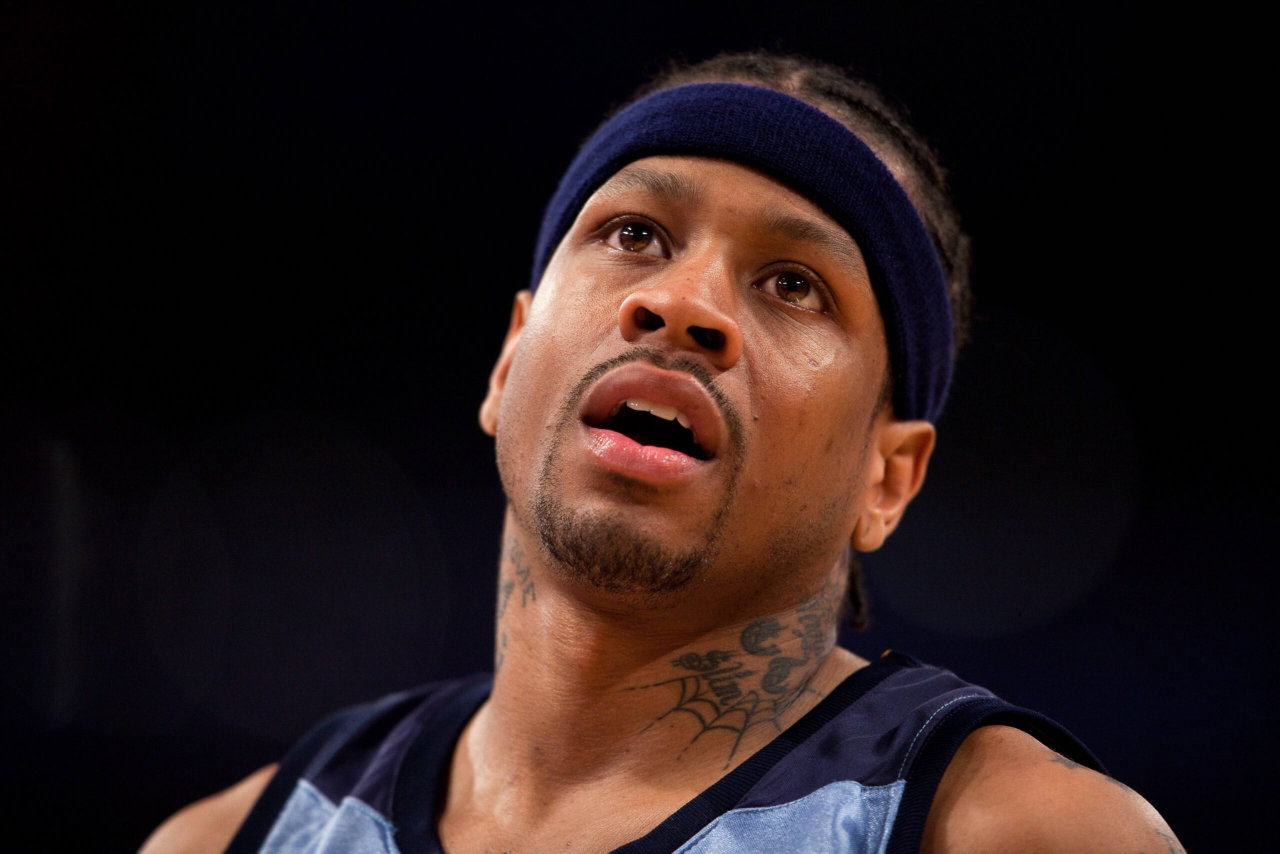
Allen Iverson has offered a candid look back at the final stretch of his NBA career, admitting that his own pride played a major role in how it ended. The Hall of Famer said he understood at the time that his choices were damaging his future in the league.
In a clip shared by NBABase, Iverson said, “I think I realized, even before going over there and while it was going on, that I committed professional suicide.” He added that the decisions he was making told him as much.
The root of the problem, Iverson explained, was that he was unwilling to start over. “I was kind of like not accepting the fact that I had to prove myself again,” he said.
Iverson said several teams were interested in bringing him in, but the conversations already included a plan for him to come off the bench. He called that a sticking point. In his experience, training camp meant every position was open and players fought for their spots.
In hindsight, he said the better approach would have been to ask only for a chance and let his play do the talking. “OK, just bring me in,” he said, describing the mindset he wishes he had. Instead, he was convinced no team could have a better option at his position. “I know that you’re not going to have a two guard on your squad better than me,” Iverson said of his thinking at the time.
Rather than keep that belief to himself, he made it public. The mistake, he said, was in “letting it be known that I had a problem with coming off the bench.”
Iverson did not soften his assessment. “That was my ego. That was my pride,” he said, adding that a substitute role had never been part of his career.
His words suggest more than a disagreement over minutes. By his own account, he struggled to accept that a player of his stature would have to earn a place again.
Iverson’s reluctance to take a backup role was a big story back then, too. When he was with the Detroit Pistons in 2008-09, people kept asking whether he would ever agree to come off the bench. He then signed a one-year deal with the Memphis Grizzlies in 2009, reportedly worth $3 million, and walked away after just three games. Before he left, he admitted that coming off the bench was “something that I never did in my life.”
What makes this interview different is that Iverson doesn’t blame anyone. He doesn’t point at the Grizzlies, the Pistons or the league. He says the problem was his own attitude. He built his career on never backing down, and he now says that same stubbornness is why it ended the way it did.