
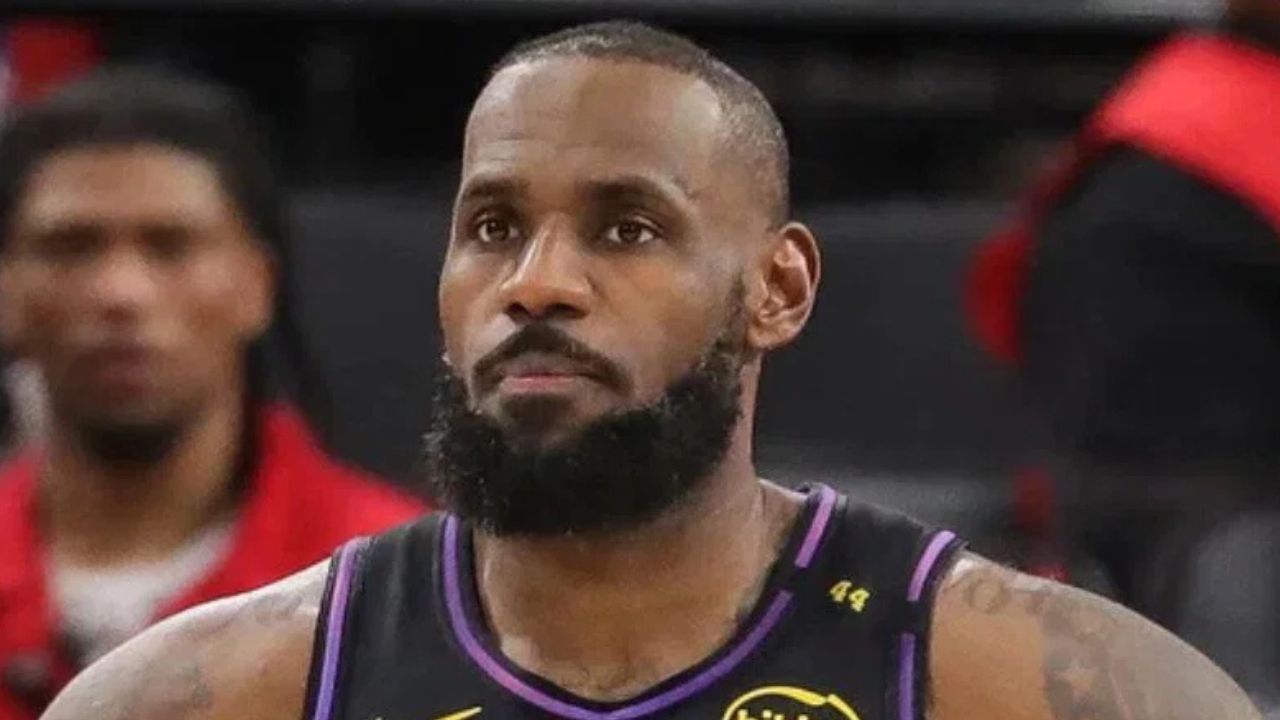
Few rookie comparisons carry more weight than those involving LeBron James. That’s why Brian Windhorst’s recent comments about Cooper Flagg quickly became one of the NBA’s most debated talking points.
Watch What’s Trending Now!
The discussion resurfaced this week after Windhorst revisited remarks he had previously made about Flagg’s defensive ability. Rather than walking back the comparison, the ESPN analyst made it even clearer where he stands on the debate.
“Let me just say, I wanna 100% clarify what I said about Cooper Flagg,” Windhorst said on October 30, 2026, on ESPN. “In my view, Cooper Flagg is better at defense than LeBron was at the same age. I don’t even think it’s debatable.”
Windhorst wasn’t arguing that Flagg is the better overall player. Instead, he focused specifically on defense, where he believes the 2025–26 NBA Rookie of the Year has an advantage over the version of James that entered the NBA in 2003.
“There were defensive plays that LeBron made at that age. You know, he certainly would get into passing lanes. He certainly would block shots,” Windhorst said. “He was a defensive playmaker, but Cooper is better defensively empirically. I don’t think that’s debatable.”
To understand Windhorst’s position, it’s worth revisiting what he said just days earlier.
“Cooper Flagg’s a better defender than LeBron at 19. Cooper Flagg’s got a better fundamental jump shot at 19. Cooper Flagg is more positionally versatile defensively at age 19.”
That versatility is at the heart of Windhorst’s argument. Flagg has already shown an ability to guard multiple positions, switch across defensive assignments, and remain effective against different types of offensive players.
A recent example came on October 26 against the Miami Heat. Flagg became the first teenager in NBA history to record at least 25 points, 10 assists, five rebounds, and five steals in a single game.
He finished with 29 points in Dallas’ 113-109 victory while impacting the game on both ends of the floor. Performances like that help explain why some analysts see his defensive ceiling as one of his defining traits.
The comparison becomes more interesting because their rookie numbers are remarkably close.
James averaged 20.9 points, 5.5 rebounds, and 5.9 assists during his Rookie of the Year campaign. Flagg, meanwhile, has averaged 21.0 points, 6.7 rebounds, and 4.5 assists through his rookie season.
Those similarities are part of what has fueled the conversation. Yet Windhorst’s argument is not centered on scoring or playmaking.
LeBron entered the league as a generational offensive talent whose combination of size, athleticism, and court vision immediately transformed Cleveland’s attack. Windhorst has acknowledged that reality while maintaining that Flagg’s defensive fundamentals and positional versatility are more advanced than James’ were at the same age.
The debate will likely continue as Flagg’s NBA career develops. But for Windhorst, the distinction is clear: while the offensive comparisons remain open for discussion, he believes Flagg already has an edge over the young LeBron in one specific area.