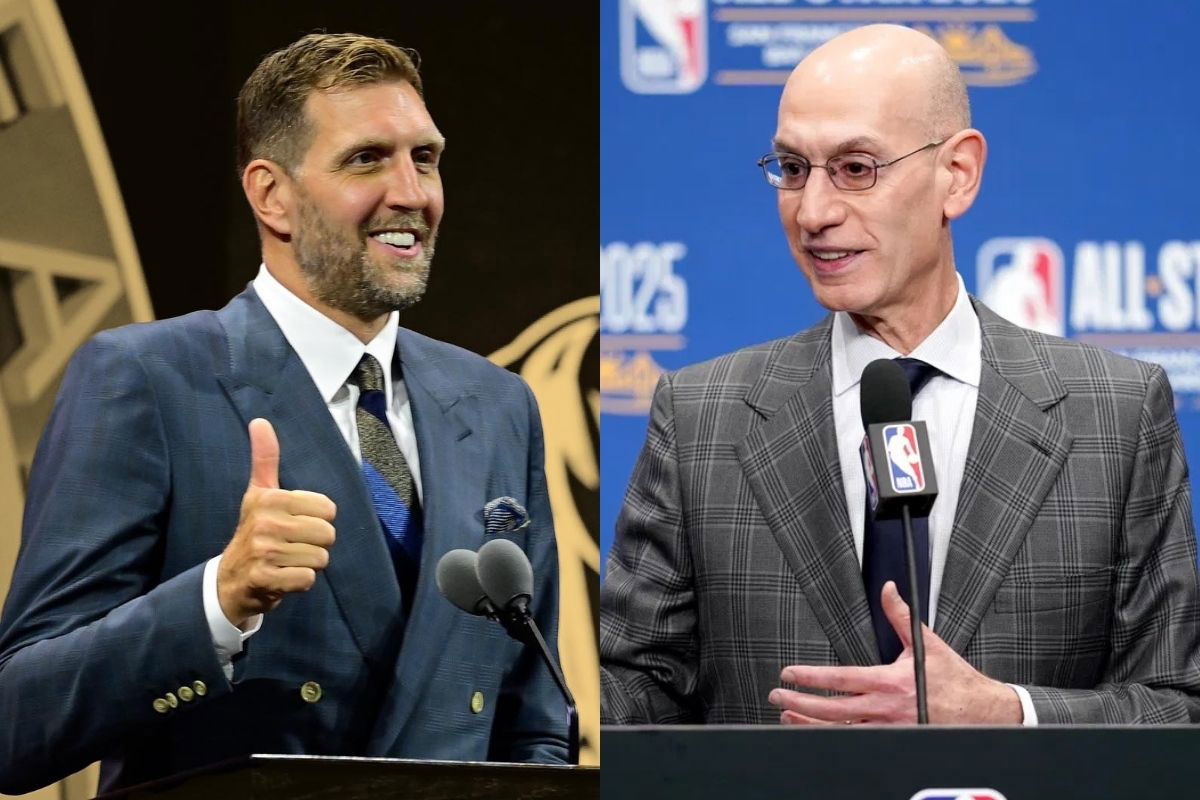
The NBA’s European expansion plan is no longer operating in theory. The window to execute is closing, pressure is mounting, and skepticism is now coming from inside the sport’s most respected voices.
Watch What’s Trending Now!
That skepticism became public this week when Dirk Nowitzki openly questioned the feasibility of NBA Europe, casting doubt on both the timeline and the structure behind Adam Silver’s most ambitious international project. His comments arrive as the league simultaneously navigates a formal legal warning from the EuroLeague, a direct rival with contractual leverage over Europe’s top clubs.
That combination changes the temperature of the conversation. Nowitzki’s concerns were blunt and specific. Speaking recently, the former NBA champion questioned how a league without confirmed locations or teams could realistically launch on schedule. “We don’t even have any locations yet, and it’s supposed to start in a year and a half. Seriously, respect, that’s a tough timeframe.”
That assessment matters because it targets execution, not philosophy. Nowitzki did not dismiss the idea of NBA Europe outright. Instead, he questioned whether the current pace matches the scale of the ambition.
He also highlighted what makes European basketball structurally different and harder to replicate. “The European model with promotion and relegation is interesting. It’s very, very important, as it’s part of what our European sports culture is based on. It makes the league more exciting.” For Nowitzki, that tension sits at the heart of the project. The NBA’s closed system prioritizes stability. European leagues thrive on stakes that run from top to bottom.

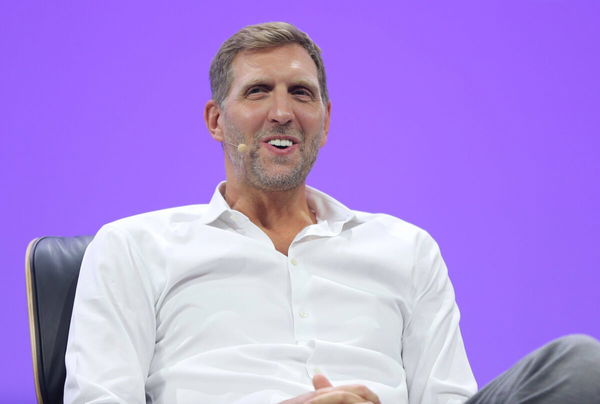
Nowitzki’s critique did not stop at logistics. He contrasted the competitive incentives baked into European leagues with the NBA’s regular-season reality. “In the NBA, if you have a bad first half of the season, you basically have nothing left to play for in the last 40 games. That makes it a bit hard to watch.”
That observation connects directly to NBA Europe’s identity problem. If the league cannot mirror European stakes, it risks feeling artificial. However, if it does mirror them, it challenges core NBA principles. Nowitzki acknowledged that tension without pretending there is an easy answer. “With the European model, there’s something at stake right up to the end. But I’m also curious to see how it’s going to work. The EuroLeague is still around, and that’s a good competition.” Curiosity, here, is not endorsement. It is a caution.
Adam Silver and Co. face a legal battle amid their plan to launch NBA Europe
While Nowitzki raised execution concerns, the EuroLeague introduced legal ones. According to a recent report, EuroLeague formally informed the NBA that legal action may be pursued if the league engages in discussions with clubs that have already committed to EuroLeague for the next decade. A letter was sent last week, and all A-licensed EuroLeague clubs were notified.
That distinction matters. No lawsuit has been filed. However, the threat is explicit and contract-based. The pressure stems from EuroLeague’s push to lock in long-term commitments. Thirteen shareholder clubs currently hold A-licenses, not twenty. Those clubs were recently asked to formalize long-term participation, a move designed to insulate the league from NBA outreach.
Legally, clubs still retain flexibility until mid-2026. Practically, the warning complicates NBA Europe’s recruitment strategy now.
Reuters
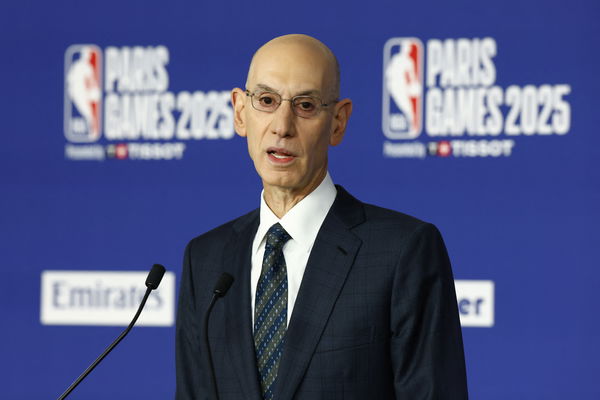
[US, Mexico, & Canada customers only] Jan 23, 2025; Paris, FRANCE; NBA commissioner Adam Silver speaks before the Paris Games 2025 NBA basketball game between the San Antonio Spurs and Indiana Pacers at Accor Arena. Mandatory Credit: Stephanie Lecocq/Reuters via Imagn Images
That combination validates Nowitzki’s skepticism. His comments do not exist in isolation. They echo growing doubts across the European basketball ecosystem.
Meanwhile, the NBA has acknowledged ongoing talks with team owners and investors. Still, no finalized commitments have been announced. Momentum exists. Certainty does not.
For Silver and the NBA, the next phase is decisive. Recruitment efforts must navigate legal boundaries while accelerating structural clarity. Delay strengthens EuroLeague’s leverage. Speed increases execution risk. For EuroLeague clubs, the clock also ticks. Decisions made in the coming months will shape European basketball’s power structure for the next decade.
And for observers like Nowitzki, the stance is clear. Vision alone is not enough. Without locations, structure, and buy-in, ambition becomes exposure. NBA Europe is no longer being judged on what it could become. It is being judged on whether it can arrive at all.