
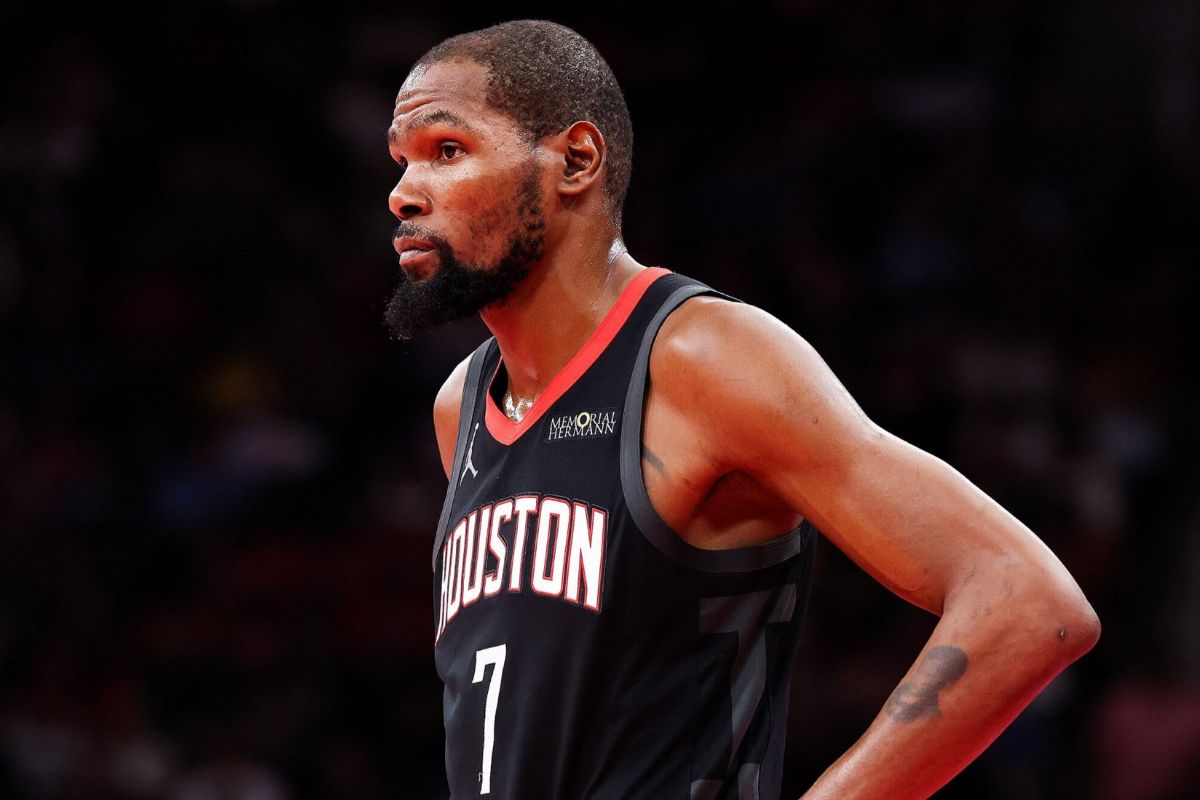
A lower-body injury. A playoff series on the line. A medical staff declaring the star fit to return. The last time those three elements converged in October, it ended with a pop audible over 20,000 fans in Toronto, and an entire season wiped out. Now, ahead of Game 2 of the Houston Rockets’ first-round series against the Los Angeles Lakers, history is beginning to rhyme in ways that should give everyone in Houston pause. Dr. Evan Jeffries, the NBA and NFL’s go-to injury analyst, reviewed the latest update on Kevin Durant and offered an assessment that raised a red flag beyond the official optimism surrounding the Rockets star.
Watch What’s Trending Now!
According to ESPN’s Shams Charania, Durant’s status for Game 2 remains “up in the air,” with the star dealing with a deep bruise in his right patellar tendon. Writing on X, Dr. Jeffries warned: “Contact directly with the tendon can cause a bruise, but it can also cause an ‘acute tendonitis.’ This can cause pain, swelling, and a lack of range of motion.” As Lachard Binkley of Sports Illustrated reported on Tuesday, Jeffries elaborated further, saying: “I wouldn’t necessarily say he could make it worse; it would be more he’s going to cause a delay in healing because he will be irritating it by playing on it,” Dr. Jeffries said when asked if his return for Game 2 could make the injury worse by coming back too quickly.

With Kevin Durant's status for Game 2 still up in the air, I spoke with @GameInjuryDoc about exactly what a bone contusion is, if he could make it worse by coming back too soon, how the injury will limit his game when he does come back, what other players have recently dealt with Show more

Charania painted the clearest picture yet of how the injury occurred: Durant suffered the deep bruise in his right patellar tendon last Wednesday during a practice drill, chasing a loose ball before colliding knee-to-knee with a teammate. The collision has since caused swelling, pain, and a restricted range of motion in the leg. Rockets head coach Ime Udoka offered his own frank assessment of why Durant sat out Game 1: “He hit it in a very awkward spot. Right above the knee, the patellar tendon area, it’s just very tender and sore. Pain tolerance is one thing, but actually, limited movement is more the cause.” Imaging of the area revealed “nothing major” structurally, but as Dr. Jeffries’ warning makes plain, the absence of structural damage does not eliminate the risk of making things significantly worse.
Durant’s absence from Game 1 opened the door for LeBron James to lead Los Angeles to an unexpected 107-98 victory. A result made more stinging by the fact that the Lakers were also missing Luka Doncic and Austin Reaves. Durant recently described himself as “the offense” for a Rockets team that has played all year without starting point guard Fred VanVleet, who tore his ACL in September. ESPN’s Brian Windhorst called the situation “worrisome”, a word that carries particular weight given what happened the last time urgency overrode caution with this player.
The Ghost of 2019: Why Durant’s Injury History Makes This So Alarming
In the 2019 NBA Finals, Durant returned from a right calf strain, missing nine games, before being cleared to play Game 5 against the Toronto Raptors. He had undergone just four weeks of rehabilitation before being cleared, on that same day, to compete in the NBA Finals. In the second quarter, he heard a pop, and the rest is one of the most painful chapters in NBA history. Warriors then president Bob Myers, visibly emotional after the game, said: “Had we known this was even in the realm of possibility, there’s no way we ever would have allowed Kevin to come back.” The pattern, a lower-body soft-tissue injury, playoff pressure, and premature clearance, looks uncomfortably familiar from the outside looking in.
Imago
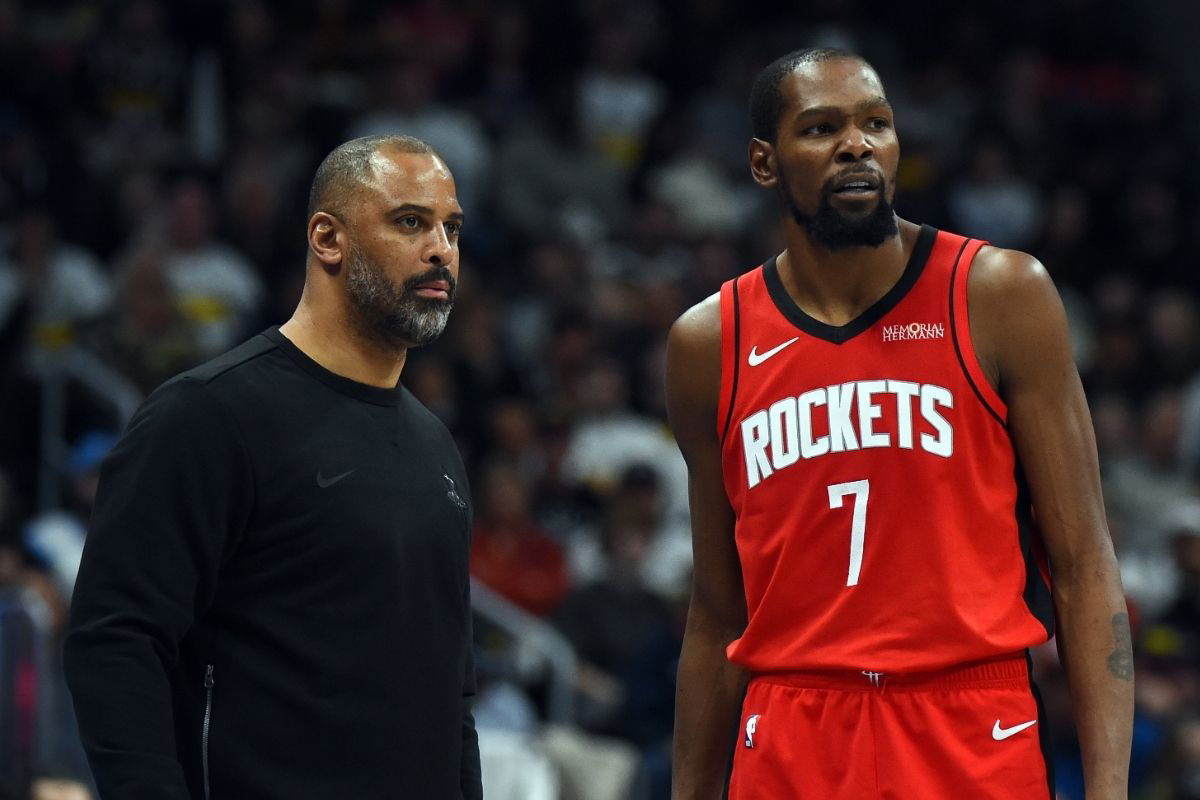
Dec 20, 2025; Denver, Colorado, USA; Houston Rockets forward Kevin Durant (7) talks with head coach Ime Udoka during the second half against the Denver Nuggets at Ball Arena. Mandatory Credit: Christopher Hanewinckel-Imagn Images
Durant played 2,840 minutes during the 2025-26 regular season, the most since his 2013-14 MVP campaign, missing only four of 82 games and averaging 26.0 points per game. Critically, this injury did not come from the grind of that workload; it was a freak collision in practice a week before the playoffs began. Udoka confirmed that KD participated in approximately half of Monday’s practice and listed him as a game-time decision for Tuesday’s Game 2.
The Rockets’ optimism is understandable, but it was optimism that preceded the worst night of Durant’s career in 2019. Dr. Jeffries’ warning and the shadow of that Achilles rupture together form an unmistakable message: the most dangerous move Houston could make right now is letting the scoreboard dictate the medical timeline. If the tendonitis diagnosis proves accurate and sidelines Durant beyond a week or two, Houston’s season could effectively be over before it really begins. Game 2 tips off Tuesday, but the bigger question is what shape the Rockets’ franchise cornerstone will be in for Game 3, Game 4, and beyond.