
A torn oblique kept Paolo Banchero out of action for 34 games during the 2024-25 NBA season. The Orlando Magic star missed more than two months after suffering the injury, showing just how complicated recovery can become.
Watch What’s Trending Now!
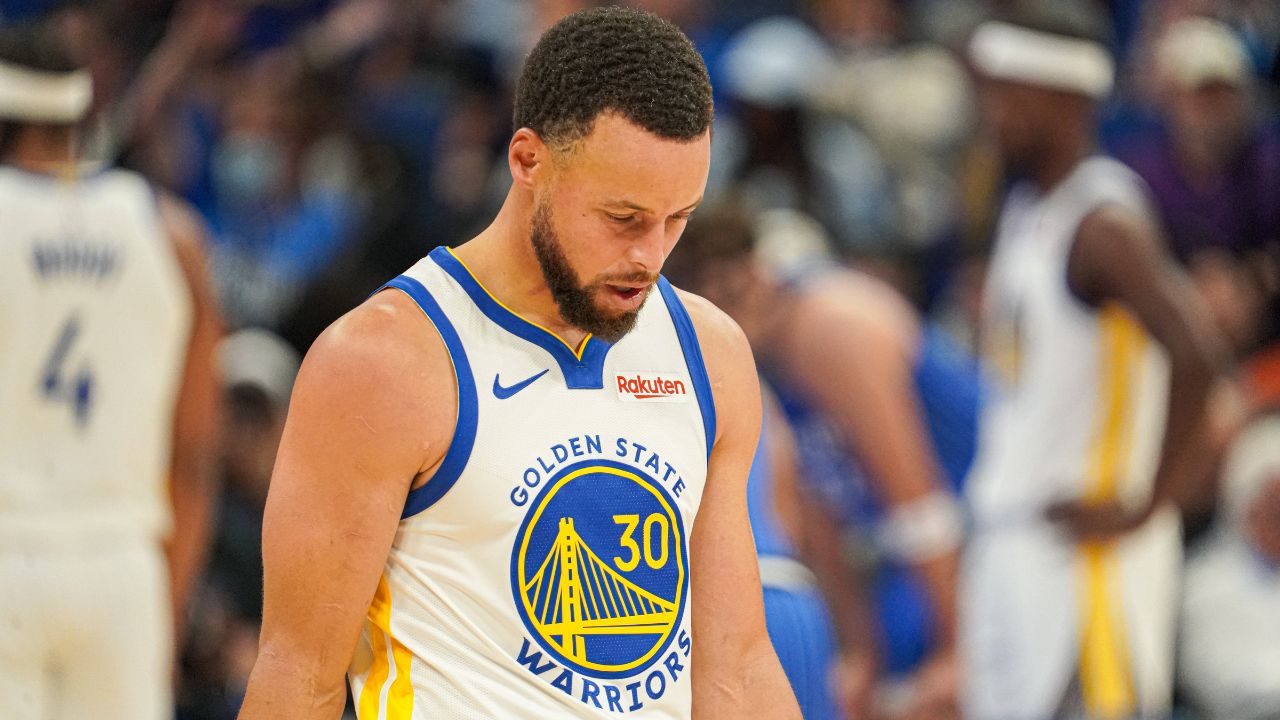
Now, Stephen Curry is facing a similar problem. The Golden State Warriors superstar suffered an oblique abdominal tear against the Houston Rockets, and while the initial diagnosis offered some hope, the latest medical assessment has raised questions about his recovery.
“On average, NBA players miss around 4 games with these injuries but there are varying degrees of severity which can make for a longer recovery (i.e. baseball players usually miss 4 weeks), particularly if a player is older.”
That was UCSF orthopedic surgeon Dr. Nirav Pandya’s assessment after ESPN’s Shams Charania reported Curry’s diagnosis. The doctor’s comments offer some relief, but his warning about age and injury severity is particularly relevant to the 38-year-old superstar.
The difference between a short absence and several weeks on the sidelines could depend on the extent of Curry’s tear. Sports medicine physician Dr. Brian Sutterer examined historical NBA injury data and found that players with abdominal strains missed approximately two weeks, while those with abdominal or oblique tears averaged around 5.5 weeks.
That difference makes the Warriors’ latest update particularly important. The franchise has confirmed that Curry will be re-evaluated in two weeks, but that does not mean he will automatically return once that period ends.
Shams Charania also provided a more concerning outlook on ESPN, reporting that Curry could be sidelined for closer to one month. He explained that the Warriors would assess the injury after approximately 14 days before deciding whether the recovery would require three weeks, four weeks or even longer.
For Golden State, the priority will be ensuring that Curry makes a complete recovery. However, the nature of this particular injury makes that process more complicated than simply waiting for the pain to disappear.
The obliques are muscles located on either side of the abdomen. They help the body rotate, bend sideways and maintain stability during movement, making them important for several actions that basketball players perform throughout a game.
Dr. Pandya explained their importance while discussing Curry’s injury.
“They basically are the muscles that help you rotate, bend to the side, kind of move your trunk around, and that’s really important for any kind of rotational movement.”
The injury is particularly uncommon in basketball because oblique muscles are more frequently affected in baseball. Batters and pitchers repeatedly rotate their trunks while swinging and throwing, placing considerable stress on the muscles.
Dr. Pandya pointed out that baseball players are especially vulnerable because of the demands of their sport.
“They’re commonly injured by baseball players who make a living swinging a bat.”
However, basketball presents its own challenges. Players constantly change direction, pivot, accelerate and stop, all of which require the abdominal muscles to help stabilise the body.
Dr. Pandya also highlighted how important the obliques are for these movements.
“It’s not only important for doing the basic things like shooting and passing, but what it’s extremely important for is that it gives you that stability so you can cut, pivot and change direction.”
That is where Curry’s injury becomes particularly concerning. The Warriors guard does not simply stand behind the three-point line waiting for the ball; his ability to create separation through constant movement is a major part of his offensive game.
Curry regularly runs around screens, changes direction and relocates after passing the ball. His shooting also requires him to maintain balance and coordinate his upper and lower body, particularly when attempting shots while moving at speed.
An injured oblique could make these movements uncomfortable and affect his ability to perform them at full intensity. Even after the pain improves, the Warriors will need to ensure that Curry can move freely without putting additional stress on the injured area.
Dr. Pandya also specifically addressed how the injury could affect Curry’s game.
“Not only does an oblique injury affect the ability to shoot, but Curry’s off-ball wizardry is dependent upon having strong obliques.”
The recovery process will therefore involve more than simply getting Curry back onto the practice court. The Warriors will need to monitor how he responds to movement, shooting drills and the physical demands of a full game before considering his return.
There is also a reason the franchise cannot afford to rush the process. Dr. Pandya explained that returning before the muscle has properly recovered could create problems elsewhere in the body.
“What you don’t want is that he’s having a little bit of soreness in his oblique and he comes back and he starts running differently or he’s changing his directions a little bit differently, then his knee flares up, his ankle flares up … you want to make sure everything is 100 percent in place so that he doesn’t get that secondary injury.”
That warning carries additional weight considering Curry’s recent injury history. He missed 39 games during the 2025-26 season because of a right knee injury, appearing in just 43 games.
The Warriors had already been careful with his workload entering the new campaign. Head coach Steve Kerr acknowledged that the coaching staff would continue monitoring Curry’s minutes after his previous knee problems.
“We’re definitely going to manage [Curry’s] minutes as best we can. That will be a conversation with Rick.”
Kerr was referring to Rick Celebrini, the Warriors’ director of sports medicine and performance. Curry had also expressed confidence in his physical condition before the season, saying he had “no limitations at all” and felt “a lot stronger” after his summer training.
The latest injury is an unfortunate interruption to that progress. More importantly, the Warriors must now balance their immediate need for their superstar with the importance of protecting him for the remainder of the season.
There are also historical examples that show why the franchise cannot rely on a single recovery estimate. Banchero’s 34-game absence is one of the clearest reminders of how long a serious oblique tear can keep an NBA player away from the court.
Franz Wagner, Banchero’s Orlando teammate, also suffered an oblique injury during the 2024-25 season. He missed 20 games before returning, providing another example of how recovery can stretch beyond the initial expectations.
LeBron James offers a different comparison. The Los Angeles Lakers superstar, then 36, missed eight games with an abdominal strain during the 2021-22 season. However, his injury was classified as a strain rather than a confirmed tear, making it an imperfect comparison for Curry.
Austin Reaves also suffered a Grade 2 left oblique strain during the 2025-26 season. He missed nine games across the regular season and playoffs before returning, showing that even injuries involving the same muscle group can produce different recovery periods.
These cases do not establish how long Curry will be unavailable. The Warriors have not publicly disclosed the grade of his tear, making direct comparisons difficult.
Meanwhile, Golden State must figure out how to maintain its momentum without its leading scorer. The Warriors entered the Houston matchup with an 8-3 record after putting together an eight-game winning streak, making Curry’s sudden absence an especially difficult setback.
The team went 13-26 in the 39 games Curry missed last season, compared with 25-20 when he played. Its offensive rating also dropped from 119.3 with Curry on the floor to 109.0 without him, highlighting just how much his presence influences the team’s scoring.
Curry was averaging 30.6 points in 28.6 minutes per game before the Houston game, while shooting 45.7% from beyond the arc. He had helped Golden State recover from an 0-3 start, and his production was a major reason behind the team’s turnaround.
His departure against Houston also created an opportunity for the supporting cast to take on greater responsibilities. Brandin Podziemski finished with 22 points, six rebounds and four assists in 37 minutes, showing that he could provide an offensive spark.
Yaxel Lendeborg also delivered an impressive performance, finishing with 25 points and 10 rebounds. He scored 13 points in the second quarter, helping Golden State remain competitive after Curry headed to the locker room.
However, replicating those performances over an extended stretch will be a different challenge. Podziemski will need to take on more responsibility as a scorer and playmaker, while Lendeborg could be handed a bigger role as the Warriors look for additional offensive production.
Golden State’s previous season also offers a warning. Its 13-26 record without Curry shows how difficult it can be to replace his influence, even when other players produce impressive individual performances.
Curry’s recovery will therefore remain the biggest concern for the Warriors over the coming weeks. Dr. Pandya explained that the initial treatment period would focus on allowing the injured muscle to settle before gradually increasing activity.
“It’s one of those things where the first seven to 10 days, you’re just letting that area rest. You’re making sure the muscle ends up getting that inflammation down, and then you’re slowly building it back up.”
There is some encouraging news, though. Dr. Pandya noted that these injuries rarely require surgery and generally do not lead to lasting complications.
“These very rarely become a chronic issue. It’s not like I have this oblique issue that’s going to bother me during the season.”
Still, the Warriors will have to be patient. Curry’s age, the uncertainty surrounding the severity of the tear and the physical demands of his playing style make a cautious recovery particularly important.
The next two weeks should provide a clearer picture of his progress, but the bigger question will be whether Curry can return without compromising the movements that make him one of basketball’s most dangerous offensive players.