

Victor Wembanyama’s NBA Cup Finals’ appearance saved the day. Otherwise, award nominations with just 64 games? You really think Adam Silver & Co. would be that flexible? No. However, the San Antonio Spurs’ phenom has been complaining about the 65-game rule. And something doesn’t sit right. Because you can’t support a rule when it benefits you and then complain when it hurts you.
Watch What’s Trending Now!
So, NFL legend Shannon Sharpe grilled the French big man on the Night Cap. “Voting or not voting has consequences. Don’t get to complain about something that you voted for, and it turns around and bites you in the butt. See, you cannot purchase a lion and then get mad if it attacks you,” Sharpe said.
In simple terms, Shannon Sharpe is calling out Victor Wembanyama for complaining about the 65-game rule, saying players only have themselves to blame. He added, “There’s 82 games in the regular season. The threshold that you must meet in order to be eligible for postseason awards is 65. Yes, sir. Now, a rule that you voted on comes back to bite you. It’s unfair. Oh, it wasn’t unfair if you didn’t think it was going to impact you, or was it when it wasn’t impacting you?”
According to Sharpe, people only start complaining when a problem personally affects them. Something ignored before suddenly feels unbearable once it hits close to home. Issues seem minor at a distance but overwhelming up close. Essentially, he’s calling out Wemby’s selective outrage.

Imago
Apr 1, 2026; San Francisco, California, USA; San Antonio Spurs center Victor Wembanyama (1) stands on the court before the start of the game against the Golden State Warriors at the Chase Center. Mandatory Credit: Cary Edmondson-Imagn Images
Last Friday, the 22-year-old returned to the floor against the Dallas Mavericks after missing a game due to a rib injury. After a 26-minute outing secured his eligibility, Victor Wembanyama pushed back on the 65-game rule, crunching numbers himself and suggesting a 75% threshold—roughly 62 games—might make more sense.
“If a guy plays 50 games, 35 minutes a game, that’s 50 times 35 — that’s 1,750, right? Am I right?” he asked the media. “If a guy plays 75 games at 20 minutes, it’s 1,500. So it’s a good view, in my opinion, to not have a limit. It’s one opinion. Seventy-five percent of the games, in my opinion, would be a logical thing, and that would be 61.5 games, right? So, 62 games.”
He then subtly pointed toward Cade Cunningham, Luka Doncic, and Anthony Edwards. All brilliant, yet falling short of the 65-game cutoff. Wemby chose to remain realistic. No special passes this season. “I think, obviously, I don’t think there’s going to be an exception made for this year. I think it’d be somewhat unfair, but we’ll see how it turns out,” he said.
Interestingly enough, Shannon Sharpe isn’t the only one who feels Victor Wembanyama’s comments made little sense. And that is because Charles Barkley has also called out the players for complaining about the 65-game rule.
Charles Barkley lashed out at the likes of Victor Wembanyama
Barkley argues that expecting players to appear in 79.2% of the regular season is fair, especially for athletes earning tens of millions annually. Moreover, he stresses it was several players themselves who approved. Therefore, he believes the 65-game rule debate lacks sympathy. Accountability matters, and agreed-upon rules must be honored without complaint later.
“I don’t think 65 games is a lot to ask, man. Shut the hell up. Y’all voted on that in the collective bargaining, and now y’all want to complain,” Charles Barkley said on Sunday’s ESPN Tip-Off Show. “If’ y’all weren’t sitting on your a— half the time sipping margaritas and stuff, they wouldn’t have put the 65-game threshold in there. Shut the hell up.”
This isn’t the first time sports legends have called out younger players for what they see as selective outrage, especially over issues like load management and availability.
A lot of these rules and expectations don’t just appear out of nowhere; they’re shaped through league policies and collective bargaining agreements that players themselves have a hand in creating. So when frustration pops up later, it can feel a bit contradictory.
Take Michael Jordan, for example. He’s been pretty outspoken about how the modern game handles rest and workload. In a 2025 NBC interview, he didn’t mince words- saying load management “shouldn’t be needed, first and foremost.”
For someone who played in a much more physically demanding era without the same kind of rest strategies, it’s easy to see why he, and many others from his generation, feel the way they do.
And that’s really where the tension comes in. On the one hand, players and their unions push for policies to balance health, performance, and the fan experience.
But on the other hand, when those same policies start affecting star players in ways they don’t like, complaints start to surface. It ends up reinforcing the idea Shannon Sharpe summed up so well: you can’t buy the lion and then act surprised when it bites.
The NBA’s 65-game rule was introduced for the 2022–23 season as part of a broader shift in the league’s player participation policy. Previously, under the 2017 player resting policy, healthy stars were restricted from sitting out nationally televised games, or teams faced fines of at least $100,000. Now, things are stricter and sharper.
Imago
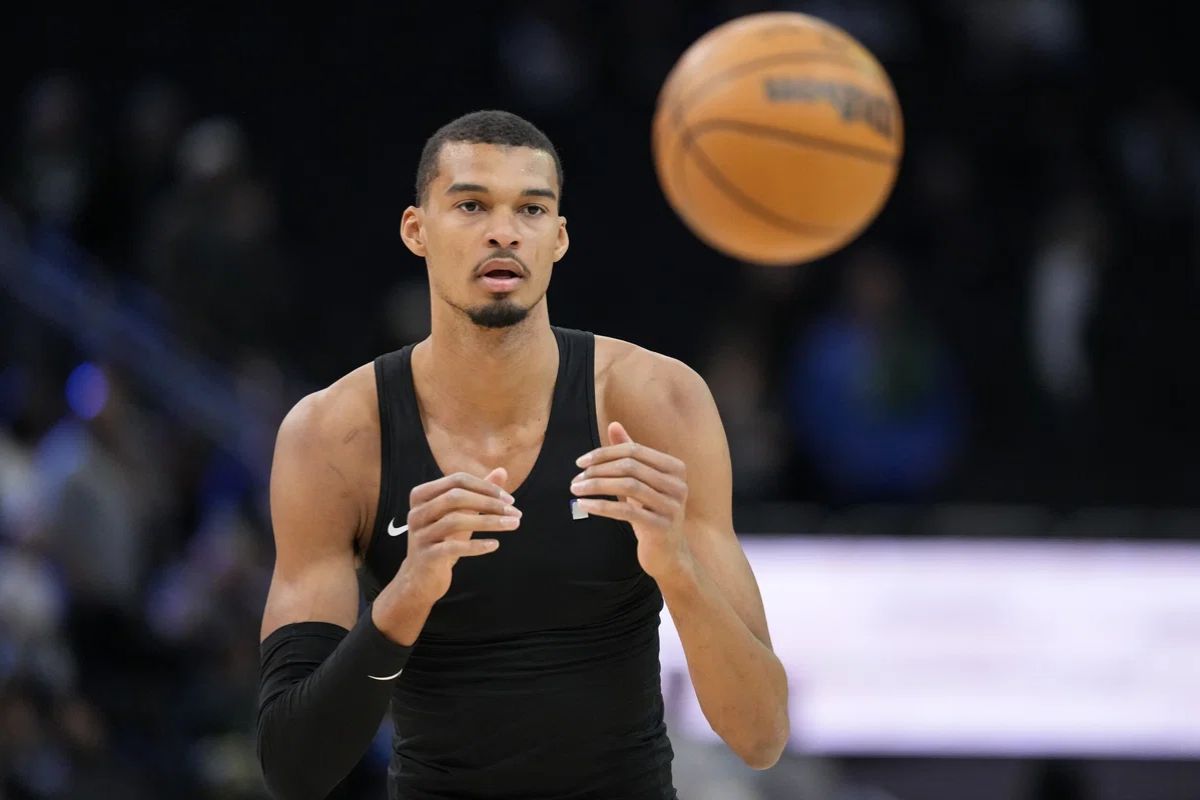
Mar 28, 2026; Milwaukee, Wisconsin, USA; San Antonio Spurs forward Victor Wembanyama (1) during warmups prior to the game against the Milwaukee Bucks at Fiserv Forum. Mandatory Credit: Jeff Hanisch-Imagn Images
To qualify for MVP, DPOY, MIP, and All-NBA or All-Defensive honors, a player must appear in at least 65 regular-season games, with a minimum of 20 minutes counting as one full game. Therefore, availability has become just as valuable as performance, turning attendance into a core metric of greatness.
Since this rule sits inside the Collective Bargaining Agreement (CBA), it was approved by both the league and the players’ union. Therefore, Charles Barkley points directly at that agreement and questions the backlash. In his view, players cannot approve rules through their representatives and later reject them when consequences hit.
The message is simple and firm. Players helped shape the 65-game rule through the collective agreement, so the backlash feels inconsistent. Moreover, Shannon Sharpe and Charles Barkley both stress accountability and ownership. Therefore, complaining after approval weakens credibility.
So, Victor Wembanyama’s debate only reignites a larger truth about responsibility, consequences, and the need to respect rules once they are set in motion.