
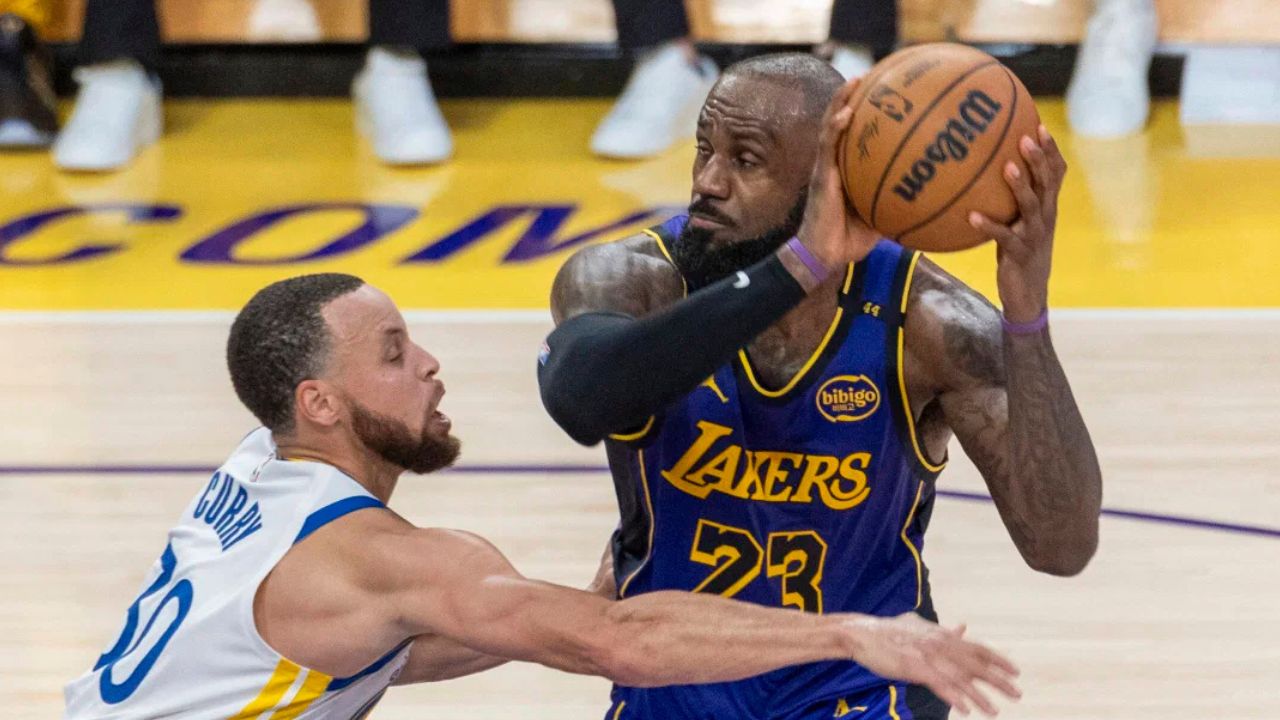
Stephen Curry and LeBron James have spent years sitting at the top of the NBA’s commercial mountain. Their jerseys remain among the league’s most recognizable, and their names help drive merchandise. Yet there is one part of the contract where neither superstar gets a bigger check than an ordinary young player.
Watch What’s Trending Now!
Draymond Green recently opened up about the lesser-known side of the business of basketball, from free agency and player-agent dynamics to jersey sales, in-season travel and much more. While breaking down how the league works behind the scenes, the Warriors superstar explained why even the biggest stars can receive the same annual licensing payout as a player who barely saw the floor the previous season.
“We all get a licensing check. LeBron James, Steph Curry, Kawhi Leonard, Shai Gilgeous-Alexander, and Nikola Jokic, they all get the same jersey sales,” said Green on The Draymond Green Show. “As a rookie, you don’t get a license check because the license check is from the year before. But say a second-year guy who didn’t play much on a team and the license check was 500 grand.
“That’s jersey sales, that’s all of the licensing things. That same 500 grand that that second-year guy gets, Steph Curry gets. It’s divvied up. It’s even split. And so you could make $300,000, you could make $500,000, but every player makes the same amount.”
Green’s explanation is intriguing when viewed in light of Stephen Curry‘s actual popularity. The Warriors star led the NBA’s 2025-26 regular-season jersey sales, with Luka Doncic, Jalen Brunson, Victor Wembanyama and LeBron James also among the top five.
The rankings were based on sales through NBAStore.com, Fanatics.com, and Fanatics’ partner sites. But those rankings do not determine how much a player receives from the league’s group licensing pool.
The National Basketball Players Association’s commercial arm, THINK450, manages group licensing partnerships on behalf of NBA players. Those rights cover a broad range of products and commercial opportunities. A recent revelation from Minnesota Timberwolves guard Jaylen Clark put an actual number on that benefit.
Clark said players received a $385,000 licensing check in 2026, explaining that the money comes from products and services that use NBA players’ collective likeness rights.
“Instead of LeBron James making $30 million. All the players came together and said we’re going to include everybody. Everybody gets an equal share, no matter if you’re the TOP dog on the team or the bottom dog.”
A player’s individual popularity can make them far more valuable commercially, but that does not translate into a proportionally larger check from the collective licensing pool.
In 2008, then-NBPA president Derek Fisher explained why players accepted an equal distribution even though stars such as Kobe Bryant and LeBron James were driving significantly more jersey sales.
“The good part about it I think — at least for most guys — is that it’s evenly distributed,” Fisher said in the LA Times. “If it wasn’t evenly distributed, you’d have some guys who would probably get zero. We recognize that our star players, they carry the load, in terms of the face of our game and the jersey sales that go on. So we’re appreciative of the fact that they’re in it too.”
Even then, Lakers star Luke Walton jokingly thanked the bigger stars as he received an unexpected licensing check.
“Thanks, Kobe Bryant. Thanks, LeBron James,” Luke Walton said, laughing. “You open the mail and have a check you don’t even count on, that’s beautiful.”
And there is a reason players have embraced that model. The league’s biggest stars generate enormous commercial interest, but younger and less established players also share in the financial upside created by that popularity.
Stephen Curry can sell more jerseys than almost anyone in the league. LeBron James can remain one of the NBA’s most recognizable athletes decades into his career. But when the collective licensing check arrives, their superstar status does not give them a bigger slice.