
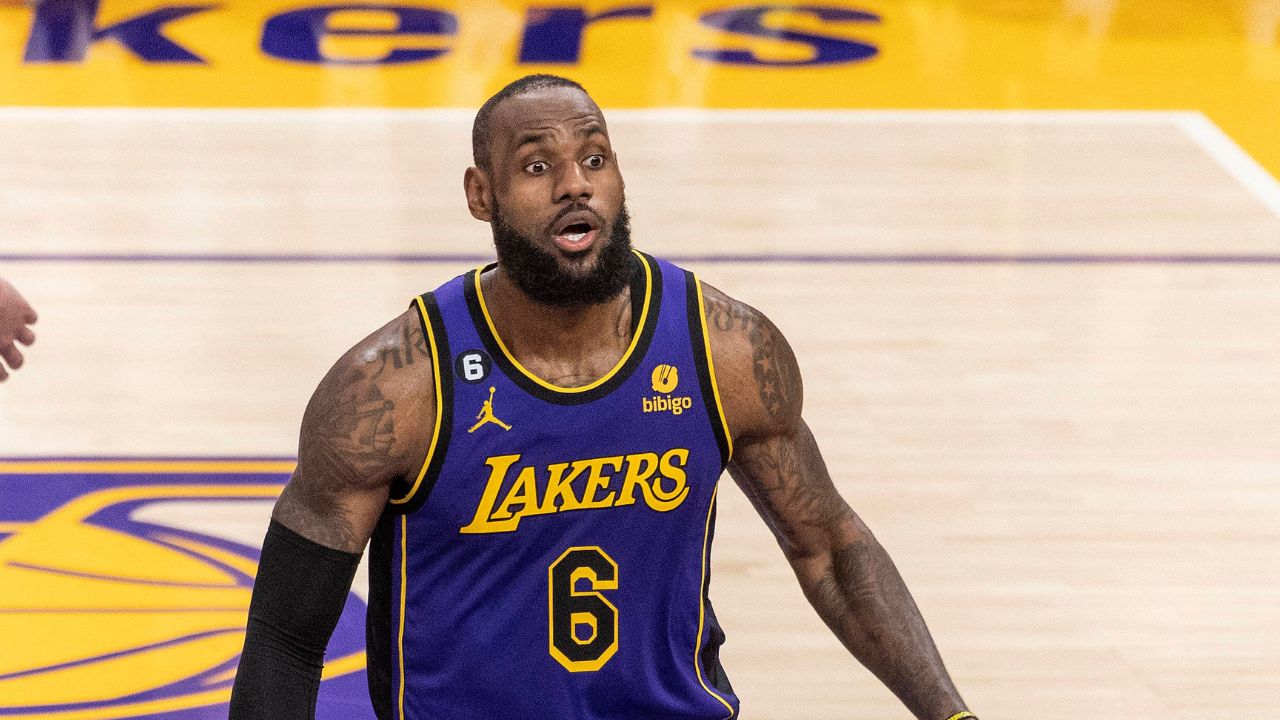
LeBron James may have chosen Philadelphia, but the biggest obstacle to completing the move isn’t another team. It’s the hard-cap situation. As excitement builds around the blockbuster signing, ESPN insiders revealed that the 76ers can’t officially finalize the deal under their current financial situation, creating an unexpected twist in the most anticipated off-season story involving Jaylen Brown.
Watch What’s Trending Now!
“They (Sixers) can’t even functionally sign LeBron. Is that correct?” Brian Windhorst asked Bobby Marks, speaking on The Hoops Collective’s Emergency Pod. The Cap expert, Bobby Marks, confirmed the concern before pointing to one important detail.
“That’s correct. It’s because he’s signing a two-year deal.”
He explained that a one-year veteran minimum contract would have counted only $2.4 million against the Sixers’ salary cap because of the NBA’s veteran reimbursement rule. However, since LeBron James is expected to sign a two-year veteran minimum contract, the league’s reimbursement benefit no longer applies. As a result, the Sixers must absorb the full $3.9 million first-year salary against the cap. That difference may appear small on paper, but it changes everything.
Marks explained that the Sixers have already hard-capped themselves at the first apron after several offseason transactions. Once a team reaches that limit, it cannot exceed it under any circumstances, regardless of the player involved. The additional cap hit pushes the Sixers roughly above $572k. That’s why the contract cannot become official in its current form.
Windhorst also noted that the Sixers triggered the hard cap through multiple roster moves. Notably, in the Jaylen Brown trade, the team absorbed more salary than it sent out. Marks agreed, adding that the team had effectively hard-capped themselves several different ways during the offseason.
To establish their unbreakable hard-cap line, the Sixers completed a blockbuster trade absorbing Jaylen Brown’s massive $57 million incoming salary in exchange for sending out Paul George’s $54 million contract along with two first-round and two second-round draft picks.
“They basically, I think they’ve hard-capped themselves four times. You can only do it once, but for them, they did it four times,” Marks said.
The situation doesn’t signal that LeBron James won’t make it to the Sixers roster.
Tim Bontemps illustrated the point by comparing James’ contract structure to the one DeAndre Jordan signed with the Pelicans. While James accepting a veteran minimum contract represents an enormous bargain from a basketball standpoint, the two-year structure eliminates the salary cap relief that normally accompanies one-year veteran minimum deals.
Teams operating near the first apron have almost no flexibility once they trigger those restrictions, leaving even minor financial differences with significant consequences. That technically has become the Sixers’ biggest hurdle.
Fortunately, the issue appears solvable.
The front office needs to reduce enough salary to move back below the hard-cap line before the league can approve LeBron James’ contract. That could come through a minor trade, a roster move involving a non-guaranteed contract, or another transaction that clears the required space.
Currently, Jabari Walker and Dalen Terry appear as the likely options to be waived to create the space.