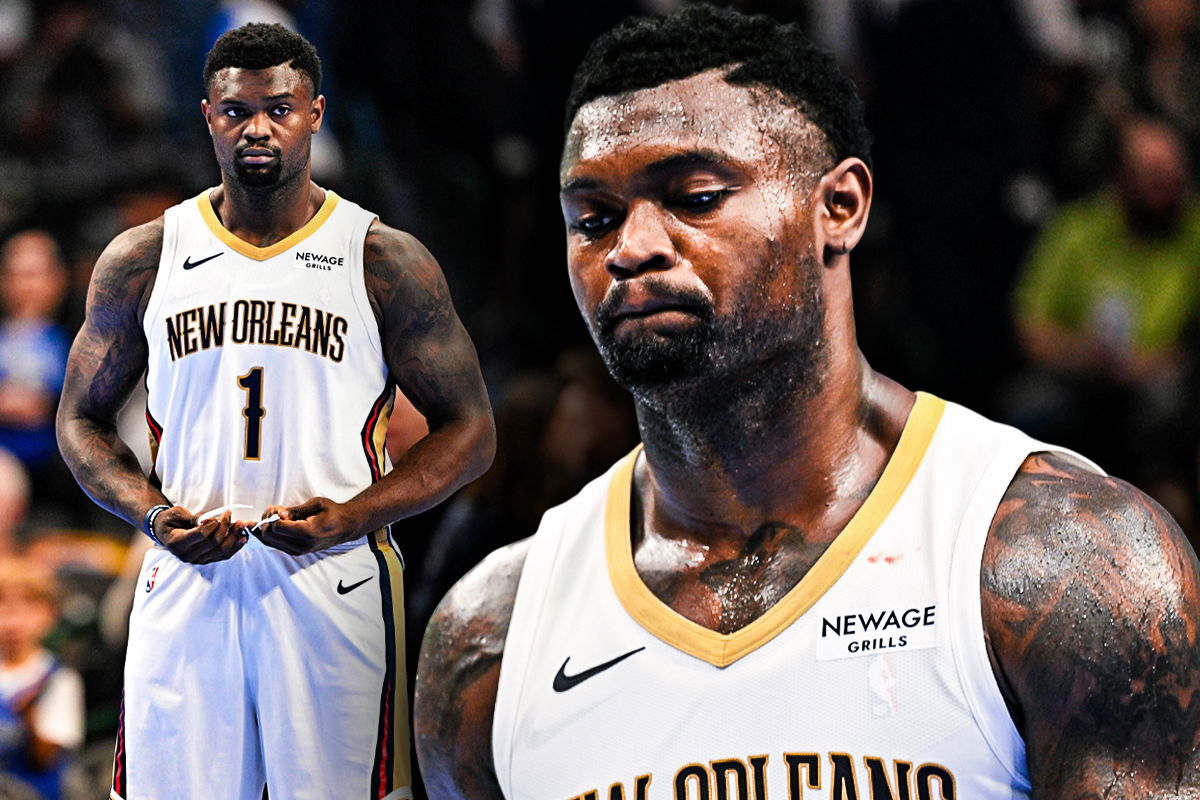
Almost six years after welcoming Zion Williamson’s NBA debut with cautiousness, the New Orleans Pelicans are still managing their star player with care.


After missing five games to heal a Grade 2 right hip adductor strain, Williamson played two games this week, albeit on a minutes restriction off the bench. Though this marks the first time in his seven-year career that he played as a reserve, Williamson has returned on a minutes restriction already.
Watch What’s Trending Now!
After missing the first 44 games of the 2019-20 season while rehabbing his right knee, Williamson averaged a career-low 27.8 minutes per game in hopes to maximize his health. Shortly after the NBA resumed its postponed season during the COVID-19 pandemic on a quarantined campus, Williamson left for nine days to attend to what he called “an urgent family matter.”
Every year since then, Williamson has experienced numerous injuries that have stunted his potential. Zion missed the entire 2021-22 season to recover from offseason surgery on his right foot. In 2022-23, he played in 29 games before missing the rest of the season after Jan. 2 with an injured right hamstring. Williamson then missed the 2024 playoffs after injuring his left hamstring in a Play-In game against the Los Angeles Lakers. This season, he has missed 12 out of 27 games, mostly due to his left hamstring (10) and right adductor (five).
The Pelicans have stayed patient enough with Williamson to sign him to a five-year, $197 million extension following the 2021-22 season. But how long should they remain patient with the 25-year-old’s tenuous health moving forward?
EssentiallySports spoke to three outside medical experts for perspective on Williamsons’ injury history, his current injuries and their outlook on his health. Though none of these doctors have worked with Williamson and have access to his medical files, they have worked with patients who have dealt with similar injuries.
The roundtable included:
Dr. Taylor Dunphy, sports medicine surgeon with Hoag Orthopedic Institute.
Dr. Jonathan Kaplan, associate professor of orthopedic surgery at Duke University
Dr. Jay Shah, medical director of sports medicine clinic, Pomona Valley Hospital Medical Center.
Editor’s note: The following one-on-one interviews were conducted separately. The following transcript has been edited and condensed.
What do you make of Zion’s latest injuries?
Dunphy: “Grade 1 is mild. Grade 2 is a partial tear. Grade 3 is a full tear. It’s favorable that it’s not a full tear. That’s good news. But for explosive athletes, any kind of hamstring, adductor or quad tear can take a long time to heal. I typically tell my patients that Grade 2 injuries take six weeks to heal. But obviously, each patient is different. Grade 1 is about a week or two. Grade 2 is about six weeks. But for some football players, a hamstring injury can take 12 weeks. Grade 3 is more severe. That could yield to season-ending surgery. Given his history, Zion’s nursing one injury into another. That means the likelihood to return quickly is not going to happen. They’re not going to put him out there again just to get hurt two weeks later. So it’s a slow go and one of these injuries that you have to rehab, be slow to return and be smart about the explosion.”
Kaplan: “We see a lot of soft-tissue injuries, whether it’s adductor or hamstrings. Adductors are like a groin strain. We see a lot of these with high-explosive athletes. It’s very common for football and basketball players for two reasons. One, the nature of the sport. There is a lot of agility, mobility and quick movements. Two, it happens to a lot of athletes that go from a slow or stopped position to trying to accelerate very quickly and speed up. So I’m not totally surprised. We tend to see injuries with athletes that are also explosive with their movements. Obviously, Zion is one of those people. He’s such an explosive, quick and fast-twitched person. So these types of injuries are very, very common.”
Shah: “These are recurring injuries. So it tells us that muscle or tendon hasn’t had a proper chance to heal. Is that muscle group capable of handling that level of activity? When you look at Zion Williamson and the style of play that he commands, he’s categorized as an explosive athlete. He’s not Zach Randolph as a slow churn that just has the ball in the paint. Zion plays more vertically up and down the court and relies on his athleticism and explosiveness to command the game. Having a recurring hamstring strain and adductor strain tells us that those areas of his body are just not yet capable of handling that intensity of his game.”
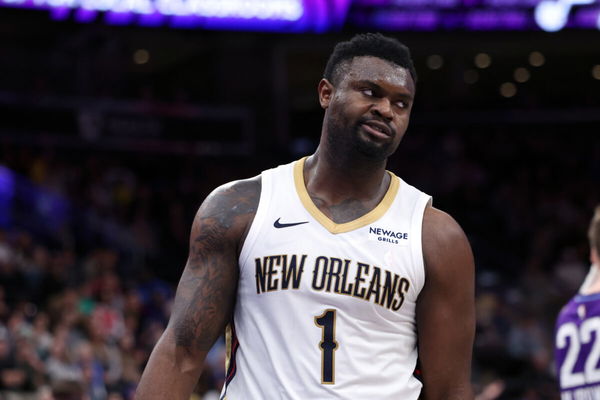
Imago
Mar 2, 2025; Salt Lake City, Utah, USA; New Orleans Pelicans forward Zion Williamson (1) reacts to a play against the Utah Jazz during the second half at Delta Center. Mandatory Credit: Rob Gray-Imagn Images
Given the nature of hamstring and adductor injuries as well as Zion’s injury history, how would you characterize what your level of concern is with him?
Dunphy: “It’s crazy how many injuries he’s had. Zion is 25. So you wonder what that looks like in the future. You see these big guys. He’s not a Yao Ming kind of guy. But there are guys that just cannot stay healthy. They have all of these stress fractures and soft-tissue injuries, and it doesn’t look good. If you’re missing multiple sessions in one season, the odds of it happening again would probably be high.
I wouldn’t say the recurrence rate is out of the norm. But if I was a betting person, I would say if he returns, he may have something else coming up. That’s always a concern. And why is he so injury-prone? That’s the question that someone closer to him would have a better sense of. Is it how they’re treating him? Are they pushing him too hard? Or not enough? I don’t know him personally, obviously. But those are the questions.”
Kaplan: “Obviously, I don’t know his exact injury. But reading between the lines, it reads like this is more of a mild injury. Normally, with an adductor injury, it’s a mild injury where you stretch the muscle, but you don’t really tear the muscle fibers. So I would have less concern for the quality of play. Usually with these injuries, players can come back and play pretty well. The biggest concern with any soft-tissue injury, whether it’s mild, moderate or severe, is always the risk of reinjury.
With these mild injuries, athletes can return to play within a week or two, but the body is still healing through the course of months. So the biggest concern, risk or worry is if he reinjures it. With Grade 1, you’ll usually stretch the muscle. Grade 2, you’ll have a partial tear. Grade 3, you’ll have a full tear. Each one takes longer to come back. With Grade 2, you can still come back within a week or two. But sometimes it can be three or four weeks.”
Shah: “It’s concerning given the fact that he’s had a plethora of injuries since entering the league. He started out with a meniscus injury. He’s had hamstring injuries. He’s had adductor strains. There are all indications that it’s a structural problem or overuse injuries. So it’s concerning that it’s been happening season by season. I don’t know if you can rank which injury is more significant than the other. But when you’re looking at the number of injuries he’s had and the types of injuries he’s had, the strength of those areas of the body to the level of play that he’s requesting his body to perform isn’t equal.
When you have these injuries on a recurring basis, you start asking questions. What’s going on with his conditioning? How is he approaching his offseason? Is he having a holistic team that’s comprised of strength and conditioning coaches, nutritionists, physical therapists, athletic trainers and physicians that are overseeing his care and looking at everything through the kinetic chain? A hamstring is not just a hamstring. An adductor is not just an adductor. They all work in conjunction.
Look at Steph Curry as a comparison case. Earlier in his career, he dealt with recurring ankle injuries. It’s well documented that he worked with a few strength and conditioning coaches, athletic trainers and physicians to work on his core strength, hip strength and landing mechanics. That changed the trajectory of his career.”
You all haven’t worked with Zion or the Pelicans directly. Pelicans coaches and players have publicly said in recent years that Zion has been doing the right things with following training staff’s feedback and being more consistent with his routine and dieting. But what are the controllable things Zion should be doing to give him the best chance for better health and availability?
Dunphy: “For elite athletes, it’s a combination of nutrition, training and following the advice and being patient. Patience is going to be the biggest thing for him. He has a career that is only so long. So you want to go back and be on the team and prove yourself and extend your contract. But if you don’t listen to your body and you push too fast, you’re going to go backwards. That’s a big thing for veteran players and players that are trying to extend their contract. They may have motivations they wouldn’t have. That’s my concern.
How is he getting treated? How is he handling things mentally? I assume they’re giving him the best nutrition, daily PT and access to help speed up recovery. So those are the things that he can have access to that you and I wouldn’t have: PRP injections, hyperbaric oxygen chambers, specialized nutrition diets. Those can all aid in his recovery. But really, it’s a combination of his age and his injury history. Is this something that he is prone to and has a streak that he can’t break or is he trying to have to push through these injuries to show himself so he can continue to have a job?”
Kaplan: “It’s about having good balance throughout. Historically, he was knocked for his weight. So it’s about having a good balance of diet and nutrition to have good, lean muscle mass so it doesn’t overload his joints. It’s also about working on balancing all of the muscles. One thing that they probably worked with him on during therapy was core strengthening and resistance exercises. You want to balance all of the muscles out. A lot of times, they’ll transition to mobility exercises with stretching instead of just weight training. You can incorporate yoga or pyro metrics to maintain good joint mobility. That helps decrease injuries.
In the offseason, you should avoid a lot of fluctuations in your activity. Continue to work out in the offseason and incorporate them in the season. So when they start to play in the NBA season, they’re not ramping up very quickly and overloading their body after not being used to it for a few months. So it’s about being consistent throughout the year.”
Shah: “The Pelicans can be publicly saying that he is doing everything that is recommended to him by this comprehensive staff, which can include physical therapists, athletic trainers and nutritionists and physicians. But even if you’re doing all of the right things, sometimes you can still succumb to these injuries. That’s what is frustrating. It’s not as easy as saying, “If you do ‘A, B and C,’ you will be able to achieve ‘X, Y and Z.’ The probability increases. But it’s not a guarantee.
That’s what could be potentially frustrating for an athlete like Zion. They do everything that is recommended – they do their exercises, make it to physical therapy and go to their appointments and are well-conditioned in the offseason. They’re not lazy. They’re not overeating. They’re not falling off on their nutritional plan. And yet they succumb to a pulled hammy, adductor strain or a fracture. You did everything you could. But sometimes it just happens.”
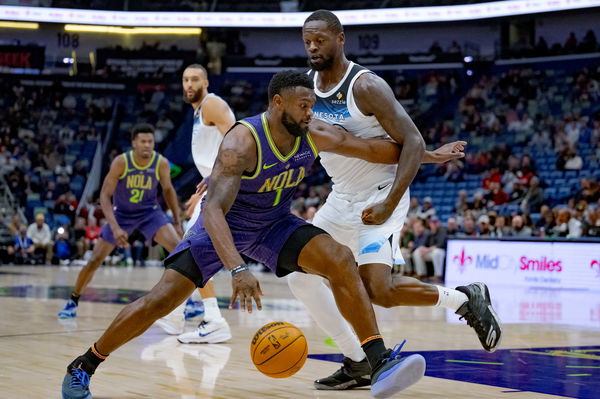
Imago
Jan 7, 2025; New Orleans, Louisiana, USA; New Orleans Pelicans forward Zion Williamson (1) dribbles around Minnesota Timberwolves forward Julius Randle (30) during the first half at Smoothie King Center. Mandatory Credit: Matthew Hinton-Imagn Images
From an outside medical expert’s point of view, to what extent should Zion adjust his explosive style of play?
Dunphy: “Each player has his own style. He’s very explosive. He’s very physical. If you’re someone like him doing fadeaways, you won’t have as much injury potential versus guys in the paint bumping around. So in the offseason, does he try to develop a skillset that he maybe is not as good at now to decrease his chance of getting hurt? That’s a question he may look into. Is he a player that can be more on the periphery than driving the lane and going up against big guys? But that’s the way his bread and butter has been with being around the basket. So can he develop more of a peripheral game?”
Kaplan: “I don’t think you should ask athletes to change the way they play. I think the biggest thing is that the athletes, training staff, coaches and the whole organization should try to design programs around the way their athletes play. When you have someone like Zion who is explosive, very powerful, takes a lot of contact when driving to the basket and can really spread the floor, it’s really important for the coaches to scheme up ways to do that without overloading him. That can be about keeping an eye on his minutes and his teammates working on movements. It’s also about designing an offseason program. Ideally, he has nutritionists, therapists and trainers that are working with him throughout the year to do all of those things to protect all of the muscles he’s using when he plays the way that he does.”
Shah: “The style of play that he’s requesting, you have to compare that to his body type. He’s a unique athlete in the way he’s built and the style of play that he commands. You have to look at his body composition, and not just from a weight standpoint. But what is his body comprised of with fat mass, bone mass and muscle mass? Then you have to optimize his body composition and conditioning. That can be very beneficial to his long-term health.”
What’s your outlook on Zion being more consistently healthy and available moving forward?
Dunphy: “If he continues his same style of play, you have a high concern for the same injuries that he’s had. That’s hamstrings, adductor and lower back stuff. These athletes have access to a lot of amazing stuff that pick-up game kind of guys don’t get access to. When I toured the Houston Rockets’ facilities, they’re one of the innovators of BFR (blood flow restriction therapy), which entailed strength training with lower stressors on your body. You fool your body into feeling that you’re having more stress than you currently are. A lot of NBA teams have started doing that. When I was at USC, we used PRP procedures. You can safely inject that for non-surgical injuries to speed up recovery. I’ll use that a lot for college athletes that are trying to get back. Those are things that I assume he’s getting access to that would improve his timeline compared to someone in high school.”
Kaplan: “The big concern with all of these big explosive players is that you’re always going to worry about soft-tissue issues. You’re always going to worry about adductor, core muscles and hamstrings, calf injuries and Achilles ruptures. That’s because of how explosive they are. But I don’t think it’s any different than the other big and explosive players. Part of injury prevention comes down to dedication and strategy. But part of it is also luck or unluckiness. It can happen to anyone at any time. I still have a good outlook for him. I think the benefit is that you’ve seen him change over the course of his career. You are hearing things that he’s being more consistent and that he’s coming into the start of the season looking leaner and healthier. That gives him a better chance to have more longevity in his career.
LeBron [James] is a perfect example of that. He’s someone that dedicated to his body early and often. That’s what has helped extend LeBron’s career for so long. So hopefully Zion does that too. This will all give him more years to play. But the biggest thing is that it’s always a balance between a player and his team with returning him when he’s ready, but not rushing him back too soon. There is always the risk of reinjury. Athletes can play through things and push it. A lot of times, they want to do that. But hopefully the staff keeps that in mind so he doesn’t have a reinjury that sets him back even further.”
Shah: “He’s still a very young athlete. So the outlook is still positive. But it’s hard to answer that question with a ‘Magic 8 ball’ and know what that’s going to look like. Is he going to be able to shake the ‘injury bug?’ Is he going to ever play a full season healthy? It depends on a lot of modifiable and non-modifiable risks. What is his approach to the offseason? How is his approach in season? How is he managed game-to-game? How does he recover after games? How does he recover pregame? How is his nutrition? We don’t have full answers to these questions. Only Zion and his team have answers to these questions. But publicly, they’re stating that he’s been a good teammate, player and employee. So I think he’s still young. There’s room for him to improve from his injuries. The way he plays the game could also change, which reduces his risk of injury. We have to see. But it’s hard. It’s the million dollar question.”
Mark Medina is an NBA insider for EssentiallySports. Follow him on X, Blue Sky, Instagram, Facebook and Threads.
Written by

Edited by

Pragya Vashisth