Imago
Image Credits: Imagn
Imago
Image Credits: Imagn
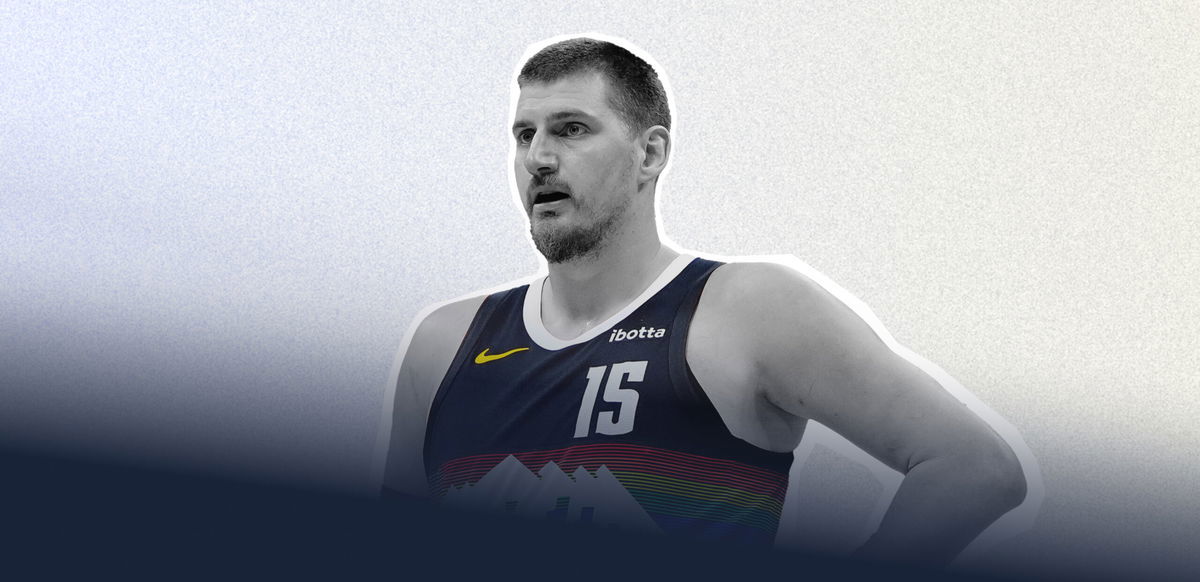
Despite staying sidelined for a month with an injury that yielded a fluid recovery, Denver Nuggets center Nikola Jokić dominated in nearly the same way as he had through an NBA championship run (2023) and three regular-season MVP campaigns (2021, 2022, 2024).


After missing 16 games while nursing a bone bruise in his hyperextended left knee, Jokić dominated with his scoring (31 points), shooting efficiency (8-for-11) and rebounding (12) in Friday’s 122-109 win over the LA Clippers. Jokić posted these numbers despite playing in only 25 minutes, a sharp decline from his normal workload (34.2 minutes per game). In Sunday’s 111-121 loss to SGA and the Oklahoma City Thunder, the 30-year-old followed that up with 16 points on 67% shooting, along with 7 rebounds and 8 assists in 29 minutes.
Watch What’s Trending Now!
That left a handful of outside doctors expressing relative optimism that Jokić won’t face many issues moving forward.
The panel included:
Dr. Kevin Collon, MD, orthopedic surgeon with Keck Medicine of USC.
Dr. Conor O’Neill, assistant professor of orthopedic surgery, foot/ankle and sports medicine, Duke University.
Dr. Jay Shah, medical director of sports medicine, Pomona Valley Hospital Medical Center.
None of these medical experts work with any NBA team directly or have access to any of the players’ medical records. But they have plenty of medical insight regarding knee injuries. They all talked generally about hyper-extended knee injuries, the usual rehab and their outlook on Jokić’s return. They also commented on the NBA’s rule that requires players to be eligible for postseason awards only if they appear in at least 65 regular-season games. Jokić can’t miss any more than three regular-season games in the next 2 1/2 months.
Editor’s note: The following interviews were conducted separately. They have also been edited and condensed.
From your outside medical perspective, what do you make of Jokić’s injury that entails a hyperextended left knee and a bone bruise?
Collon: “That’s one of the most common injuries to have with a hyperextended knee. The most commonly cited injuries with hyperextended knees are bone bruises. They don’t give you much with their reporting on it. I’ve looked at the injury to see what’s going on and there’s always drama on how long a player is out and if they’re out longer than they thought he would be. I obviously don’t know personally and wouldn’t want to speculate.”
O’Neill: “Anytime we see someone with a hyperextended knee injury and has to immediately come out of the game, the first thought is if there is something with their ligaments. With those initial reports that they planned to reevaluate him after four weeks, it appeared he avoided a ligament injury. A bone bruise is technically a form of structural damage. But it really is damage to the bone underneath the cartilage in the knee. So that’s not really restrictive from a stability standpoint. But it is very painful. Many times, those injuries are a pain tolerance situation.”
Shah: “Given the findings with what’s described in the MRI, it’s a best-case scenario. The bone bruise will eventually heal without the need for surgery. That is major. With the way he hyperextended his knee, you’re always worried about a torn ligament or a meniscus tear. Then there’s always the possibility of needing surgery and needing to be out for the season. But with the injury that he has, there is hope that he comes back from this with the body healing on its own. It just requires time, but it’s not a season-ending injury. That is good news, given the mechanism of the injury.”
Imago
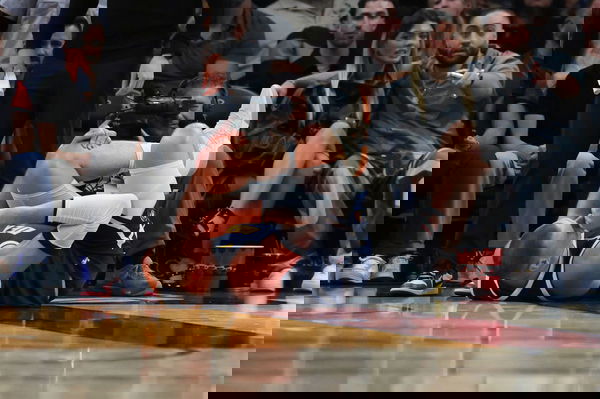
Dec 29, 2025; Miami, Florida, USA; Denver Nuggets center Nikola Jokic (15) holds his knee after an injury against the Miami Heat during the second quarter at Kaseya Center. Mandatory Credit: Sam Navarro-Imagn Images
Jokić didn’t need surgery and returned within four weeks. What’s the usual timetable to return from these injuries?
Collon: “It can vary depending on the players’ symptoms. Everything happens on a spectrum. It can be small, one bone that has a bruise on it or both bones that have a bruise on it. So every athlete will have a different recovery process with that. But it can be quite short, anywhere from two weeks to maybe even less. But it can be up to four weeks and potentially even longer. The timeline can vary from a few days to a few weeks.”
O’Neill: “It’s a little dependent on the player, the extent of the bruising and their tolerance to push through pain. I’d say four weeks is within an average. But normally, there is some form of protective weight-bearing exercises, a few days on crutches and then time to rest. The pain in the bone bruise will get progressively better as time goes on. But a bone bruise will likely be evident on an MRI for a number of months. So it can take upwards of nine months to a year for the imaging to show a resolution in the bone bruise.”
Shah: “On average, it’s about six weeks. For taller individuals, it might take a little bit more time. But on average, it’s about six weeks. At some point, the bone heals on its own. Then it becomes more about a pain tolerance issue. Since this has taken place earlier in the season, this is when you can afford to take a little time to let the joint heal, to prevent him from returning too quickly and not having him sustain an injury that could be worse, such as an ACL tear, PCL tear or a meniscus tear.”
What does the usual rehab entail?
Collon: “Usually, you rehab the athlete in the trainer’s room to try to decrease inflammation, increase mobility and get the strength back. They have a lot of different modalities. There is icing, ultrasound shock wave therapy, dry needling, scraping and massage treatment. I’m not doing those things. But I’m aware that those things are available to our patients to help with mobility and decrease swelling. Then eventually, they’ll work them through sports-specific drills and exercises to make sure they can progress through things painlessly and get back to where they need to be to compete.”
O’Neill: “There are a number of medications that sometimes people will use for bone bruises. Obviously, I don’t know if any of that was used with him. But you don’t have to necessarily intervene. Just like if you have a bruise on your skin, it’ll get better with time. But the bone bruise tends to linger longer than a soft-tissue bruise. So generally, it will be a progression with either protective weight-bearing or low-level activity, such as walking. Then the patient often ramps up and can see if they can walk for an increased period of time. As athletes, they then work on activating the quads and hamstrings without loading the knee joint. Every day, they’ll usually ramp up the amount he can do until he can walk pain free, then running, then dynamic movements and then sports-specific activities.”
Shah: “When they’re initially rehabbing the knee, you want to help with pain reduction and swelling improvement. What might be happening is that there is stiffness in the joint. So you want to improve the knee’s range of motion. It also depends on whether he can place weight on it. If you’re unable to place weight on it, then you usually do non weight-bearing exercises on a treatment table and then do partial weight-bearing exercises with crutches. Then you transition to full weight-bearing work as you can tolerate it. Then you go to strengthening exercises.
This isn’t cut and dried. But that’s the main focus. You want to get pain and swelling down. Depending on how much weight-bearing exercises you can do, you want to help the range of motion and improve strength. Then you want to incorporate basketball-related movement and work in a controlled environment to see how you’re pivoting, how you can lift off your leg and if you can land on it. Those are functional movements required to play the center position. Then, after that, you start to reincorporate the player with the team with conditioning work. As the player is able to tolerate this work, they try to keep up with their conditioning on the bike or the swimming pool. Then you incorporate that on a basketball court with individual drills, team drills and scrimmages.”
Imago
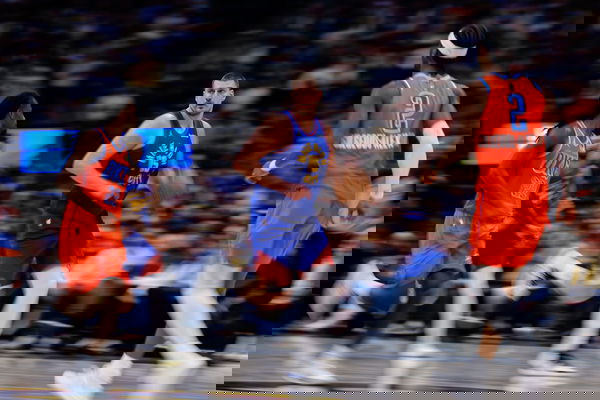
Feb 1, 2026; Denver, Colorado, USA; Denver Nuggets center Nikola Jokic (15) dribbles the ball up court against Oklahoma City Thunder guard Cason Wallace (22) and guard Shai Gilgeous-Alexander (2) in the fourth quarter at Ball Arena. Mandatory Credit: Isaiah J. Downing-Imagn Images
Recently, Nuggets coach David Adelman described Jokić’s progress as “up and down” and that there are “good days and bad days.” From an outside medical lens, how did those comments land with you?
Collon: “It doesn’t sound unusual to me. That’s just how it goes. Every athlete has a little bit of a different experience with the same injury. You just have to take it one day at a time, do the rehab and progress slowly. It’s very common where you’ll get to the next phase of the rehab and then there will be a little setback and there’s some pain. Then you have to back up and go to the previous stage and restart for a day or two. Then go to the next phase. Then, hopefully, at that point, it’s painless. But it often is a ‘three steps forward, one-step back’ or a ‘four steps forward, two steps back’ process to get back to full competition.”
O’Neill: “When you’re working up progressively, they’ll often try to push it a little bit. If you overload the joint, you’re going to aggravate that area. So I can see how a day of heavy loading could’ve put him back a little bit. The underlying issue isn’t completely resolved. So if he had a really heavy day of work, maybe he could take small steps backwards. But the natural course of this is that the injury should plateau continuously and get better with time. I would think that will be the continued trajectory.”
Shah: “It’s not a surprise that it wasn’t a linear direction with improvement, especially with a few factors with his body size and that he plays at the center position. When you’re in that position, healing takes a little bit longer. There are nuances that can cause some minor setbacks. On average, it can take about six weeks. But you need to allow the body to heal on its own. Unfortunately, there is nothing that anybody can do to expedite the healing. So it can be an up and down endeavor as he returns.”
What do you think of the NBA’s 65-game rule and how it can affect players such as Jokić for their eligibility for regular-season awards and All-NBA team consideration?
Collon: “That’s up to the league to decide how many games they want a player to play to be eligible for an award. If you’re injured for a long period of time during the season, it’s unfortunate that you can’t be considered for awards. But that’s outside of my expertise, obviously. The league has its rights in determining what it should do. As medical professionals, all we can do is help athletes get back to playing as soon as they can and help them to be safe and not come back too early. But we have to stay out of the political stuff.”
O’Neill: “Obviously, I come from the medical side of things where the patient is most important. You don’t want to create a situation where someone will try to come back before they’re ready. But I don’t know if I have a strong stance on it. There have been some interesting developments recently about the progressive increase in load from year to year and the potential that this can have with an increase we’re seeing in Achilles ruptures. So I do think we need to be cognizant of the toll that these guys are putting their bodies through, and that it’s very real. If they want to have good longevity, they should listen to their bodies.”
Shah: “The whole spirit behind it was to have players play and compete. One of the biggest complaints from the casual NBA fan, whether they’re watching on TV or paying their hard-earned money to go to games, they often see their favorite NBA player not play for an injury that might be because of load management or any other case. My take is that the idea came up because this was hurting the brand. The league leaders decided that in order to qualify for certain awards that you have to play a certain amount of games. But that damages the ability for players that actually have a true injury to qualify for that award.
You can’t win every battle. You’re going to lose some by changing a rule in its current iteration. How many subtexts can you put down to make sure everybody is happy? I don’t know how you do that. I think the original idea was that if a player, especially a starter and a star, is able to play, then they should play. Then, if you don’t, you lose out on the ability to qualify for certain awards. That might be beyond me. If you’re asking a fan, that’s different. The easy answer is you can play, you play. But that’s why I’m not sitting on an executive table.”
In his return, Jokić had 31 points and 12 rebounds on a minutes restriction (25). But what’s your big picture outlook on how he will be now that he’s back?
Imago
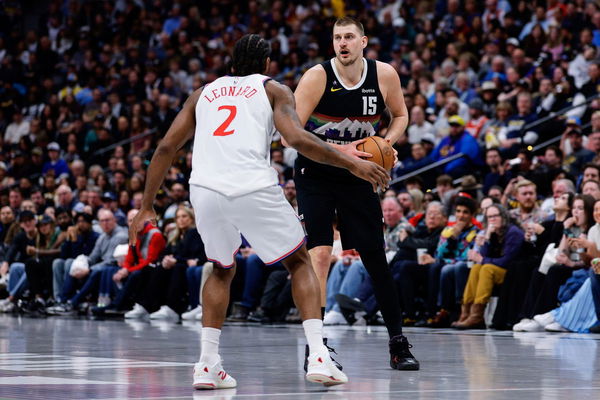
Jan 30, 2026; Denver, Colorado, USA; Denver Nuggets center Nikola Jokic (15) controls the ball as Los Angeles Clippers forward Kawhi Leonard (2) guards in the third quarter at Ball Arena. Mandatory Credit: Isaiah J. Downing-Imagn Images
Collon: “When an athlete with this injury is cleared to go back, my expectation is they can go back with little to no residual effects. I would expect them to go back to their prior level of play after having this type of injury. If you look at the data, there is a 30% chance of reinjury to the same knee within a three-year period. But that’s just averages. I’m not entirely convinced that having that injury predisposes you toward having another one in the future. I would expect someone with this injury to have a full recovery. But the timeline certainly varies.”
O’Neill: “They kept his playing time to 25 minutes, but he still nearly had a triple-double. So obviously, he’s an absolutely dominant player. But that doesn’t surprise me; they’re not going to send him back in his first game and have him play most of it. But he looked great in those 25 minutes. I’m curious to see if they let him play full soon, or if they continue this progression. The last thing you want to do is exacerbate the underlying situation when he has already demonstrated he can make a lot of improvement. If he can be that good in 25 minutes, you don’t necessarily need to rush it. So I would expect him to make a full recovery to be the full player that he was before. There may be a little bit of weakness with his injury, but his muscular system is so strong so he should compensate for that. That’s probably still not 100%, but this is not a type of injury that lingers.”
Shah: “It’s a good question. But it’s hard to predict that. The whole idea is that when he returns, he can return to full strength. Timing is everything. This happened earlier in the season, so he has some time and space to return back to his pre-injury baseline. If this happened later on in the season and the playoffs were coming around, maybe they’d accelerate his timeline. But if he comes back on an accelerated timeline, he can come back in a more compromised state. Then there’s always the risk of reinjury or an injury with worse outcomes. So the hope and the goal is to take the injury with what’s going on in the season and timing and to help with his recovery so that when he returns, he can return to his pre-injury baseline. So I think there’s still optimism he can return to his pre-injury baseline. You just have to give it some time and patience.”
Mark Medina is an NBA insider for EssentiallySports. Follow him on X, Blue Sky, Instagram, Facebook and Threads.
Written by

Edited by

Pragya Vashisth