Imago
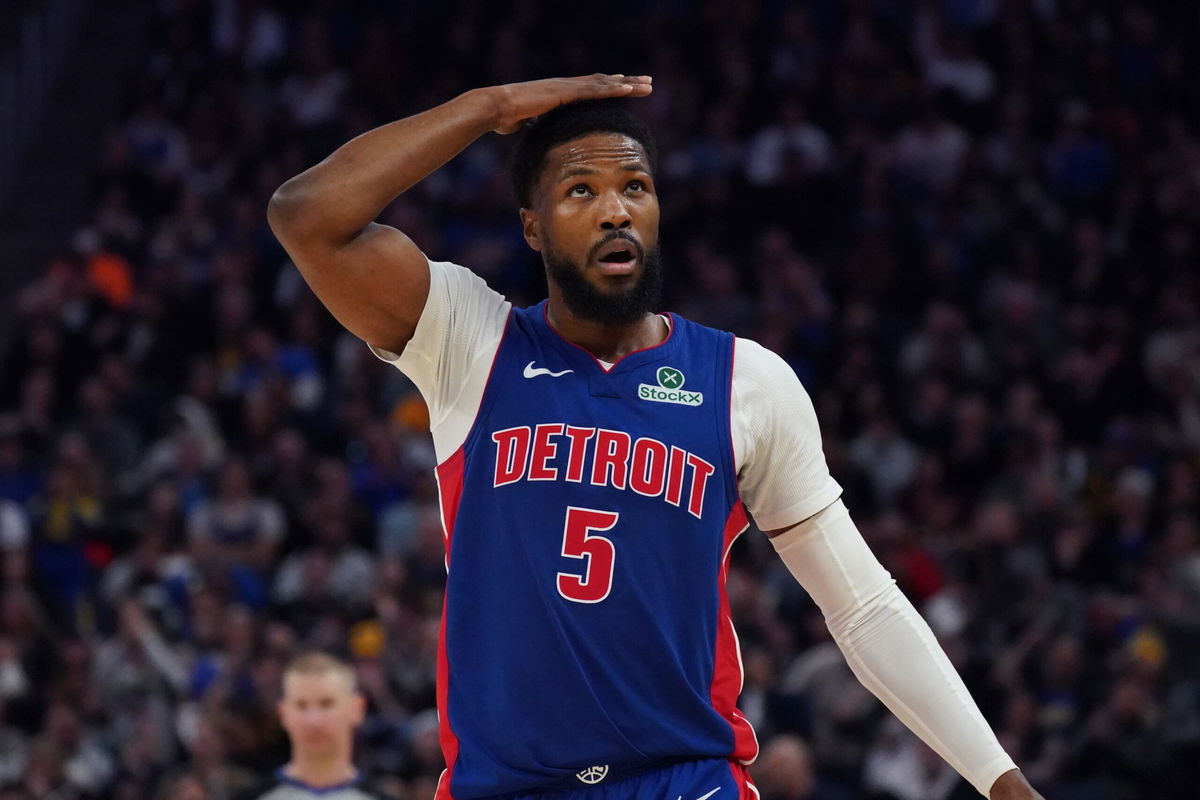
Mar 8, 2025; San Francisco, California, USA; Detroit Pistons guard Malik Beasley (5) signals for a shot clock violation during a game against the Warriors in the fourth quarter at Chase Center. Mandatory Credit: David Gonzales-Imagn Images
Imago
Mar 8, 2025; San Francisco, California, USA; Detroit Pistons guard Malik Beasley (5) signals for a shot clock violation during a game against the Warriors in the fourth quarter at Chase Center. Mandatory Credit: David Gonzales-Imagn Images
The margin between NBA wealth and financial collapse is usually measured in bad investments or poor advice. For Malik Beasley, it has become something far more complicated. Because while the 29-year-old guard once stood one signature away from a $42 million payday, he now finds himself juggling lawsuits, gambling investigations, mounting debts, and a professional exile that has pushed him out of the NBA entirely.
Watch What’s Trending Now!
And in early March, another major bill officially came due. A federal judge in New York ordered Beasley to pay $1 million to his former representation agency, Hazan Sports Management, after the free agent failed to respond to a breach-of-contract lawsuit tied to a marketing advance.
The judgment, issued by U.S. District Judge Jeannette A. Vargas, represents the latest legal blow in what has become one of the most complex financial collapses involving an active NBA player. However, the $1 million ruling is only one piece of a far larger crisis.
The case centers around Beasley’s short-lived partnership with Hazan Sports Management (HSM). Back in November 2023, the veteran shooter signed with agent Daniel Hazan, agreeing to both a standard NBA representation contract and a separate marketing agreement that gave the agency control over his endorsement opportunities.
As part of that marketing deal, HSM paid Beasley a $650,000 advance against future endorsement revenue. Initially, the partnership appeared successful. HSM negotiated a one-year, $6 million contract with the Detroit Pistons, and Beasley delivered the best shooting season of his career. He made 319 three-pointers during the 2024-25 campaign, setting a Pistons franchise record while averaging 16.3 points per game.
Imago
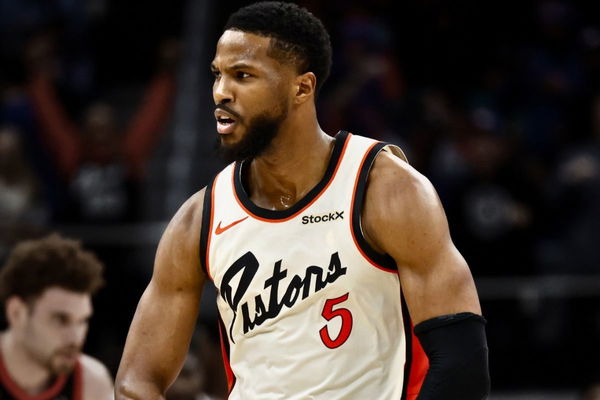
Nov 25, 2024; Detroit, Michigan, USA; Detroit Pistons guard Malik Beasley (5) reacts during the second half against the Toronto Raptors at Little Caesars Arena. Mandatory Credit: Rick Osentoski-Imagn Images
Momentum was building. However, the relationship collapsed quickly. In February 2025, just 15 months into a four-year agreement, Beasley abruptly fired the agency and moved his representation to Seros Partners.
HSM immediately claimed the move violated the exclusivity terms of their marketing contract. Because the agreement contained a strict termination clause, ending the partnership triggered automatic liquidated damages of $1 million. The agency sued in federal court.
Beasley never responded. According to court records, he failed to file a defense, retain counsel for the case, or submit any objections despite being personally served the lawsuit in New York.
As a result, the court issued a default judgment, ordering him to pay the full amount plus interest. That interest alone has been accruing at $246.58 per day since March 2025.
A Financial Collapse Years in the Making
The lawsuit might sound dramatic on its own. In reality, it barely scratches the surface of Beasley’s financial situation. Despite earning roughly $60 million during his NBA career, the guard has been drowning in debt across multiple jurisdictions.
The largest burden came from a $5.8 million judgment secured by South River Capital, a company that provides loans to professional athletes backed by future contracts. Beasley had used his guaranteed NBA earnings as collateral for the loan while playing with the Minnesota Timberwolves.
Although he reportedly repaid around $1.1 million, the majority of the judgment remains outstanding. Meanwhile, several smaller debts paint an even more troubling picture.
Court filings show Beasley was sued by a Detroit landlord for unpaid rent totaling more than $21,000, ultimately resulting in his eviction from a luxury apartment building known as The Stott. A Minnesota dentist also won a $34,390 judgment, forcing wage garnishment from Beasley’s Pistons salary.
Imago
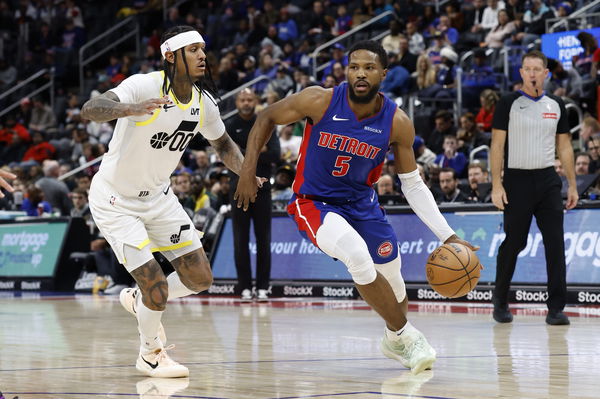
Dec 19, 2024; Detroit, Michigan, USA; Detroit Pistons guard Malik Beasley (5) dribbles on Utah Jazz guard Jordan Clarkson (00) in the first half at Little Caesars Arena. Mandatory Credit: Rick Osentoski-Imagn Images
Even a Milwaukee barbershop secured $26,827 in unpaid service fees through the courts. The optics were striking. During the same period he was averaging 16 points per game and earning millions, Beasley was facing lawsuits over rent, dental bills, and haircuts.
Which raises the obvious question. How does a player with eight-figure career earnings reach this point? The answer lies in the structure of modern athlete financing. Many lenders provide large cash advances against future contracts, often with aggressive interest structures.
As long as the athlete continues signing NBA deals, the system works. The moment those deals disappear, the entire financial structure collapses. That exact scenario played out for Beasley.
The $42 Million Contract That Disappeared Overnight
Just months after his record-setting season with Detroit, Beasley was positioned to cash in. The Pistons were reportedly prepared to offer him a three-year, $42 million extension entering the summer of 2025.
Then everything changed. One day before NBA free agency opened, reports surfaced that Beasley had become connected to a federal investigation into an illegal sports gambling ring.
The probe was part of a wider inquiry into betting manipulation tied to NBA player prop markets. Betting irregularities surrounding a January 2024 game between the Milwaukee Bucks and Portland Trail Blazers triggered scrutiny when massive wagers were placed on Beasley recording fewer than 2.5 rebounds.
The unusual betting activity raised alarms across sportsbooks and integrity monitoring systems. Even though Beasley ultimately finished that game with six rebounds, the investigation had already begun. The fallout was immediate. Detroit withdrew its $42 million offer.
Across the NBA, teams became unwilling to commit money to a player who might face suspension or worse. Beasley’s earning power vanished overnight.
Cleared by the FBI, Still Waiting on the NBA
Beasley’s legal team later stated that the FBI cleared him as a target of the federal investigation. However, that has not ended the uncertainty surrounding his career. The NBA continues to conduct its own internal investigation, and until the league officially closes the case, front offices remain hesitant to sign him.
That has effectively placed the veteran guard in what his lawyers called “investigative purgatory.” Without NBA clearance, Beasley’s only option was to leave the league.
In February 2026, Beasley signed with the Cangrejeros de Santurce, a franchise in Puerto Rico’s professional league. The team carries unusual visibility because it is owned by global music superstar Bad Bunny and a group of entertainment executives.
The move provides Beasley with several strategic advantages. First, the league’s schedule allows him to stay game-ready ahead of the next NBA free agency window. Second, Puerto Rico keeps him geographically close to the United States in case the NBA investigation concludes.
Imago
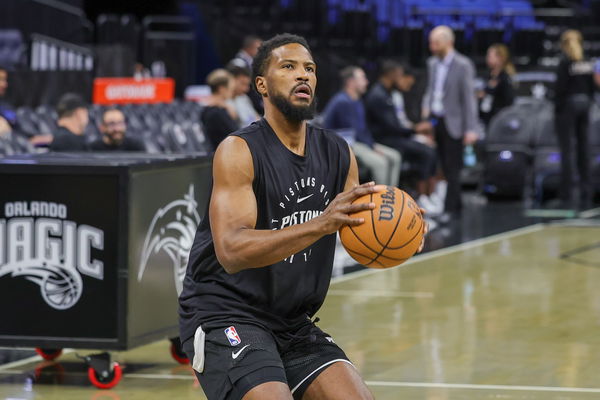
Nov 23, 2024; Orlando, Florida, USA; Detroit Pistons guard Malik Beasley warms up before the game against the Orlando Magic at Kia Center. Mandatory Credit: Mike Watters-Imagn Images
And third, the team’s high-profile ownership guarantees national media attention that could help reshape his public image. For a player once considered one of the NBA’s elite perimeter shooters, it represents a temporary lifeline.
At his peak, Beasley was one of the league’s most valuable floor spacers. His 319 three-pointers during the 2024-25 season remain proof that his on-court value never disappeared.
What did vanish was the financial stability surrounding it. Between lawsuits, loan judgments, wage garnishments, and a lost $42 million contract, the guard now faces millions in liabilities while trying to rebuild his career from outside the NBA.
The $1 million judgment handed down in New York is only the latest reminder of how quickly that fall happened. Whether Beasley can return to the league will depend on one final decision. The moment the NBA closes its investigation, his future could change again overnight. Until then, one of basketball’s most prolific shooters remains an outsider looking in.