
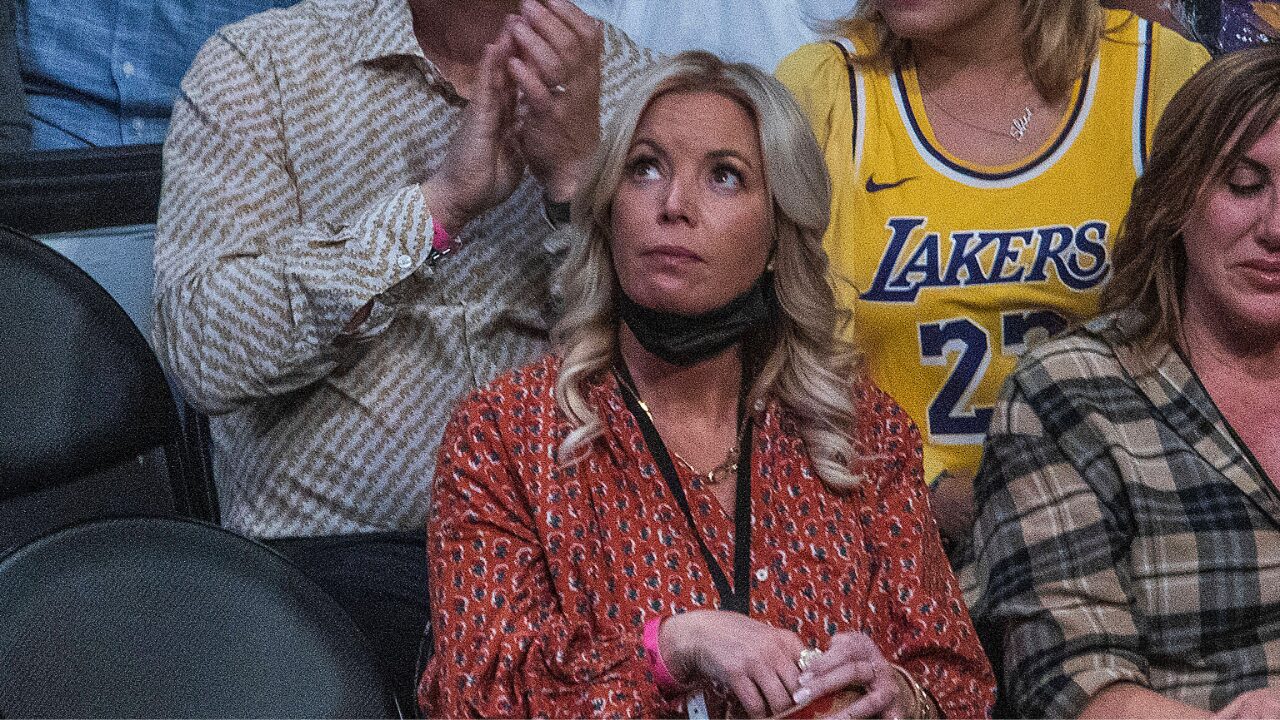
Just over a week ago, Bob Iger and Josh Kushner’s joint statement on their record $12.5 billion purchase pledged “immense respect for the leadership and vision of Jerry and Jeanie Buss.” The sale was seen as a continuation of the family’s legacy rather than an ending to it. That isn’t the case, as the Buss family confirmed that they’re stepping away rather than staying on in any reduced capacity.
Watch What’s Trending Now!
According to Shams Charania, the Buss family trust voted to allow trustees to sell the family’s remaining ownership stake to the Iger and Kushner group. The vote required four of six trust members to approve the tag-along provision tied to Mark Walter’s original sale, which valued the franchise at $12.5 billion.
Once finalized, Jeanie Buss will no longer hold the 15% ownership stake the NBA requires for a controlling owner or governor, ending the family’s operational control of the team entirely.
“We have decided as a family to sell the remaining Buss Family Trust shares to the Bob Iger group as part of the ongoing transaction,” the Buss family said in a statement. “We love the Lakers, Laker fans and will continue to support Los Angeles; but it is time to use this opportunity to move on and exit gracefully while we still can.”
The sale closes out one of the longest-running ownership tenures in professional sports. Jerry Buss paid $67.5 million in May 1979 to purchase the Lakers, the NHL’s Kings, the Forum arena and a 13,000-acre California ranch from Jack Kent Cooke.
A month later, the Lakers drafted Magic Johnson first overall. And Buss’ Lakers won the championship in his very first season as owner, launching the “Showtime” era. Over the next three decades, Buss’s Lakers won 11 NBA titles across two dynasties. Five in the 1980s behind Johnson and Kareem Abdul-Jabbar, and five more in an 11-year stretch built around Kobe Bryant and Shaquille O’Neal, while making 17 total Finals appearances and turning the franchise into a global entertainment brand on par with the Yankees or Cowboys.
Buss died in 2013 at age 80, having stated repeatedly that he wanted the team to remain in Buss family hands “for generation after generation,” according to his son Johnny.
That wish didn’t survive intact. ESPN’s Baxter Holmes reported earlier this year on the dysfunction that defined the family’s ownership after Jerry’s death. He described a period marked by “sibling infighting and subterfuge, attempted coups and deep familial distrust.”
The tension reportedly grew severe enough that Jeanie, according to one account, told her brother Jesse, “you should’ve never been born” during a dispute. Johnny Buss told ESPN: “The Lakers were the tension point in the family.”
It had real consequences once Mark Walter’s original $10 billion sale closed in October. Just three weeks later, and 15 games into a season the team was playing well in, four of Jeanie’s siblings, Jim, Johnny, Joey and Jesse, were fired from their roles within the organization by the team’s CFO, with Janie, then 62 and near retirement, let go as well after asking simply to be allowed to resign instead.
“She fired everyone,” one team official told ESPN, referring to Jeanie, who remained the only Buss sibling still involved with the franchise at that point as its governor. Some family members have since told ESPN they still have questions about whether that sale, and the way it was executed, was fully in line with the family trust’s original terms.
What’s Next for Lakers Leadership
With Jeanie Buss no longer meeting the NBA’s governor threshold, the league will need to formally recognize a new controlling figure within the Iger-Kushner ownership group. Neither the league nor the new owners have yet detailed exactly how the day-to-day authority will be structured going forward.
The timing now places the ownership transition right in the middle of an on-court moment for the franchise. With the team now built around Luka Doncic’s three-year extension, there will be no shortage of scrutiny on how the new ownership group, who are unfamiliar with basketball operations, will approach roster decisions.