Imago
Mark J. Terrill, Associated Press
Imago
Mark J. Terrill, Associated Press
Imago
Mark J. Terrill, Associated Press
Imago
Mark J. Terrill, Associated Press
The NBA MVP isn’t just about being the best player — it’s historically been about surviving the season. It is a stamp honoring individual dominance in a league that demands endurance. For decades, durability functioned as the unofficial first filter — dominate, yes, but do it across 82 games.
Watch What’s Trending Now!
Seasons from ironmen like Michael Jordan and Kareem Abdul-Jabbar established the expectation: greatness had to last from October to April. If even the most talented stars miss significant time, they often lose significant consideration in the eyes of the voters — or all consideration if they are unable to log at least 65 games, as is the controversial case today.
Yet history shows rare cases in which exceptional performers defied the “availability is the best ability” mantra and still claimed the throne. But history keeps exposing cracks in that philosophy.
Five Players Who Won MVP With the Fewest Games Played
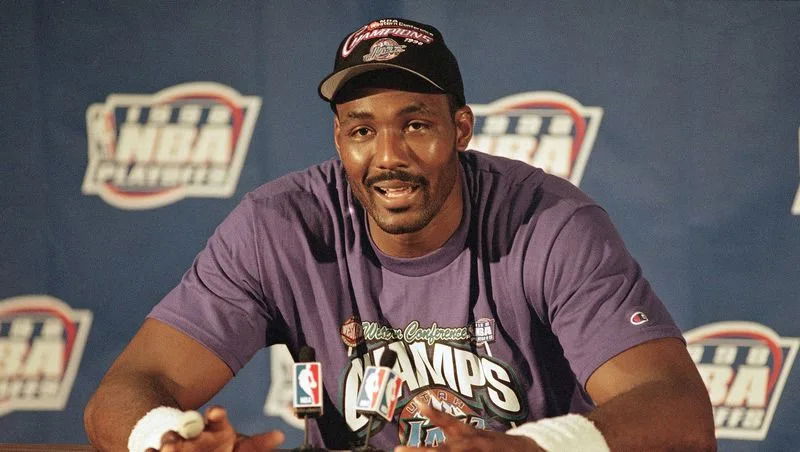
Karl Malone, 49 Games (Utah Jazz, 1998-99 Season): Few stars embodied durability more than Malone, which makes this MVP ironic. He led the league in appearances in six separate seasons, playing at least 80 games in 17 of his 19-year NBA career. However, one of his two MVP awards was won in the season in which he had his second-fewest appearances.
No one has ever won the MVP award in fewer games than Malone in the 1998-99 season. However, that season was a lockout-shortened one as the NBA squeezed just 50 games into the schedule after labor strife wiped out the first half. The Utah Jazz legend suited for 49 of them, averaging 23.8 points, 9.4 rebounds, and 4.1 assists while shooting 49.3% from the field. The Jazz finished as the No. 1 seed in the West, and Malone edged out Shaquille O’Neal and Allen Iverson.


Bill Walton, 58 Games (Portland Trail Blazers, 1977-78 Season): Walton’s MVP triumph in 1977-78 with the Portland Trail Blazers is one of the most standout and controversial low-game winners in a full 82-game era. In an 82-game season, he played only 58, missing chunks due to foot issues that would ultimately plague his career.
Yet when healthy, his two-way game was key to a Portland team that won 50 of its first 60 games. Walton averaged 18.9 points, 13.2 rebounds, 5.0 assists, and 2.5 blocks per game. Perhaps not striking numbers by today’s standards, but it was top-tier at the time. His regular season was cut short because of that injury, but he was deemed a worthy winner over superstar wingmen George Gervin and Julius Erving.
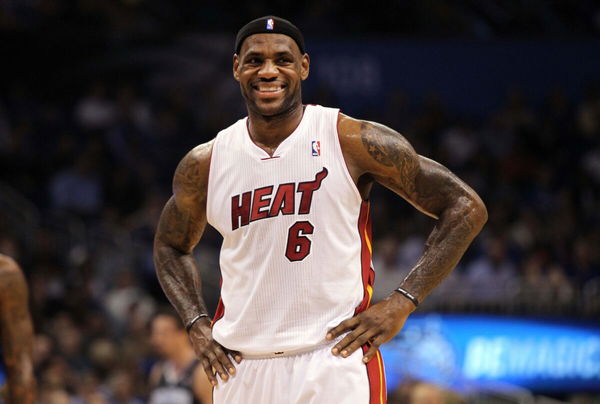
LeBron James, 62 Games (Miami Heat, 2011-12 Season): The 2011-12 season was another lockout year in the NBA, and it was capped at 66 regular-season games. James played 62 tilts, leading the Heat to a 46-20 record, which was second-best in the East. He averaged 27.1 points, 7.9 rebounds, 6.2 assists, and capped it off with elite defense and a 53.1% field goal. “Miami LeBron” was the epitome of efficiency.
His true shooting hit 60.5%, and he outpaced Kevin Durant and Kobe Bryant to win his third MVP award. Critics have always maintained that the shortened season helped, but James’ all-around dominance made the games he played count almost as double.
Giannis Antetokounmpo, 63 Games (Milwaukee Bucks, 2019-20 Season): In yet another shortened NBA season, Antetokounmpo delivered one of the most dominant MVP campaigns in recent memory. This year, however, it wasn’t a lockout problem but a global one, as it was the COVID-shortened season, where the league played only 73 games before the bubble.
The Greek superstar appeared in 63 games that year, leading the Bucks to a 56-17 record, which was the best in the NBA by a wide margin. He averaged 29.5 points, 13.6 rebounds (No. 1 in the NBA), 5.6 assists, one steal, and one block per game and shot 55.3% from the field. He was the best player that season and was outright the MVP, comfortably outclassing a 35-year-old James in the final voting. He also captured the Defensive Player of the Year that same year, becoming just the third player ever, after Jordan and Hakeem Olajuwon, to sweep both awards in one season.
Bob Cousy, 64 Games (1956-57 Season): Cousy’s MVP award in the 1956-57 season shows that ironman seasons don’t always need to be the benchmark. The Celtics legend played 64 games — although this was in the pre-82 era expansion — and he led the league with 7.5 assists per game while also averaging 20.6 points and 4.8 rebounds.
This was pre-3-point line and pre-modern spacing, but Cousy still orchestrated Boston’s offense like no one else, leading his team to the championship and the start of a dynasty that would dominate that era.
The Harsh Truth About the MVP Award
In recent years, the last time an MVP winner has played over 80 regular-season games was Russell Westbrook in 2017. Philadelphia 76ers star Joel Embiid played just 66 games in his MVP-winning campaign; Nikola Jokic played just below 75 games in two of his three MVP-winning seasons; and Antetokounmpo averaged 67.5 games played per season in his two MVP-winning years, though one was in a shortened season.
These five MVP cases spotlight a shifting reality in voting for the Michael Jordan Trophy. In full 82-game seasons, the threshold hovers near 70+ games, anything below risks voter backlash unless the dominance is overwhelming, as is the case with Walton and Embiid. Shortened seasons lower the bar, allowing stars to win with 60-ish games because the whole league plays less. But voters prioritize impact per game over sheer volume when the gap is massive.
USA Today via Reuters
February 3, 2011; Orlando, FL, USA; Miami Heat small forward LeBron James (6) points and smiles during the first quarter against the Orlando Magic at Amway Center. Mandatory Credit: Kim Klement-USA TODAY Sports
The NBA tried as much as possible to lend credibility to the MVP award by introducing the 65-game minimum for award eligibility. It’s been flawed so far. The rule aims to reward durability in an era of load management and, although availability matters more now than ever, it ignores context like a pandemic or labor disputes. There would have been debates on whether Malone or James was qualified for the award.
The MVP award shouldn’t be an endurance contest but one that rewards value over the course of the regular season. Of course, value over 25 games cannot be weighed in the same vein as value rendered in 60+ games. But when a worthy candidate is dismissed because he fell short of playing 65 games due to unforeseen injuries, the credibility that the league wanted in the first place is lost.
That noted, winning MVP is a very prestigious honor. Only 69 men have ever struck that lottery. Regardless of the criteria the voters use or how deserving of the award fans think a player is, capturing this hardware undeniably inserts a player into a rare fold.