
In 2012, the Oklahoma City Thunder reportedly drew a hard line with James Harden’s extension negotiations, offering a deal that fell just short of the max before ultimately trading the future MVP to Houston. More than a decade later, the move remains one of the NBA’s most cited examples of how quickly a contract standoff can reshape a franchise’s future.
Watch What’s Trending Now!
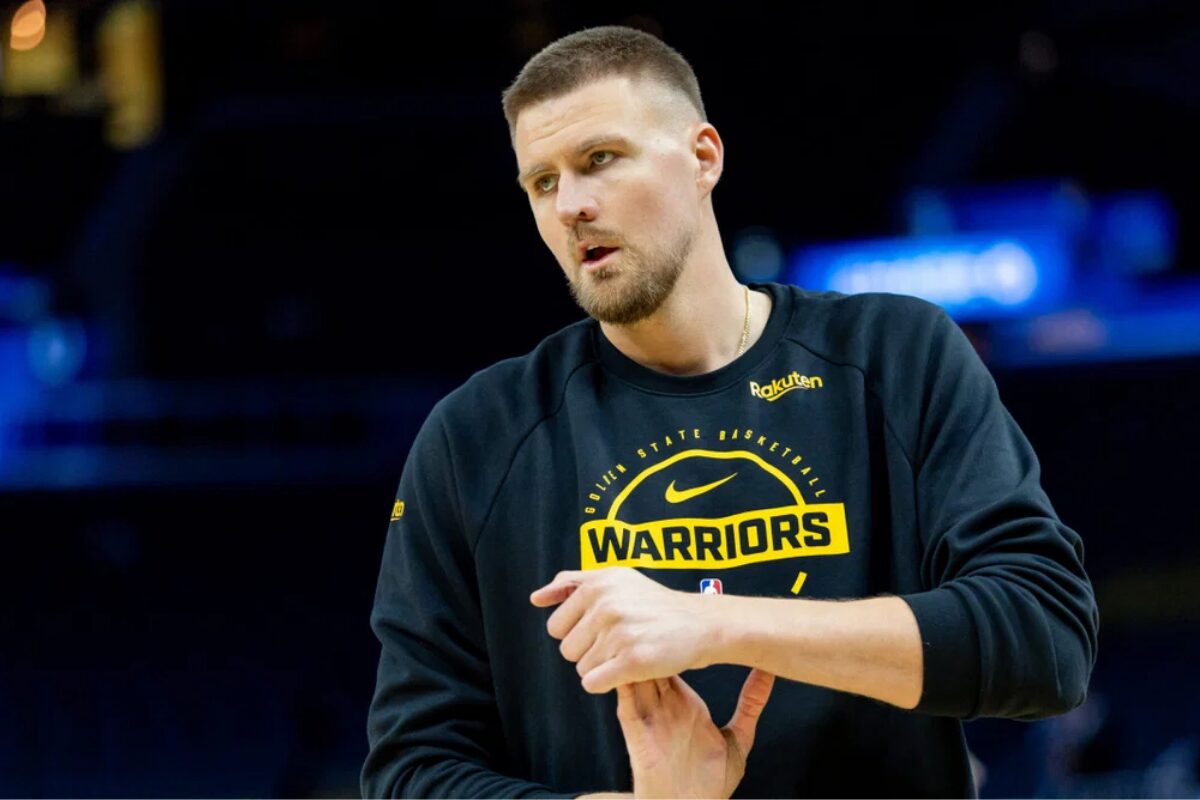
The Golden State Warriors are not facing a Harden-sized decision this summer, but they are navigating a familiar dilemma. After spending months locked in a frustrating negotiation with Jonathan Kuminga before eventually trading him to the Atlanta Hawks in February, Golden State now faces another delicate contract situation with Kristaps Porzingis.
According to Chuck Walter of the Locked On Warriors podcast, the Warriors should be careful not to repeat the same mistakes that turned the Kuminga situation into a months-long saga. “So, I think Steinbach may be the guy in this year’s draft if you were to get two. If you have one solo pick, then the likely thing is you’re banking on Kristaps (Porzingis) coming back at a team-friendly deal and trying to work with what you have there because you’re not going to get much better than Kristaps.”
Walter’s concern centers less on Porzingis himself and more on how Golden State handles the negotiation. The Warriors spent the summer of 2025 haggling with Kuminga before agreeing to a short-term deal that ultimately led to a trade just months later, creating uncertainty for both the player and the franchise.
When Golden State acquired Kristaps Porzingis at the 2026 trade deadline, they absorbed his $30.7 million expiring contract knowing a difficult decision was waiting on the other side. Multiple reports indicate the Warriors want to bring him back, but only at a significantly lower number than his previous salary.
The reasoning goes beyond simple cost-cutting. Under the NBA’s new collective bargaining agreement, a large Porzingis contract could push Golden State toward apron restrictions that limit roster-building flexibility, including access to the non-taxpayer mid-level exception and certain trade mechanisms. A more team-friendly deal would allow the Warriors to remain aggressive elsewhere on the market while still retaining a player Steve Kerr has publicly praised as “an easy fit” because of his combination of size and shooting.
“But if the plan is to move away from that and basically have the Kuminga trade go in vain for a rental of Kristaps Porzingis for a little bit, which lets bygones be bygones,” Walter continued. “Don’t hold on to it just because you need more value. That’s what got us into the Kuminga situation in the first place. But I think we’d reached the point where if Porzingis wasn’t the plan, you’d really need to start looking at a big.”
The Kuminga saga became messy because the negotiations never truly produced a long-term solution. After months of discussions, the former seventh overall pick signed a highly tradeable short-term deal in late September before requesting a move as soon as he became eligible to be traded. By February, he was gone.
That is the scenario Walter believes Golden State must avoid with Porzingis. The Warriors need to quickly determine whether the Latvian big man is part of their medium-term plans or simply a useful salary slot. Dragging negotiations deep into the summer could create another situation where both sides enter the season without long-term clarity.
Imago
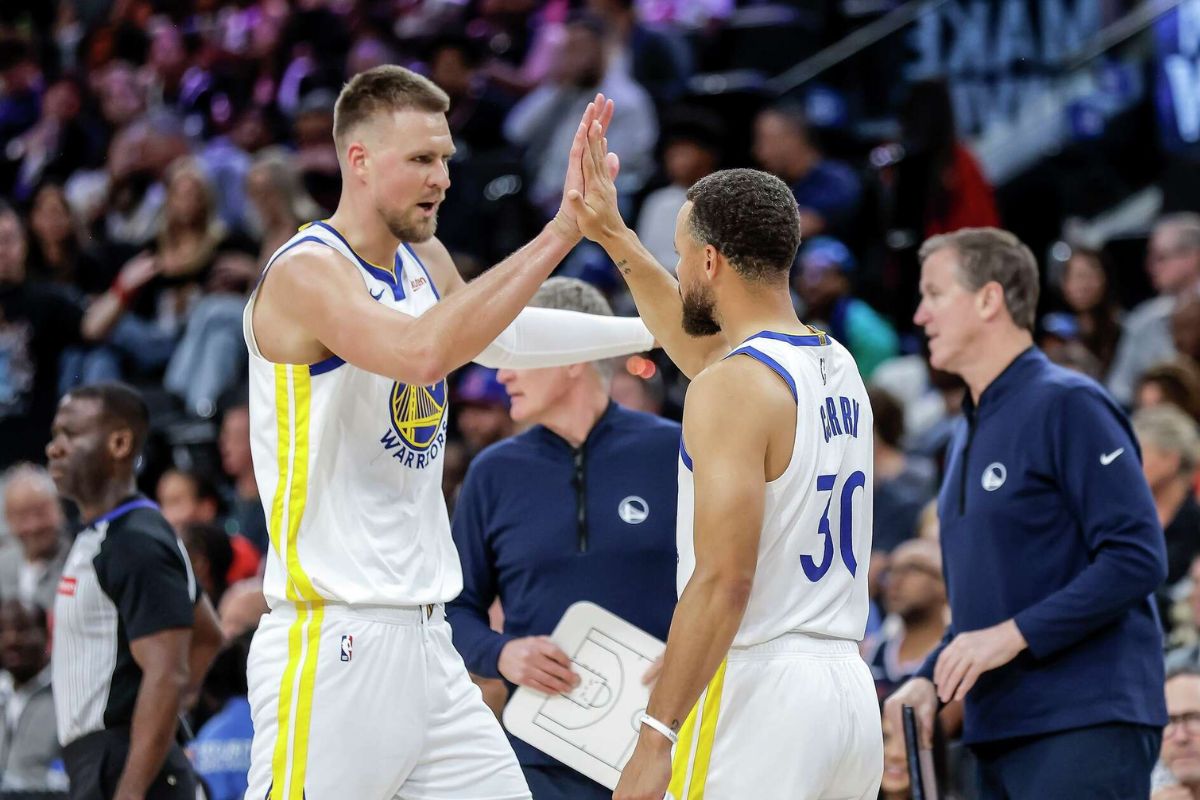
Kristaps Porzingis, Stephen Curry (via: San Francisco Chronicle)
One reason the Warriors may feel less pressure to overspend on veteran frontcourt help is the emergence of draft options like Hannes Steinbach. The former Washington Huskies forward has risen significantly during the draft process after impressive measurements and combine performances. Scouts view him as a physically mature big with rebounding ability, interior scoring, and a frame that could contribute sooner rather than later.
If the Warriors draft Steinbach, or another NBA-ready frontcourt player, the front office gains additional leverage in negotiations with Porzingis while reducing its dependence on the free-agent market.
The Warriors have also been linked to prospects who can help immediately rather than requiring years of development. One name generating buzz is Yaxel Lendeborg, who recently worked out for Golden State and is viewed as an NBA-ready forward with passing ability, defensive versatility, and experience playing winning basketball.
The Warriors’ Interest in LeBron James Complicates Porzingis’ Case
The future of the biggest free agent has been the topic of trade discussions even before the offseason began. Several recent reports indicate that the Golden State Warriors are “legitimately interested” in pursuing LeBron James if his situation with the Lakers changes. Reports from Marc Stein, Monte Poole, and others all suggest that there is genuine interest from the Warriors.
A more intriguing complication is how Porzingis’ contract could affect Golden State’s pursuit of other stars. Reports from multiple insiders have linked the Warriors to a potential pursuit of LeBron James, and maintaining flexibility beneath key apron thresholds would make those ambitions easier to execute.
That reality gives Porzingis leverage but also creates tension. The Warriors want to keep him, yet they also have broader roster-building goals that become more difficult if they commit too much money to an injury-prone veteran entering his 30s.
That dynamic could create opportunities elsewhere. The Spurs have previously surfaced as a theoretical Porzingis destination because of their cap flexibility and the possibility of pairing another floor-spacing seven-footer alongside Victor Wembanyama. Jake Fischer reported last year that San Antonio had explored the idea of acquiring Porzingis, and his impending free agency could once again make the Spurs a team worth monitoring.
The challenge is determining how realistic such a scenario actually is. San Antonio already has its franchise cornerstone in Wembanyama and has generally prioritized maintaining long-term flexibility. Still, if negotiations between Porzingis and Golden State become complicated, the Spurs are one of the few teams that could plausibly explore a short-term gamble on a player who can stretch the floor and protect the rim.
Right now, Porzingis occupies one of the most important positions in Golden State’s offseason plans. The Warriors want him back, but they don’t want him back at $30+ million per year. Golden State reportedly hopes to re-sign him on a cap-friendly contract after taking on his expiring $30.7 million deal.
That leaves Porzingis and the Warriors with a decision that extends beyond a simple contract negotiation. Golden State traded Jonathan Kuminga for the opportunity to evaluate whether Porzingis could help extend Stephen Curry’s championship window. The organization now has to decide how much that evaluation was worth.
If the Warriors can reach a reasonable deal, they keep a unique frontcourt piece while preserving flexibility for future moves. If negotiations become another drawn-out standoff, Walter’s warning may prove prophetic: Golden State could once again find itself managing uncertainty instead of building around its remaining title window.