
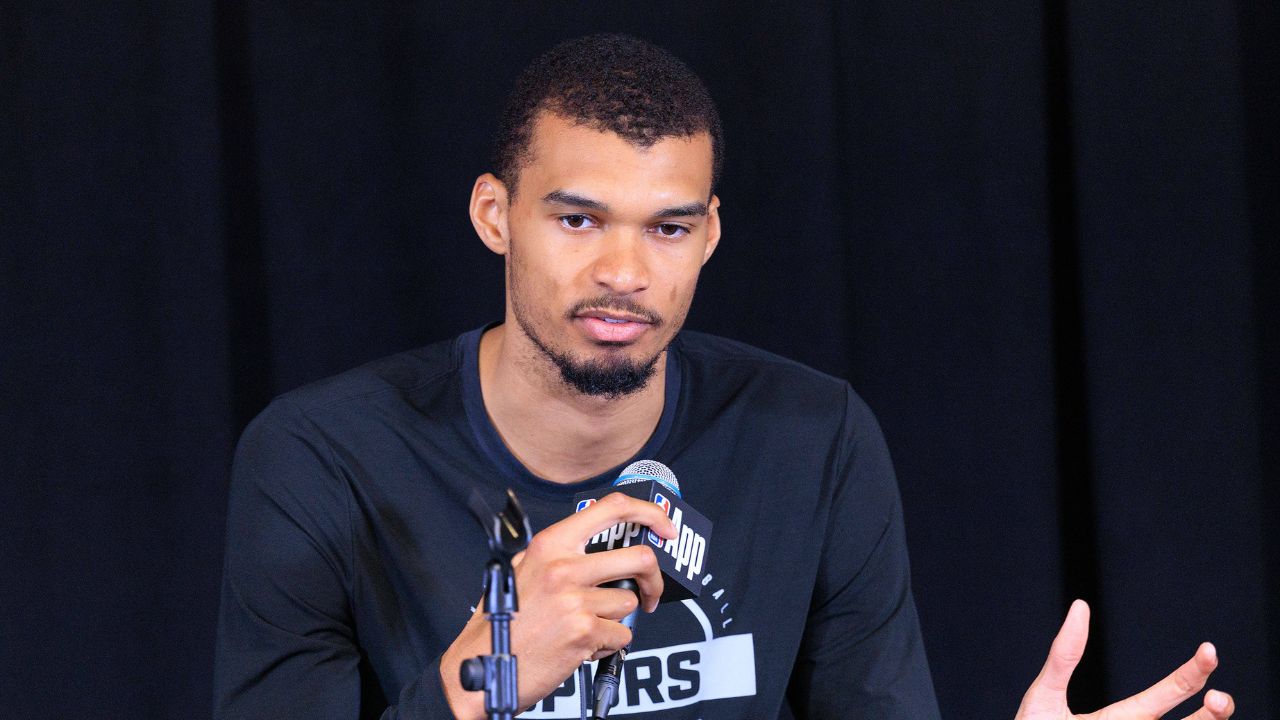
NBA Commissioner Adam Silver’s vision for competitive balance has always been under heavy fire from former players and league analysts. Diehard fans, like most recently Knicks nation, have never responded well to their core teams being broken up due to the second apron. Since the 2026 NBA Finals, another fanbase is bracing itself too. Following the San Antonio Spurs’ improbable run to the 2026 NBA Finals behind generational superstar Victor Wembanyama, the reality of the league’s restrictive collective bargaining agreement is threatening to tear apart one of the most promising young cores in basketball before it can truly prove itself.
Watch What’s Trending Now!
The Club 520 Podcast debated Adam Silver’s recent comments on parity at the NBA Board of Governors meeting. Host and former All-Star guard Jeff Teague and his co-hosts pulled no punches when giving their opinions on the second apron and penalty-heavy salary cap rules that are forcing front offices to dismantle good rosters.
“I don’t like parity. I hate it,” Teague stated bluntly during the show. “Obviously, I like having a [salary] cap, but I wish… the teams that did a great job of picking some of these really, really good players, being able to develop them into superstars—they get to stay with the organization that drafted them. I wish OKC could have kept James Harden back then… but we here now.”
Teague’s co-host, DJ, echoed those frustrations, arguing that Silver’s enforcement of a rigid, NFL-style cap structure punishes organizations for drafting well.
“I like teams that draft well to be rewarded for what they did. I hate the fact that you put them in a bad situation just because you want, quote-unquote, ‘parity,'” DJ explained.
He also confirmed that the concept of parity is going to claim another championship roster very soon.
“So, like, we hate the fact that we got to break up the Spurs team. We love seeing Dylan Harper as a backcourt going forward. Like, you know, you got to break the team up. Yeah. And we just waiting to see who develop better and who going to have to leave. Yeah. That’s kind of weak.”
Teague implied that cap space math has now made it possible to predict who’s already on the trade block. As DJ Wells said, Teague confirmed fan bases and betting markets are already anticipating which young star will be forced out of San Antonio first:
“And you kind of, if you’re on cash, you can make that bet right now. Who was going to be leaving first? Dylan Harper or Stephon Castle in the future, for sure.”
While they laughed at the joke, they hate it as much as the Spurs fanbase does. Those of us like Teague have no choice but to cope with humor after Commissioner Adam Silver’s defense of the league’s financial structure confirmed the second apron is here to stay.
While critics argue the second apron restricts player movement and dismantles contending cores, Silver doubling down on the 2023 CBA highlighted a fundamental rift between the league office and its franchises.
“The point was to design a system, I’m not embarrassed to say, more NFL-like where every team was put in a position where, regardless of market size, they could compete for championships,” Silver told reporters. “Eight different champions over the last eight years. That isn’t necessarily a sign of success. I’m fine if teams repeat. But I think over successive collective bargaining agreements and revenue-sharing systems and other changes we’ve made, we’ve gotten closer to building the kind of parity of opportunity we want.”
While Silver views eight unique champions in eight seasons as vindication for his financial model, the system presents an existential crisis for the Spurs. San Antonio, coming off an extraordinary 62-20 campaign and a surprise Finals appearance, is loaded with blue-chip talent, including reigning DPOY Wembanyama, 2025 No. 2 overall pick Dylan Harper, Stephon Castle, and veteran point guard De’Aaron Fox.
Sadly, business imperatives are fast approaching. Even though the league office raised the second apron cap slightly, it won’t help the Spurs. Even Lindy Waters left the NBA after he didn’t qualify for a two-way deal because of limited options.
Fox’s massive four-year, $229 million extension kicks in for the 2026-27 season, with an annual salary of nearly $50 million. That contract, combined with Devin Vassell’s $27 million annual salary and the incoming rookie-scale deals for Harper and Castle, projects to push the Spurs payroll well past the luxury tax line and dangerously close to second apron territory by 2027-28, where their estimated committed salary of around $200-202 million would bump against a projected second apron threshold of approximately $234-237 million.
Wemby opted to sign a $252 million max contract rather than a $303 million supermax, hoping the $50 million relief would help keep two of his best teammates.
Wembanyama chose the 25% maximum rather than the 30% supermax, a decision he framed publicly as a team-first commitment. “Spurs family, I’m here to stay,” he posted on social media the day the deal was announced. “Whatever it takes.”
The sacrifice is structurally meaningful: his annual salary will now check in at around $16.9 million for 2026-27 (final year of his rookie deal), with the new extension starting in 2027-28 at around $43.5 million and rising gradually over the contract rather than accelerating toward the cap-consuming figures the supermax would have required.
It saved the Spurs roughly $10 million per year in cap space they would otherwise owe him had he repeated as Defensive Player of the Year or earned All-NBA honors.
However, even Kendrick Perkins previously warned that San Antonio’s decision-makers will be backed into a corner by the second apron.
“De’Aaron Fox is set to make over $200 million over the next four years. That’s a business decision they’re going to have to make,” Perkins noted recently, pointing out that Fox’s contract may ultimately block Harper’s development.
As some can predict, Spurs fans want Fox and his punitive contract out to keep Castle and Harper. “The second apron… it’s coming, and eventually it’s going to kick your a–.”
Perkins’ warning has an added layer of urgency when the full payroll math is laid out. The Spurs currently carry 14 players on standard contracts totaling approximately $198 million for 2026-27, with the projected salary cap sitting at $165 million, the tax line at $200 million, and the second apron threshold at $222 million.
That leaves only about $2 million of breathing room below the tax line before the punitive restrictions of the second apron kick in, and that margin evaporates quickly once roster spots are filled and Castle’s extension becomes eligible.
Wells pointed out that NBA fans loved the sport even when there were dynasties and three-peats. So Silver’s argument about eight different champions doesn’t satisfy fans. What they do hate is watching a fan-favorite be shipped out to avoid punitive tax. With each championship core broken up, NBA fans are demanding that the second apron be removed.
The pressure is structural, not speculative. Stephon Castle becomes eligible for a rookie-scale extension after next season. Dylan Harper follows the year after. Both deals, when they arrive, will carry maximum rookie contract values.
The Spurs will be forced to choose between their two youngest cornerstones and their most veteran, most expensive one, and those decisions will arrive long before the core has had a legitimate chance to compete for a championship together.
With the NBPA’s CBA opt-out window less than two years out, and second apron grievances already representing the single most cited player complaint in offseason media, from Teague to Wembanyama’s own contract sacrifice to the Knicks breaking up their core, forced roster breakups driven by the second apron are quickly becoming the issue that could define the next round of collective bargaining.