
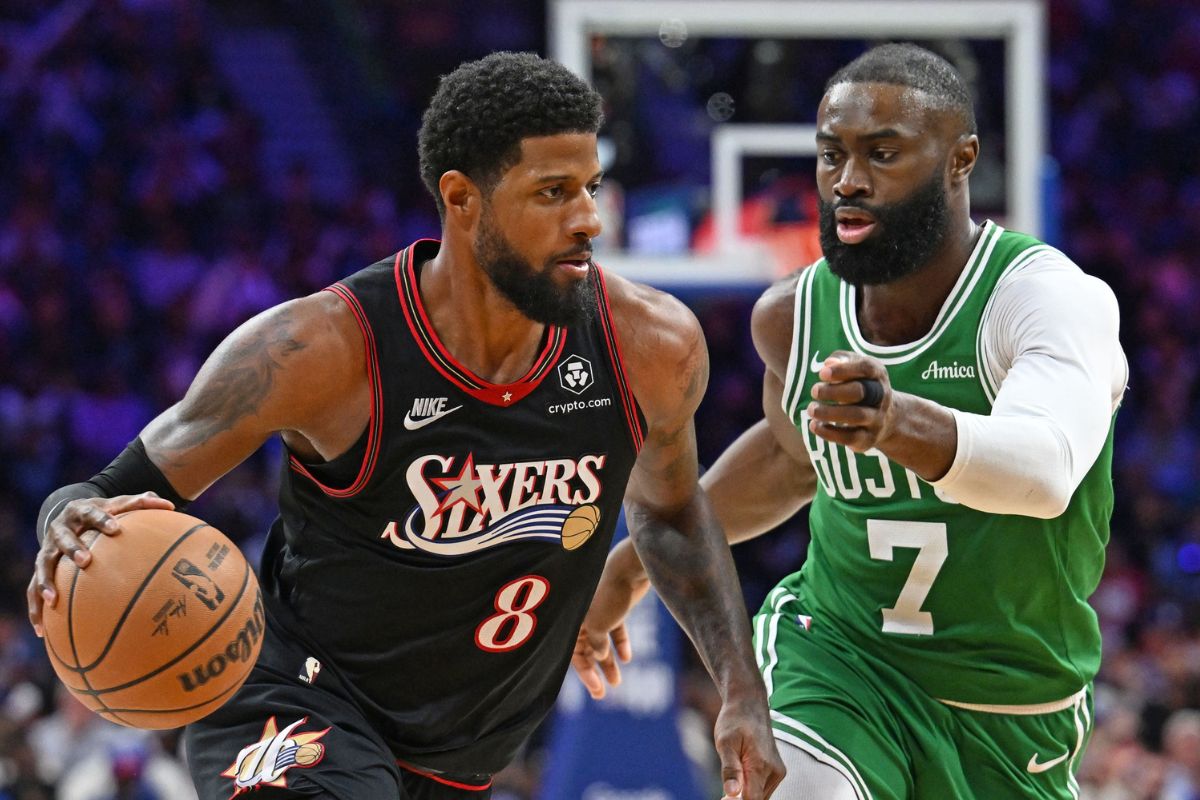
The Celtics knew trading away Jaylen Brown, a proven Finals MVP, would trigger backlash. No explanation could justify replacing a 29-year-old coming off an MVP-caliber season with a 36-year-old Paul George. So, when the Celtics president, Brad Stevens, addressed the media for the first time after the blockbuster deal, he acknowledged just how difficult the past few days had been.
Watch What’s Trending Now!
Most importantly, he explained why Paul George was the right fit.
“One that comes with a lot of, you know, very little sleep to do the trade,” Stevens admitted to the press, sitting alongside team owner Bill Chisholm.
“We’re not very far removed from all sitting in our series against Philadelphia and watching Paul be a guy that can carry you for portions of a quarter or a half, but also play a complementary role on both ends of the floor at the highest of levels. He’s excited to come to Boston. He actually already came in this weekend, and we’re excited to get a chance to work with him.”
Stevens pointed to the Celtics’ recent playoff heartbreak against the Sixers. He reasoned it as the justification behind the front office’s confidence in PG13 despite the criticism surrounding the move. According to them, George stood out as a multi-dimensional player rather than a primary scorer unlike Jaylen Brown.
That versatility forms the foundation of the C’s gamble.
In the playoffs opening round, Paul George averaged 17.4 ppg in seven games, while shooting efficiently. He made 55% of his three-pointers! Moreover, his 23-point effort in Game 6 helped the Sixers come back from a 3-1 deficit and force Game 7.
Above all, Stevens views George as a player capable of complimenting alongside Jayson Tatum rather than requiring the assets to revolve around him.
He offers secondary playmaking, spacing creation with off-ball movements, and elite defensive capability. An experienced two-way forward.
However, the basketball fit wasn’t the only reason for recruitment.
Imago
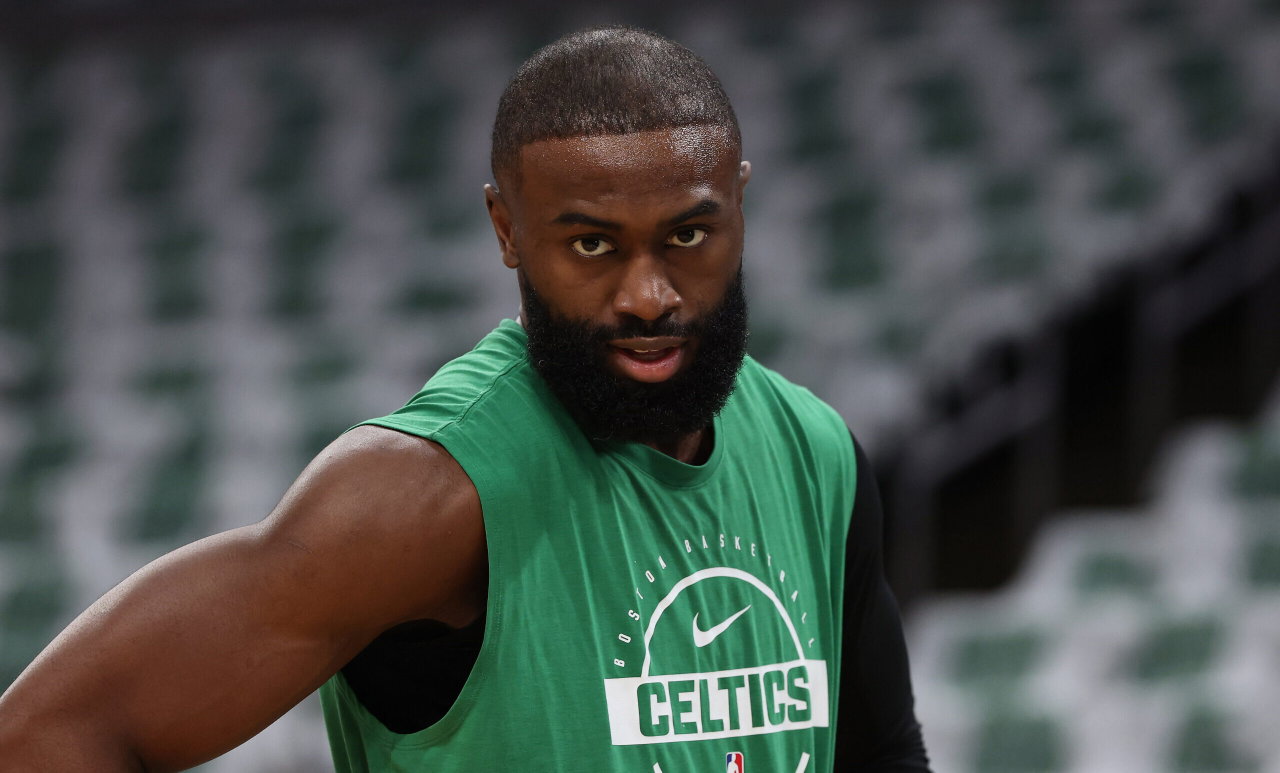
May 2, 2026; Boston, Massachusetts, USA; Boston Celtics guard Jaylen Brown (7) on the court before game seven of the first round of the 2026 NBA Playoffs against the Philadelphia 76ers at TD Garden. Mandatory Credit: Winslow Townson-Imagn Images
Brad Stevens acknowledged the long-term financial reality of having Jayson Tatum and Jaylen Brown on the same roster. Both of them earn roughly $58 million annually. That’s nearly 70% of the salary cap committed to two players.
“The path looked a little bit more challenging with 70% of our cap and such a high percent of our usage tied into two players,” Stevens said. Also, he highlighted how this disproportionate salary affected the roster’s depth. And how depth played a role in championships in the last two seasons.
“You have to have the optionality to do a great job of building out depth that can hopefully replace the irreplaceable individual.”
He also stressed that he has nothing against Jaylen Brown, not his value as a player.
He felt the team needed a deeper supporting cast around Tatum. Moreover, Paul George’s willingness to waive his trade kicker only reinforced that belief, preserving additional financial flexibility.
Whether this equation succeeds or not, only the future will tell. For now, Brad Stevens made it clear that he didn’t doubt Jaylen Brown’s talent. He just needed an elite talent that would complement Jayson Tatum.
With added draft capital and financial flexibility, the C’s will only get stronger from here on.