
Essentials Inside The Story
- Three weeks ago, Kendrick Perkins was calling Victor Wembanyama the NBA's future. What changed?
- The same analyst who crowned Wembanyama after the West finals is now asking hard questions.
- A Finals loss wasn't the only thing that shifted the conversation around the Spurs superstar.
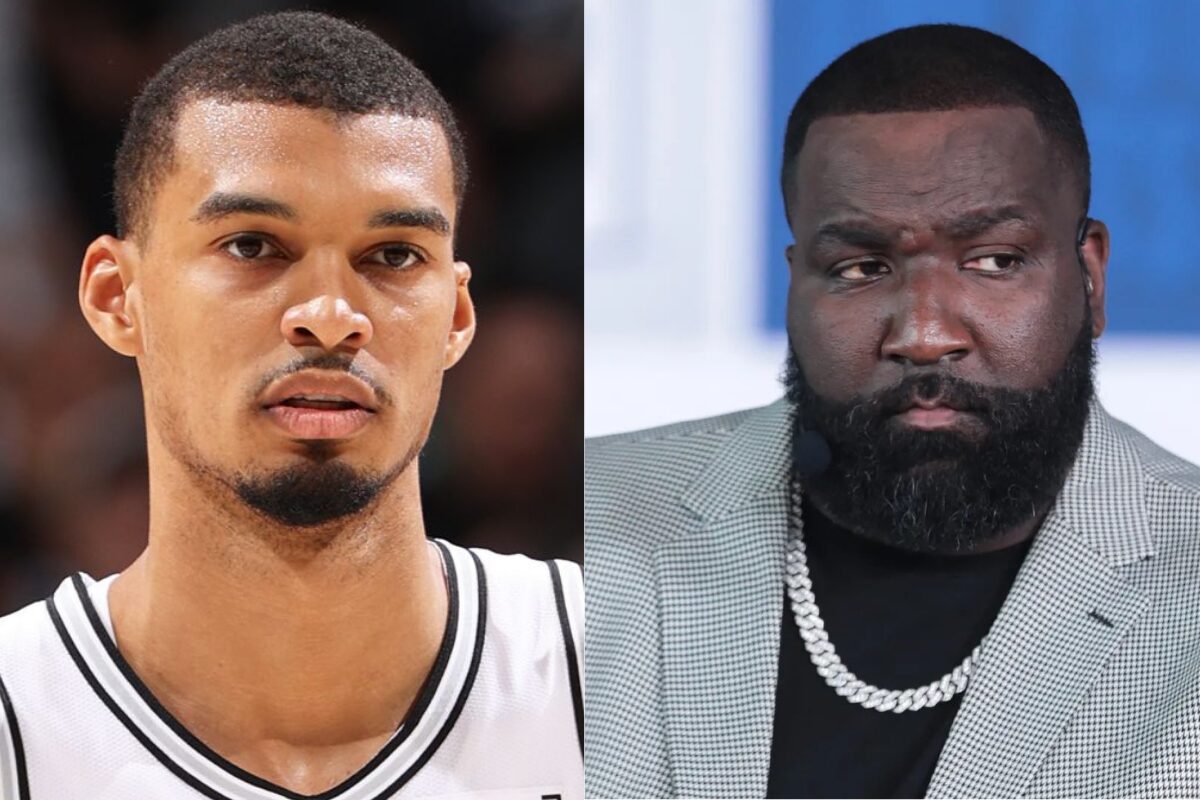
Three weeks ago, Kendrick Perkins was talking about Victor Wembanyama as if the league already belonged to him. After San Antonio’s Western Conference Finals victory over Oklahoma City, the ESPN analyst said Wembanyama had “snatched Chet Holmgren’s soul” and claimed the Thunder big man was “scared to compete.” Days earlier, Perkins had gone even further, declaring that “the NBA belongs to Wemby for the next 10 years” and floating the Spurs star as a future participant in the GOAT debate alongside Michael Jordan and LeBron James.
Watch What’s Trending Now!
That made Perkins’ comments Wednesday on Yahoo Sports Daily all the more striking. Less than a month after declaring Wembanyama the face of the league’s future, he delivered one of the harshest public critiques of the 22-year-old’s NBA Finals performance.
“Wemby was soft,” he said, when his co-host danced around the word. “Let’s keep it real. He was soft and he was scared, especially in the big moments. He did a whole lot of barking in the interviews, but he did no biting whatsoever.” Wembanyama, before and during the Finals, talked about composure, “this is what I’m built for,” and what he produced when the games actually mattered.


"He was soft and he was scared." 🫢 @KendrickPerkins sounds off on Victor Wembanyama's NBA Finals performance. (via Yahoo Sports Daily)
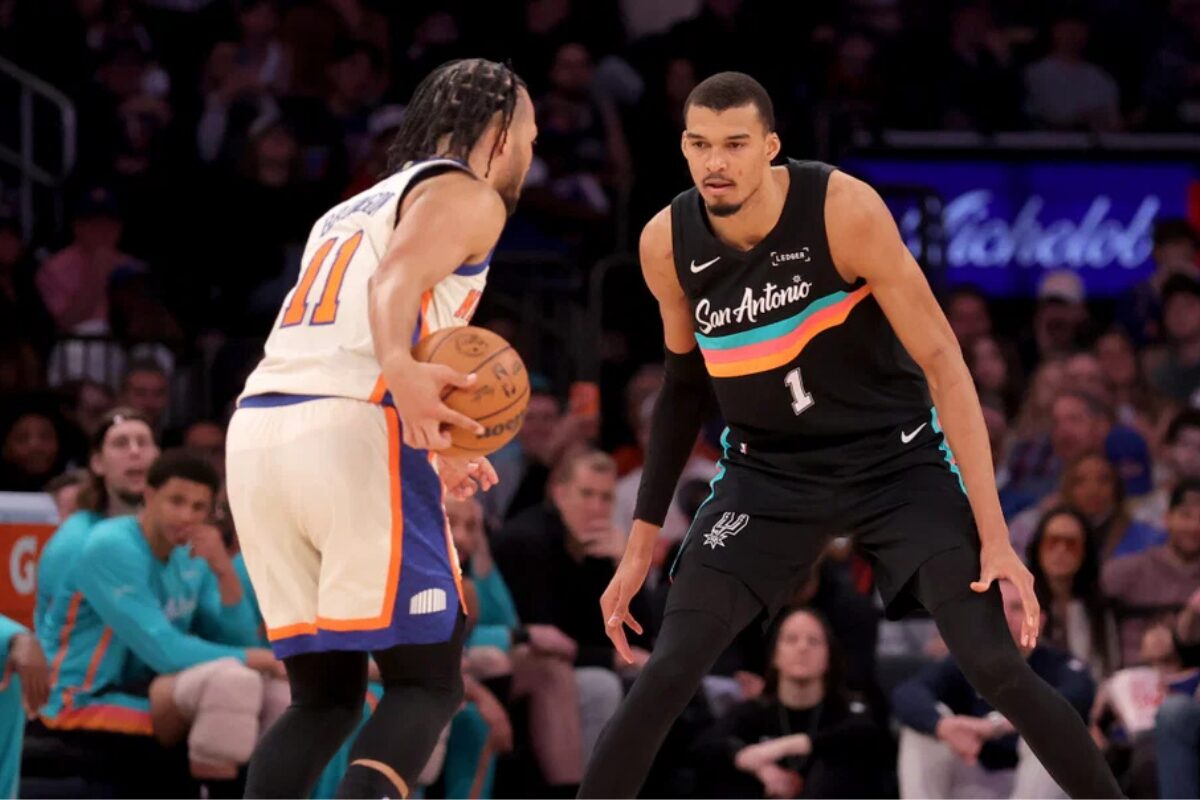
Perkins’ criticism came despite a series in which Wembanyama averaged roughly 26 points, 11 rebounds and more than three blocks per game. Still, several defining moments worked against him. He opened the Finals by shooting 6-of-21 in Game 1, committed a costly late turnover in Game 2, followed his best outing of the series with a 9-of-25 shooting performance in Game 4, and finished the closeout Game 5 with 19 points on 7-of-19 shooting as New York secured the title in five games.
The criticism also landed awkwardly against some of Wembanyama’s own comments during the series. Facing a 2-0 deficit, the Spurs star insisted, “This is what I’m built for.” Earlier in the postseason, he had said, “I’m not gonna give basketball a choice of who the face is going to be.” Perkins repeatedly referenced that confidence while arguing that Wembanyama failed to match it in the Finals’ biggest moments.
Perkins went further: “If I’m in that locker room, the first thing I’m going to do is tell him to embrace being a big man first with guard skills. After Games 1 and 2, they made an adjustment and started hiding Welby so he didn’t have to guard Karl-Anthony Towns. We’re talking about the Defensive Player of the Year. You’re 7’5”. You could be the most dominant player in the league by just embracing being a big man.”
Perkins repeatedly pointed to San Antonio’s defensive adjustments against Karl-Anthony Towns as evidence for his argument. He claimed the Spurs began moving Wembanyama away from direct Towns assignments after the opening games of the series, framing it as a surprising development for the league’s reigning Defensive Player of the Year.
In May, before the Finals began, he told The Pat McAfee Show that Victor Wembanyama would own the NBA for the next decade and floated him as a future entry into the GOAT conversation alongside Michael Jordan and LeBron James.
At various points throughout the season, Perkins also called Wembanyama “the best defensive player I’ve ever laid my eyes on” and predicted he could win five or six Defensive Player of the Year awards. Following the Spurs’ playoff run, he described Wembanyama as “the best thing that happened to the NBA since LeBron James in 2003.”
Then, as recently as the WCF, he had declared that Wembanyama had “officially taken over the NBA.” The Finals lasted less than two weeks and produced a complete reversal. In the time it took New York to win in five games, Perkins went from anointing the next face of the league to calling him soft and scared on a national podcast.
Perkins Built Victor Wembanyama Up the Highest, and Tore Him Down the Hardest
When Perkins evaluated Chet Holmgren’s struggles against Wembanyama during the Western Conference Finals, his language was unforgiving. He said Wembanyama had “snatched” Holmgren’s soul, accused the Thunder center of being “scared to compete,” and even suggested Oklahoma City should consider major roster changes around the matchup. Weeks later, that same vocabulary was being directed toward Wembanyama himself.
Imago
Credit: IMAGN
The broader narrative around Victor Wembanyama’s Finals run has not been uniformly negative. The Frenchman’s decision to walk to the locker room after the final buzzer rather than congratulate the Knicks generated its own debate, with Perkins actually praising the competitive edge it showed, calling it exactly the kind of villain energy the league has been missing.
Chris Broussard pushed back on First Things First: “He’s not as likable as everybody thought.” Stephen A. Smith and Draymond Green both weighed in, arguing that the refusal to shake hands missed a standard expected of the player who wants to be the face of the league.
The reaction to Wembanyama’s Finals run ultimately became a debate about expectations as much as performance. Perkins praised the walk-off as competitive fire, while others questioned whether it reflected the responsibility that comes with being viewed as the league’s next face. What made his comments stand out was not simply the criticism itself, but how dramatically it contrasted with the praise he had delivered throughout the season.