
The NBA Playoffs are around the corner, with the final round of play-in games set to conclude on April 17. But every spring, NBA fans end up doing the same thing: staring at the standings, reading about tiebreakers and ‘play‑in spots.’ Always trying to figure out who your team is playing against can get tricky sometimes.
Watch What’s Trending Now!
But the league’s postseason format is more layered than ever in 2026, with 20 teams entering the picture. The Play‑In Tournament sorts out the final seeds, and a fixed bracket can turn one upset into a clear path to the Finals. This guide will break down how seeding really works, from tiebreaker rules to home‑court advantage and why the NBA refuses to reseed.
How Many Teams Make the NBA Playoffs and How Are Seeds Determined?
The league is still using the familiar top-six-plus-play-in system to determine the top eight seeds. In other words, from 15 teams in each conference, only eight make the final cut. The top six in each conference (determined by regular‑season winning percentage) are guaranteed playoff spots. The teams finishing between 7 and 10 enter the Play‑In Tournament to fight for the two remaining playoff seeds.
When it comes to seeding, the standings are based solely on the conference. All 15 teams are ranked purely based on their win record. Divisional winners no longer receive any automatic seeding advantage; they only receive potential tiebreaker preferences. Once the top six are locked in, the Play-In Tournament determines the seventh and eighth seeds.
- 7 vs. 8 — the winner becomes the 7th seed and enters the main bracket.
- 9 vs. 10 — the loser is eliminated while the winner advances.
- Play-In Final — the loser from 7-8 hosts the winner of 9-10; the winner of that game becomes the 8th seed.
That produces the traditional 1-8 bracket in each conference.
- 1 vs. 8
- 2 vs. 7
- 3 vs.6
- 4 vs.5
All first-round ties and subsequent match-ups are a best-of-seven series.
How Do NBA Tiebreakers Work When Teams Finish With the Same Record?
Since the introduction of the Play-In Game and the increasing value of seeding, one single game can swing momentum and turn darkhorses into favorites. Due to this volatility, the league has a clear, ordered tiebreaker system in place. Adam Silver and his team first use the system to determine divisional leaders and then apply the same tiebreak criteria to set overall seeding.

BREAKING: The NBA Play-In Bracket is SET ‼️👀 Western Conference: 🔸Warriors vs. Clippers 🔸Blazers vs. Suns Eastern Conference: 🔸Heat vs. Hornets 🔸Magic vs. 76ers Who is advancing to the playoffs?

For two-team stalemates, the league uses the following criteria in order:
- Head-to-Head winning % between the tied teams.
- Division leader status: if one team won its division and the other didn’t, the champion gets the higher seed.
- Division record (only applies if both teams are from the same division).
- Conference Record
- Winning % vs. playoff-eligible teams: Only applies to teams in the same conference (in other words, it’s how you performed against the top-10 in your division).
- Winning % vs. playoff-eligible teams in other conference.
- Points Differential: It’s the points scored minus the points allowed stat from the full season.
In layman’s terms, the head-to-head criteria are the primary lever for the NBA Playoff seeding. Division status only matters in a tiebreaker, but not for automatic seeding. Advanced criteria like winning % vs. playoff-eligible teams and point differential only come into play if everything else is dead even.
How Does Home Court Advantage Work in the NBA Playoffs?
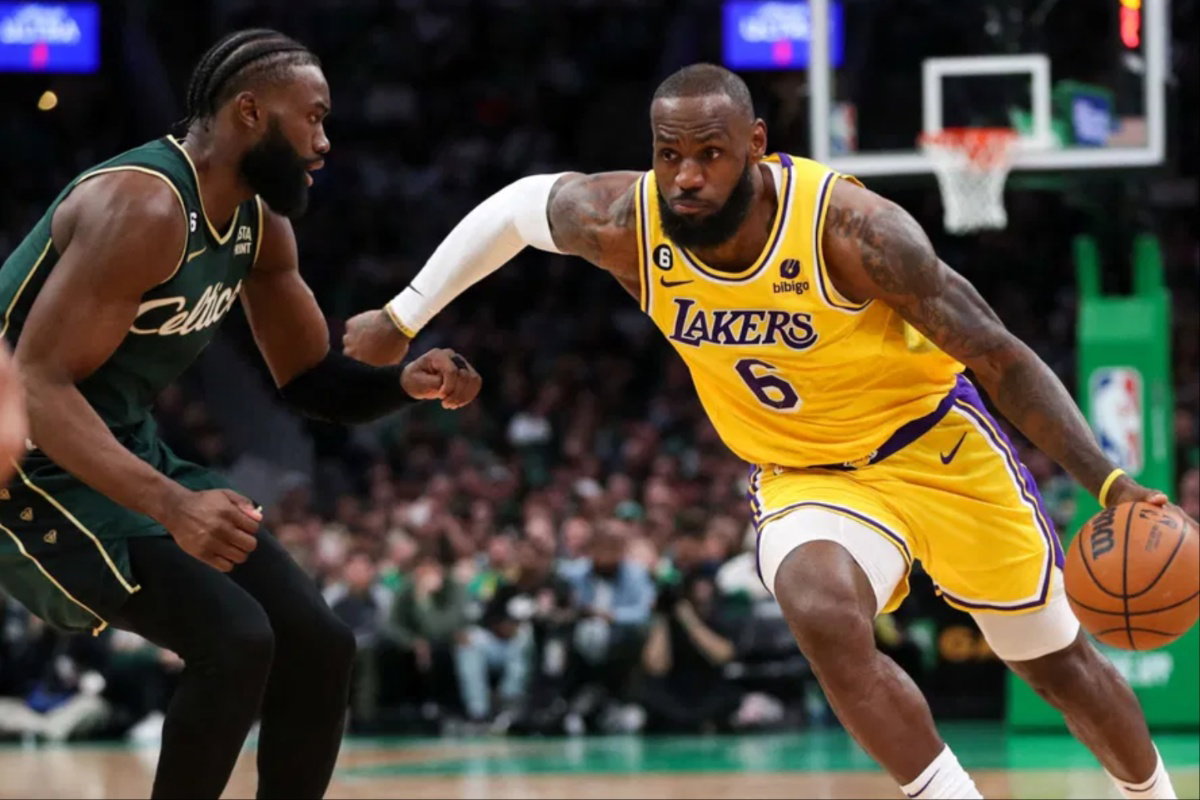
As mentioned earlier, NBA Playoff series are a best-of-seven duel. By design, the team with home-court advantage hosts games one, two, five, and, if needed, game seven. The lower-seeded team hosts games three, four, and six. This makes players like LeBron James and Jaylen Brown hungry for a home-court advantage to map out potential championship runs.
In the opening three rounds of the playoffs, the home-court advantage is determined by regular-season record, which almost always favors the higher seed.
In the NBA Finals, where teams arrive from different conferences, home-court advantage is also determined from regular-season winning percentage. If records are tied, the same tiebreaker criteria are applied (starting with head-to-head).

Imago
Apr 5, 2026; Dallas, Texas, USA; Los Angeles Lakers forward LeBron James (23) controls the ball against the Dallas Mavericks during the second half at American Airlines Center. Mandatory Credit: Kevin Jairaj-Imagn Images
The higher seed often comes up with the game plan to go hard in the two home games and usurp a 2-0 lead. Then, if the series were to go all the way, they would have home court advantage in Game 7. A Samford University study found that, across the seven-game playoff series that have taken place over the last decade, 75% were won by the team with home-court advantage.
Are Teams Reseeded After Each Round or Is the Bracket Fixed?
To cut it short, no, teams are not reseeded after each round of the NBA Playoffs. That often surprises NFL fans who are used to the model where the highest seed always faces the lowest seed.
In each conference, the first round matchups are placed in a sort of a tree (1 vs. 8, 2 vs. 7, 3 vs. 6, 4 vs. 5). The winner of 1 vs. 8 is locked in to play the winner of 4 vs. 5, and the winner of 2 vs. 7 goes up against the victor from 3 vs. 6.
This bracket style mirrors the NHL and MLB, while the NFL remains the only anomaly in the American subset to reseed after each round.
This allows fans to map their team’s trajectories once the brackets are released on the final day of the regular season. An early upset can completely open one side of the bracket without changing the structure for everybody else.