
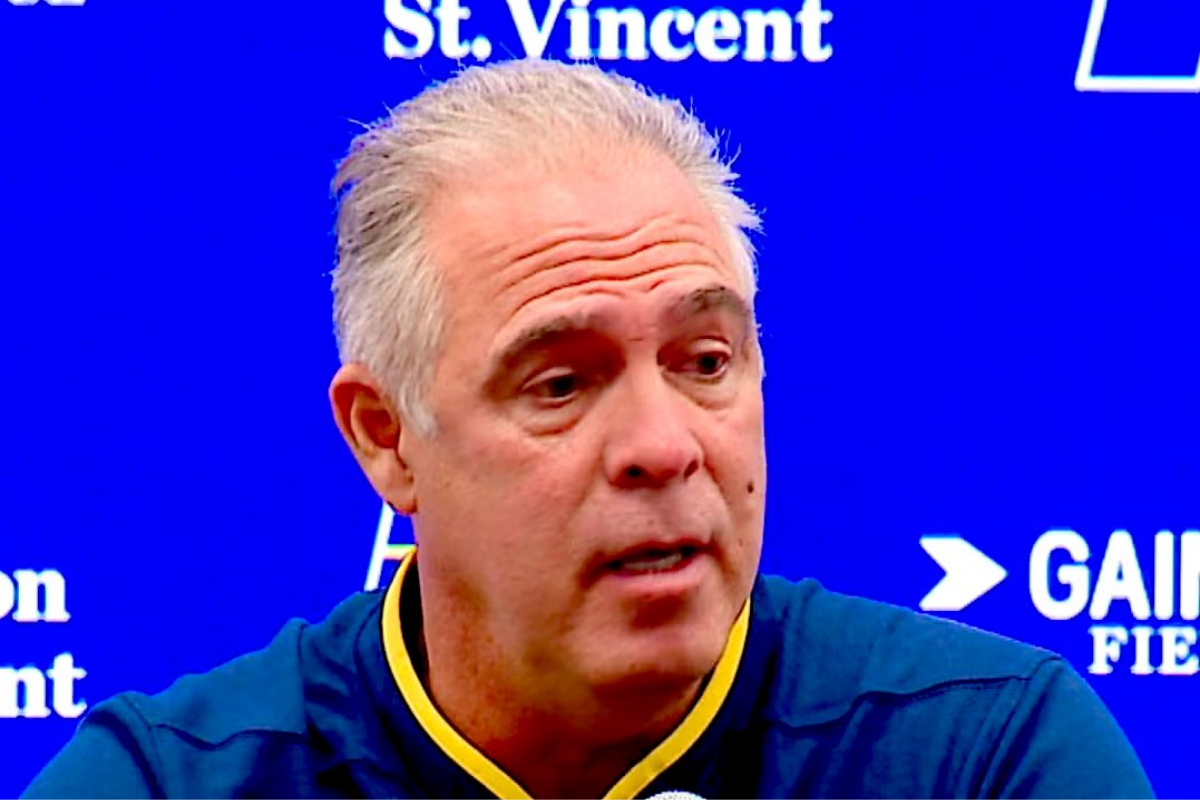
NBA executives almost never apologize publicly. They hide behind phrases like “organizational vision,” “long-term flexibility,” and “basketball decisions.” They talk in corporate language designed to soften failure before fans can fully process it. Even when front offices completely miscalculate a roster, the response is usually cold, distant, and carefully sanitized.
Watch What’s Trending Now!
It’s rare that an NBA executive would ever take full accountability for their franchise’s shortcomings. This is what made Kevin Pritchard’s message hit so differently Sunday night. “I’m really sorry to all our fans,” the Indiana Pacers president posted after the 2026 NBA Draft Lottery. “I own taking this risk. Surprised it came up 5th after this year. I thought we were due some luck.”
That final line was the one that echoed across the NBA world. “I thought we were due some luck.” Because buried inside that sentence was the full emotional reality of what just happened to Indiana.

I'm really sorry to all our fans. I own taking this risk. Surprised it came up 5th after this year. I thought we were due some luck. But please remember - this team deserved a starting center to compete with the best teams next year. We have always been resilient.
The Pacers didn’t simply lose lottery position. They lost a franchise-altering asset because they gambled on probability, believed the basketball gods owed them something after a nightmare season, and watched the lottery punish them in the worst possible way.
And now, one of the NBA’s most respected executives is publicly admitting he pushed his chips to the center of the table and lost. To understand why Pritchard’s apology became such a massive story, you first have to understand the gamble itself.
Back at the February trade deadline, Indiana made one of the boldest moves in the league by trading for veteran center Ivica Zubac from the Los Angeles Clippers. The Pacers desperately needed interior stability after losing longtime defensive anchor Myles Turner and watching their roster collapse following Tyrese Haliburton’s devastating Achilles injury during the 2025 NBA Finals.
Pritchard believed the team couldn’t survive another season without a legitimate starting center. So Indiana went all in. The Pacers sent Bennedict Mathurin, Isaiah Jackson, an unprotected 2029 first-round pick, and — most importantly — their 2026 first-round pick with top-four protection attached.
That protection became the entire story Sunday night. Indiana finished the season with the second-worst record in basketball, giving them a 52.1% chance to stay inside the top four and retain the pick. But they also had a brutal 47.9% chance of slipping outside the protected range.
That’s exactly what happened. When the lottery settled, Indiana fell to No. 5. The pick immediately transferred to the Clippers. Just like that, the Pacers lost their shot at one of the most loaded draft classes in years.
No AJ Dybantsa. No Cameron Boozer. No franchise-saving superstar prospect. No reset button after a disastrous season. Only Zubac remained. And suddenly, what looked like an aggressive “compete-now” swing started feeling like one of the riskiest front-office bets in recent memory.
Kevin Pritchard’s “due some luck” comment revealed the psychology behind the gamble
The most fascinating part of this entire story isn’t actually the trade itself. It’s the honesty behind Pritchard’s explanation. “I thought we were due some luck.”
That isn’t how NBA executives usually talk. That’s how gamblers talk after the roulette wheel lands on black for the fifth straight time. And honestly, it revealed something deeply human about how front offices operate under pressure. The Pacers weren’t just rebuilding this season. They were emotionally recovering from trauma.
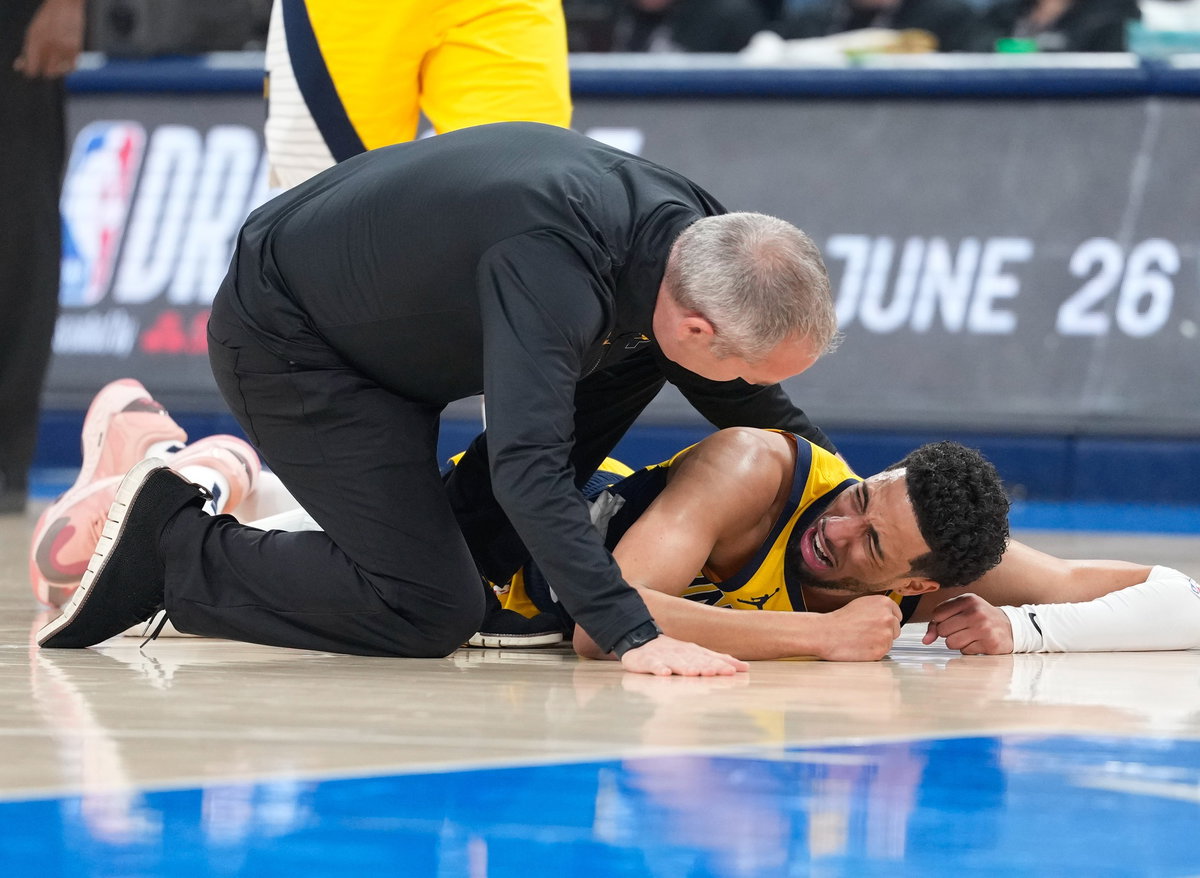
Indiana was 12 minutes away from winning the 2025 NBA Finals before Haliburton’s Achilles tear changed everything. The injury shattered the franchise timeline overnight. Suddenly, the Pacers weren’t a championship team anymore. They were a wounded contender trapped inside a lost season.
That emotional context matters because it explains why Indiana became so aggressive. Pritchard wasn’t operating from cold mathematics anymore. He was operating from urgency. From frustration. From the belief that the franchise had already suffered enough and deserved some kind of correction from the basketball universe.
Imago
Jun 22, 2025; Oklahoma City, Oklahoma, USA; Indiana Pacers guard Tyrese Haliburton (0) reacts after suffering an injury during the first quarter against the Oklahoma City Thunder during game seven of the 2025 NBA Finals at Paycom Center. Mandatory Credit: Kyle Terada-Imagn Images
That’s the dangerous part about “due luck.” It feels rational emotionally even when it’s irrational statistically. The Pacers convinced themselves the risk was survivable because the season already felt unfair. Instead of fully embracing the lottery and protecting the future, they tried to accelerate the recovery process by adding a veteran center capable of stabilizing the roster immediately.
And to be fair, there was logic behind it. Indiana’s interior defense had completely collapsed after Turner’s departure. Before the Zubac trade, the Pacers ranked near the bottom of the NBA in defensive rating, rebounding, and points allowed in the paint. They looked physically overwhelmed almost every night.
Zubac solved a real basketball problem. But the issue wasn’t whether Indiana needed a center. The issue was whether a small-market franchise should ever gamble a potentially elite lottery pick for a non-superstar veteran during a season already spiraling toward the bottom of the standings.
Now the Pacers are living with the answer. The reaction to Pritchard’s statement instantly divided Indiana fans into multiple camps.
Some were furious. For that group, the lottery result represented organizational malpractice. They viewed the Zubac trade as a short-sighted panic move that sacrificed long-term upside for temporary stability. Losing Bennedict Mathurin hurt. Losing a top-five pick in a loaded class made it catastrophic.
To them, the Pacers gambled away their future because the front office got impatient. And honestly, it’s hard to completely dismiss that argument.
Small-market teams survive through draft value. They cannot afford to lose premium lottery opportunities, especially in a draft class loaded with potential franchise changers. The Pacers effectively spent an entire miserable 19-win season earning elite lottery odds only to walk away empty-handed.
That’s brutal. But another section of the fanbase actually appreciated Pritchard’s transparency. Because executives rarely admit failure this openly.
There was no deflection. No corporate spin. No hiding behind “the process.” Pritchard directly owned the risk and directly acknowledged the pain fans felt watching the lottery unfold.
In a league increasingly dominated by sterile executive messaging, the honesty felt strangely refreshing. Then there’s the third group: the basketball realists. Those fans understand exactly why Indiana made the move.
The Pacers’ roster without a center was unsustainable. Haliburton’s injury already threatened the organization’s momentum. There was legitimate concern that another hopeless season could poison the culture around the locker room and waste critical developmental years for the rest of the roster.
Zubac wasn’t a luxury. He was viewed internally as survival. That’s what makes this story so fascinating. Nobody looks completely irrational here. The Pacers had a real weakness. Pritchard had a real competitive timeline to manage. The lottery odds weren’t impossible.
The gamble simply failed. And in sports, failure always looks stupid afterward.
The Pacers are now trapped between accelerating and resetting
The hardest part for Indiana is that this outcome dramatically changes the franchise’s flexibility moving forward. In today’s NBA, top-five picks aren’t just talent assets. They’re financial lifelines.
A rookie contract attached to a potential superstar gives organizations room to build around expensive veterans without immediately getting crushed by the luxury tax. That’s especially important for Indiana, which already has major money committed to Haliburton, Pascal Siakam, Zubac, Aaron Nesmith, and Andrew Nembhard.
Had the Pacers retained the pick, they could have added a high-upside cornerstone on a cost-controlled contract for years. Instead, they now enter the offseason with:
- fewer premium assets
- less flexibility
- a veteran-heavy roster
- and enormous pressure to win quickly
That creates a dangerous middle ground. The Pacers are no longer rebuilding enough to chase elite draft talent, but they may not be good enough to truly compete with the Eastern Conference giants either.
That’s the treadmill every small-market franchise fears most. And it’s why Sunday night felt so devastating. The front office believed it was accelerating the timeline around Haliburton. Instead, it may have compressed the franchise into a narrow championship window with very little margin for error.
Imago
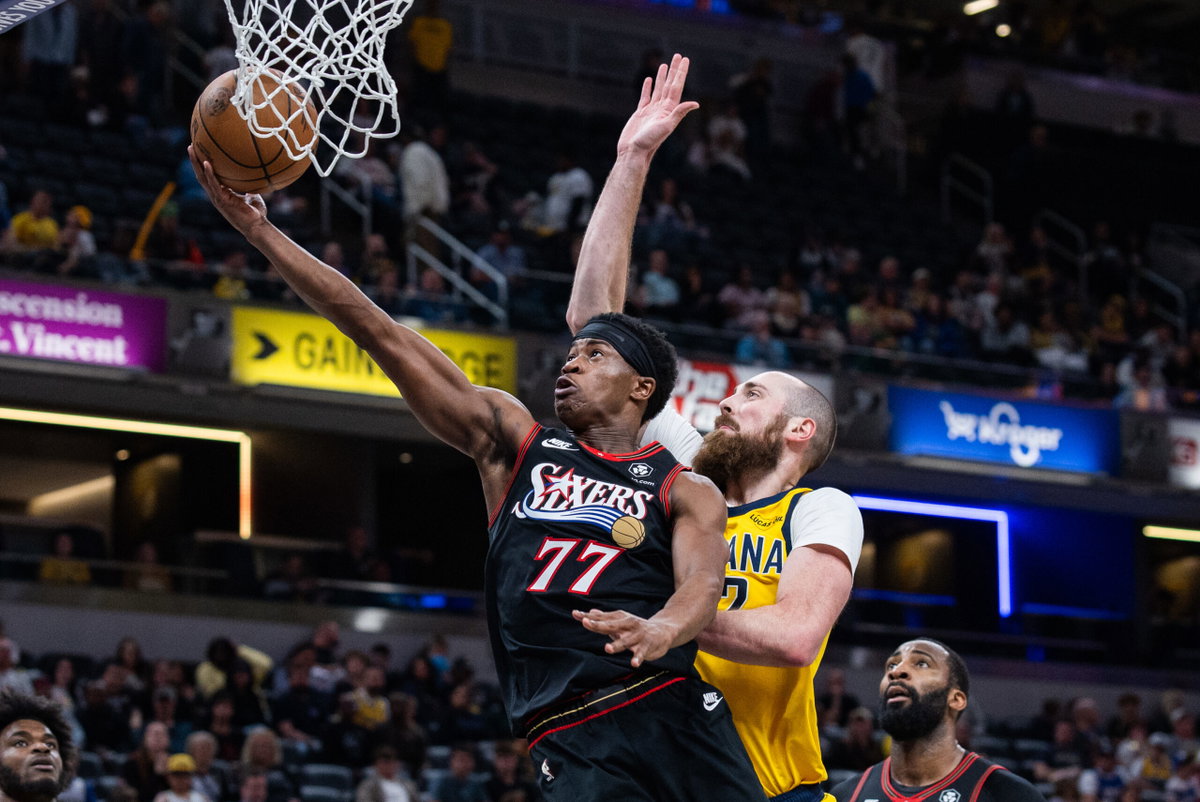
Apr 10, 2026; Indianapolis, Indiana, USA; Philadelphia 76ers guard Vj Edgecombe (77) shoots the ball while Indiana Pacers center Jay Huff (32) defends in the second half at Gainbridge Fieldhouse. Mandatory Credit: Trevor Ruszkowski-Imagn Images
What happened Sunday night will likely follow the Pacers for years. If Indiana becomes a contender with Zubac anchoring the defense and Haliburton returning to superstar form, the gamble will eventually look understandable — maybe even necessary.
But if the team stalls out as a middle-tier playoff group while the Clippers use Indiana’s surrendered pick to land a future star, this lottery night will become one of the defining “what if” moments of the Pacers era. That’s the brutal reality of modern NBA asset management.
Front offices aren’t just evaluated on wins anymore. They’re evaluated on timing, probability, patience, and risk tolerance. And Kevin Pritchard just publicly admitted he lost a bet against all four. The Pacers didn’t apologize for trying to compete. They apologized because they believed they were due some luck, and the lottery reminded them the NBA doesn’t work that way.