
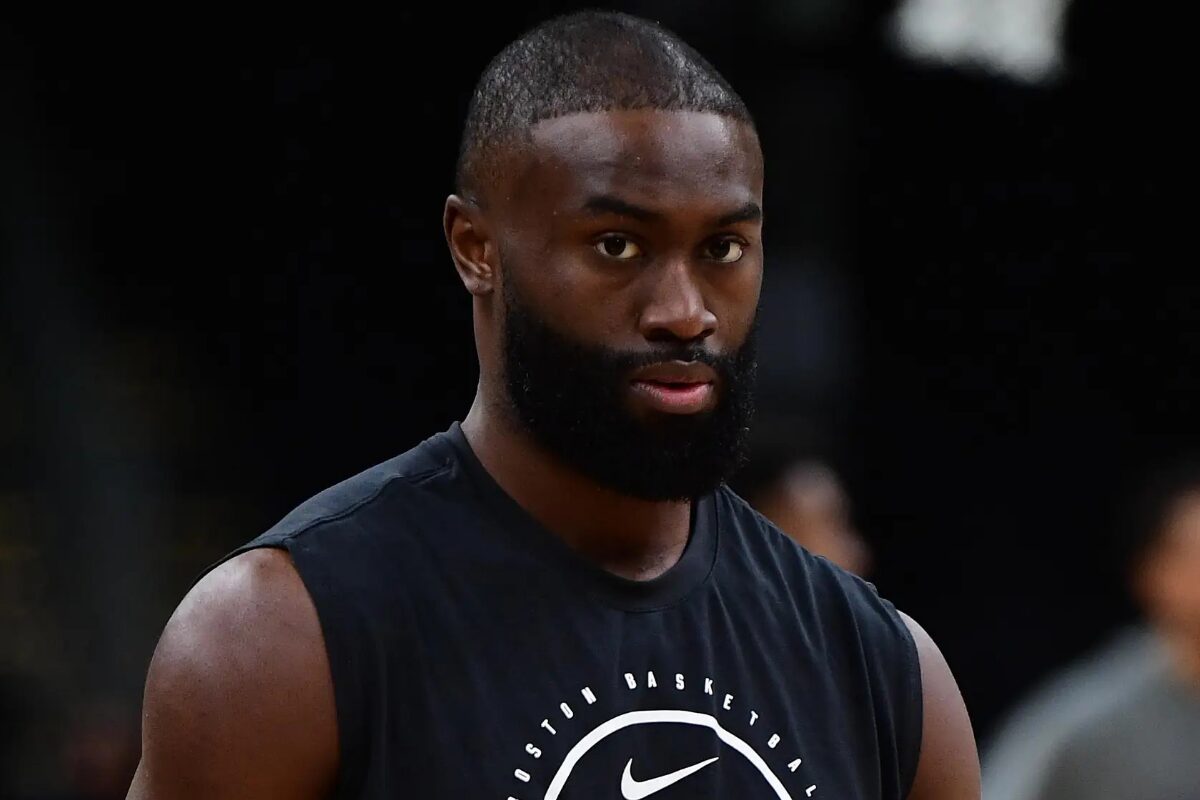
Boston Celtics President of Basketball Operations Brad Stevens and lead owner Bill Chisholm finally addressed the media and fanbase regarding the stunning blockbuster trade that sent Jaylen Brown to the Philadelphia 76ers, a division rival. The deal shipped Brown in exchange for 36-year-old veteran Paul George and a package of four draft picks. Since completing the move, Stevens has faced intense scrutiny from a fanbase still processing the dissolution of Boston’s championship core. He finally answered the burning question: Why did he trade Jaylen Brown?
Watch What’s Trending Now!
In a 45-minute press conference where one sentence was the running theme, Stevens said, “I don’t want to sound like a broken record, but, you know, it was a really hard call. I’m not saying it was the right call, and we wanted to stay good, and we wanted to add more optionality.”
Stevens somberly acknowledged that the trade was not well-received due to the sheer emotional weight of parting with a homegrown franchise pillar. Asked directly by a reporter how he reached the point of executing such a jarring transaction, Stevens admitted it was all about the assets needed to rebuild depth.
“I think that there are a lot of different angles that we have to consider in every move we make,” Stevens explained. “When I looked at our team and I looked at where the league was heading, looked at the way that we’ve finished the last couple years and also looked at the unbelievable way we’ve played in the regular season the last couple years, you know, the path looked a little bit more challenging to me. I might be wrong. I’m not going to stand up here and be defensive about that. But the path looked a little bit more challenging with 70% of our cap and such a high percent of our usage tied into two players.”
Referencing the depth of the New York Knicks’ and Oklahoma City Thunder’s championship rosters, Stevens implied that focusing all future flexibility on the Jayson Tatum and Jaylen Brown duo was unsustainable.
The calculated willingness to trade an elite wing player in the prime of his career clearly shows the difficult operational choices modern executives face. While Stevens acknowledged that trading an icon like Brown creates an immediate void in the hearts of fans, he insisted that the team’s long-term sustainability was more important.
His decision is entirely rooted in the restrictive tax penalties and salary cap. With both Jayson Tatum and Jaylen Brown on supermax extensions, the front office was staring down a future balance sheet that would make building out a deep, competitive supporting roster unfeasible.
“The reality in this era and in this day and age of the NBA… is that, you have to do a great job and you have to have the optionality to do a great job of building out depth that can hopefully replace the irreplaceable individual,” Stevens stated.
“That’s not an easy thing to do, right? And we get that. That’s absolutely nothing against Jaylen, right? If you have Jaylen Brown on your team, you should feature him. You should use all those possessions, and you should approach things that way. But I think the importance of depth, and then obviously, we have to continue to work on ways to diversify our attack overall. All that being said, still would not have made a move unless we thought the right opportunity presented itself.”
Stevens never once dressed the trade up as addition by addition. He acknowledged Brown as an explosive, elite talent and then explained, without flinching, why that same talent had become the clearest asset to move.
On the other hand, however, Chisholm appears to have contradicted Stevens when asked directly whether trading Brown was a salary-cap mandate.
“No, absolutely not,” Chisholm said. “This is all about basically trying to win, and I think really trusting in our process. I think we have the best front office in the NBA, and they put in their work, and they came to the conclusion this was the best way for us to win. That’s the mandate.”
Ironically, Kyle Kuzma confirmed that apron-based decisions are the exact blunder front offices across the league make. The structural reasoning, though the lingering grievance that four draft picks, while a meaningful haul, still feel light for a player of Brown’s caliber in his prime, is one Stevens did not attempt to dismiss. The silence he finally broke answers the ‘why.’ Whether it answers the ‘was it worth it’ remains Boston’s open wound heading into next season.